

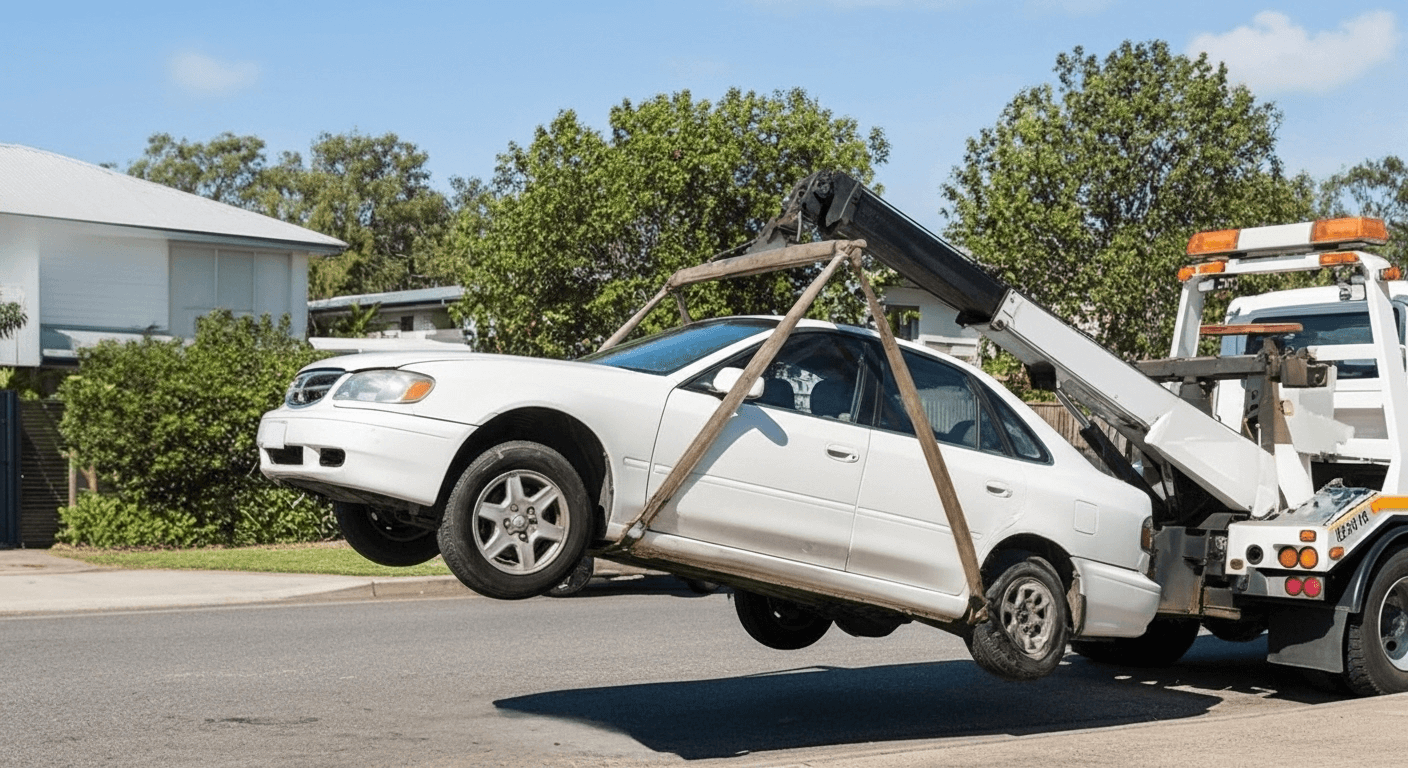
The Real Scrap Value of a Vehicle: What Determines What Auto Recyclers Will Pay You?

When an older vehicle reaches the end of its mechanical life, its book value as a drivable car becomes irrelevant. Once blown head gaskets, rusted chassis rails, or failed transmissions push repair bills well past the vehicle’s market worth, the car transitions from passenger transport into an industrial commodity.
For most motorists, this is unfamiliar territory. You might receive a quote of $250 from one scrap yard and $850 from another for the exact same vehicle. That difference is not arbitrary. Licensed vehicle dismantlers and auto recyclers calculate their payout figures using specific commodity assessments, logistical overheads, and part recovery projections.
Understanding how those calculations work gives you clear leverage to secure a fair return rather than settling for an undervaluation.
1. Kerb Weight and Pure Steel Content
The foundational baseline of every scrap car quote starts with total vehicle weight. A vehicle is predominantly steel and iron, which make up roughly 65% to 70% of its total mass.
Recyclers evaluate vehicles based on their metric tonnage. Because processing costs (such as depolluting, stripping, and crushing) remain relatively steady regardless of car size, heavier vehicles invariably yield higher base payouts:
-
Compact Cars (1,000 kg – 1,200 kg): Light hatchbacks yield less recoverable steel, placing their base scrap scrap value at the lower end of the pricing spectrum.
-
Mid-Sized Sedans and Wagons (1,300 kg – 1,600 kg): Offer a balanced yield of steel alongside secondary metals.
-
4WDs, Commercial Utes, and Large Vans (1,800 kg – 2,500+ kg): Provide substantial metal tonnage, making them significantly more valuable on the scrap scales.
However, recyclers do not pay the raw tonnage rate for the full kerb weight listed on your vehicle’s registration papers. Every car contains non-metallic "fluff"—rubber tyres, foam seats, glass, plastic dashboard trim, and carpet. Yards must pay commercial tipping fees to dispose of these non-recyclable materials in landfill, which is factored into their base net scrap rate.
2. Global Scrap Metal Market Fluctuations
Auto recycling does not operate in isolation from global commodities. The rate you are offered on a Tuesday can shift by Friday depending on international scrap metal indices, shipping freight costs, and domestic steel mill demand.
Recyclers track the market rates for several distinct metals found throughout a vehicle:
-
Heavy Melting Steel (HMS): The bulk chassis and body panels.
-
Cast Aluminium: Engine blocks, cylinder heads, alloy wheels, and gearbox casings (which fetch a significantly higher rate per kilogram than steel).
-
Copper: Wiring harnesses, starter motors, and alternators.
-
Lead: Automotive starter batteries, which are processed through specialised closed-loop recycling plants.
When domestic manufacturing or international demand for recycled steel surges, recyclers increase their payouts to draw in inventory. When mills reduce their intake, yard margins tighten, and scrap vehicle offers drop across the board.
3. The Catalytic Converter and Precious Metals
A major variable in any modern vehicle valuation is the presence of the original catalytic converter. Positioned along the exhaust system, the converter houses a ceramic honeycomb core coated in three platinum-group metals:
-
Platinum (Pt)
-
Palladium (Pd)
-
Rhodium (Rh)
Because these metals act as chemical catalysts to reduce toxic exhaust gases, their industrial value is substantial. Original Equipment Manufacturer (OEM) catalytic converters often account for a significant portion of an older vehicle's entire salvage value.
If your vehicle has an aftermarket replacement converter installed, its precious metal density is usually much lower. Likewise, if an exhaust has been cut off or hollowed out, recyclers will immediately reduce their purchase offer to reflect the missing unit.
4. Salvageable Components vs. Straight Crush
There is a distinct difference between a pure scrap metal processor and an auto dismantler/wrecker.
A shredder yard treats the vehicle purely as bulk metal. In contrast, an auto wrecker assesses the vehicle for resaleable, working components before the shell is compressed. If your vehicle has components that remain in strong retail demand, an auto recycler can afford to pay more than the bare scrap metal rate.
                     Vehicle Intake Assessment
                                 │
         ┌───────────────────────┴───────────────────────┐
         ▼                                               ▼
  [Direct Scrap Stream]                         [Auto Salvage Stream]
  • Crushed for metal tonnage                   • High-demand models
  • Heavily damaged/stripped                    • Reusable engines & panels
  • Valuation: Metal weight only                • Valuation: Scrap + Parts margin
High-Demand Spare Parts
-
Mechanical running gear: Low-kilometre engines, healthy gearboxes, differential units, and steering racks.
-
Panel work: Straight bonnets, tailgates, guards, and undamaged doors (especially for popular trade vehicles or common fleet sedans).
-
Lighting and electronics: Factory headlight assemblies, infotainment units, and pristine alloy wheel sets.
If you drive a vehicle with popular running gear—such as a Toyota Hilux, Ford Falcon, or Holden Commodore—salvage yards often bid higher because their mechanical assemblies rarely sit on shelves for long. Conversely, uncommon European luxury vehicles with catastrophic engine failures offer fewer easy-turnover parts, pulling their valuation back down to straight scrap metal rates.
5. Completeness: Why Stripping Parts Reduces Your Total Payout
A common mistake car owners make is attempting to "part out" a vehicle on community marketplaces before calling an auto dismantler.
Selling the battery privately might net you $30, or selling the alloy wheels might bring in $150. However, stripping key assemblies often reduces the recycler's collection quote by more than what you earned selling the pieces individually:
-
Missing rolling stock: Without wheels, a car cannot be winched smoothly onto a tilt-tray tow truck, requiring specialised recovery equipment that increases labour costs.
-
Missing drivetrain: Removing the engine and gearbox eliminates the heaviest chunks of aluminium, iron, and copper.
-
Missing converter: Stripping the catalytic converter immediately removes the highest per-gram value on the chassis.
Unless you possess mechanical tools, ample storage space, and the patience to deal with private marketplace enquiries over several months, selling a complete vehicle almost always nets a better overall return against your time.
If you are dealing with an end-of-life vehicle in South Australia, arranging cash for cars adelaide through an established vehicle buyer guarantees that weight and part values are calculated upfront before collection.
6. Logistics, Accessibility, and Towing Overhead
Auto recyclers do not operate without operational overheads. Diesel costs, tilt-tray depreciation, driver wages, and insurance all factor directly into the final sum offered for your car.
The difficulty of recovery plays an active role in quote calculations:
| Retrieval Condition | Tow Truck Requirement | Impact on Final Payout |
| Driveway / Kerbside (Rolling) | Standard single tilt-tray; clear winch access. | Maximum payout; standard turnaround. |
| Underground Parking / Low Clearance | Low-clearance wheel-lift vehicle required. | Adjusted payout to offset specialised equipment. |
| Backyard / Missing Wheels / Bogged | Heavy snatch-block winching, extra ground crew. | Higher labour deduction against vehicle value. |
| Regional / Rural Distance | Long-haul transit outside metro zones. | Fuel and transit time factored into total bid. |
When comparing offers, confirm whether towing deductions will be applied on arrival. Choosing certified free car removals adelaide ensures the figure quoted on the phone matches the funds handed over at your driveway without hidden cartage deductions.
7. How to Prepare Your Vehicle to Maximise Your Return
Getting top value for an end-of-life vehicle requires basic administrative and physical preparation:
-
Clear Personal Effects Thoroughly: Check under front seats, inside centre consoles, under floor mats, and through boot wheel wells. Once a vehicle enters a depollution bay and the compactor cycle, recovering lost sunglasses, toll tags, or spare keys is impossible.
-
Remove and Return Number Plates: In Australia, registration plates must be surrendered to your state or territory road authority (such as Service SA, VicRoads, or Service NSW) to cancel registration and claim any remaining pro-rata registration or CTP refunds. Recyclers will require the plates removed before processing destruction documentation.
-
Establish Clear Proof of Ownership: Legitimate operators comply strictly with scrap metal dealer legislation. Cash payments for scrap metal have been outlawed in several jurisdictions across Australia to prevent vehicle theft; payments are processed via secure Electronic Funds Transfer (EFT) or bank cheque upon presentation of current photo ID and ownership verification.
-
Disclose Accurate Details Upfront: Be transparent about missing assemblies, accident damage, or access hurdles. Providing an accurate vehicle description prevents on-site price re-negotiations when the tow truck arrives.
Frequently Asked Questions
Can I scrap a car if I don't have the registration papers?
Yes, but you must prove you are the legal owner of the vehicle. While a current registration certificate makes paperwork faster, recyclers can verify your ownership through your driving licence, matching the Vehicle Identification Number (VIN), and checking state databases to confirm there are no outstanding financial encumbrances or theft reports recorded against the chassis.
Does a flat tyre or seized engine lower the scrap price?
A flat tyre or non-running engine will not alter the pure metal value of a car. However, if the engine is completely seized or cracked, it removes any mechanical salvage value for the wrecker, meaning the vehicle will be priced strictly on its scrap steel and aluminium weight rather than as a source of replacement running gear.
Why is cash payment for scrap vehicles restricted in Australia?
Most Australian states enforce strict Scrap Metal Industry regulations designed to deter vehicle theft and cut off black-market car re-birthing syndicates. Under these regulatory frameworks, recycling yards are legally prohibited from paying physical cash for scrap metal and vehicle bodies. Legitimate operations complete transactions directly via bank transfer or cheque, retaining verifiable transaction records and identity checks for state regulatory authorities.
Is it worth repairing my car before selling it to a scrap buyer?
No. Never spend money on mechanical repairs, panel work, or professional detailing for a car headed to a dismantler. Recyclers price vehicles according to their raw materials and wholesale component demand. Spending $400 on tyres or replacement sensors will rarely add even a fraction of that expenditure back onto the salvage offer.
What happens to my car after the wrecker tows it away?
The vehicle first enters a depollution staging bay where hazardous materials are extracted. Technicians drain the engine oils, coolant, brake fluid, transmission fluid, and fuel for safe industrial disposal or refining. The battery, mercury switches, and air conditioning refrigerants are safely removed. Once salvageable panels and mechanical parts are catalogued, the stripped shell is crushed, baled, and loaded into commercial shredders to be separated into clean ferrous and non-ferrous raw materials for industrial manufacturing.
This guide was compiled by automotive dismantling specialists at Cash 4 Cars, helping motorists navigate end-of-life vehicle valuation, legal disposal processes, and fair recycling rates.

