

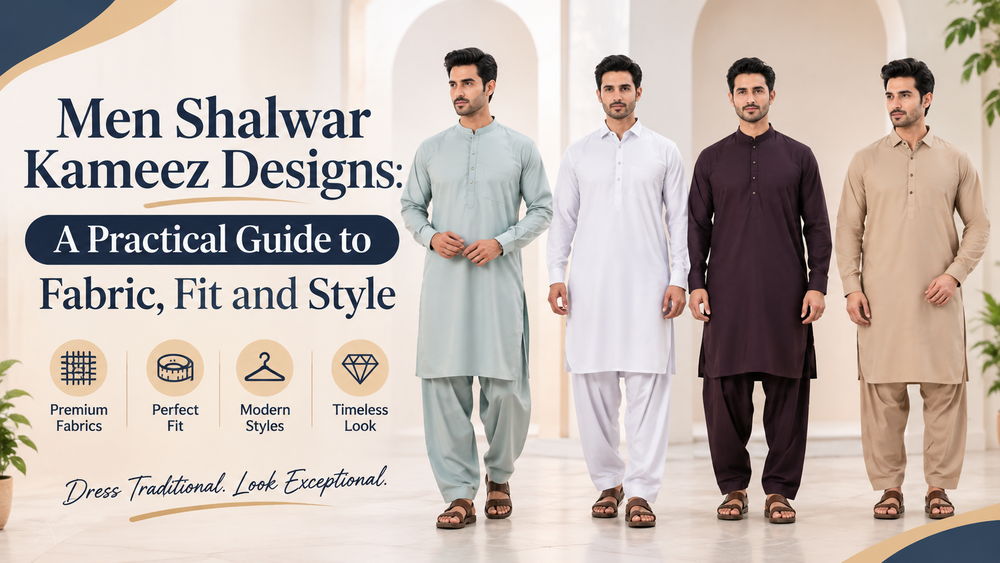
Walk into any Pakistani home on a Friday morning and you will see it: crisp, freshly pressed shalwar kameez hanging by the door, ready for prayers. It is the outfit that goes to the office, the wedding, the mosque and the family dinner, often in the same week. Yet when it is time to actually buy one, many men freeze. Which fabric? Which collar? Which fit? And why does one suit look sharp while another just looks tired?
This guide answers those questions in plain language. Whether you are buying your first suit or refreshing a wardrobe full of them, here is how to understand men's shalwar kameez designs and pick the one that suits your body, your budget and your occasion.
What is a shalwar kameez for men?
A shalwar kameez for men is a two-piece traditional outfit worn across Pakistan and South Asia. The kameez is a long shirt that usually falls between the hip and the knee, and the shalwar is a loose, pleated trouser gathered at the waist and ankle. Many men also wear it with a waistcoat, a shawl or a sherwani-style jacket for formal events.
Its popularity is no accident. The loose cut keeps you cool in heat, covers modestly, and moves easily whether you are sitting cross-legged at a dawat or rushing to a meeting.
What are the most popular men's shalwar kameez designs?
Design in a men's suit is mostly about restraint. The details are small, and they matter. Here are the styles you will see most often.
Classic straight-cut. A clean kameez with a front placket, side pockets and a simple collar. It is the everyday workhorse and looks good on almost every body type.
Band (ban) collar. A short, stand-up collar with no fold. It reads modern and polished, which is why it is a favourite for offices and festive gatherings.
Shirt (regular) collar. A folded collar, much like a dress shirt. It feels familiar and works well if you prefer a slightly casual look.
Sherwani collar. A taller, structured band collar, often with a button-through front. Choose this when you want something noticeably formal without wearing a full sherwani.
Embroidered and detailed suits. Subtle thread work on the collar, placket or cuffs adds character without shouting. These are popular for Eid and family functions.
Contrast-trim and piping styles. A thin line of contrasting fabric along the placket or pocket gives a plain suit a tailored finish.
Which fabric is best for men's shalwar kameez?
The honest answer: it depends on the season and how you plan to wear it. Fabric affects comfort, drape and how long a suit stays presentable more than any design detail does.
-
Cotton: breathable and easy to wash, ideal for everyday summer wear.
-
Wash and wear (blends): a polyester-cotton style fabric that resists wrinkles and holds its colour. A practical choice if you travel or dislike ironing.
-
Linen and cotton-linen blends: light and airy, with a naturally textured look. They crease easily, but many men like that relaxed character.
-
Boski and silk-feel fabrics: smooth with a soft sheen, traditionally chosen for weddings and Eid.
-
Khaddar and karandi: thicker, warmer weaves suited to cooler months.
-
Wool blends: the winter option for cold evenings and formal winter events.
A quick rule: in hot, humid weather choose pure cotton or a light blend. In winter, move to khaddar, karandi or wool. If your suit will be worn all day, give breathability priority over shine.
How should a men's shalwar kameez fit?
A good fit is the difference between traditional and tailored. Check these points before you buy or stitch.
-
Shoulders: the seam should sit at the edge of your shoulder, not slide down your arm.
-
Chest and waist: you should be able to move freely, but the fabric should not balloon. If it hangs like a sack, size down or ask for tailoring.
-
Kameez length: it should end around mid-thigh to just above the knee. Too short looks like a kurta over trousers; too long makes you look shorter.
-
Sleeves: they should reach the wrist bone, with room to bend your elbow.
-
Shalwar rise and width: the trouser should sit comfortably at the waist and taper neatly at the ankle, so it does not drag on the floor.
If you are between sizes, choose the larger one and have it altered. Taking in a suit is easy; letting it out is not.
What colours work best?
Colour sets the mood of the whole outfit.
-
White, off-white and cream: timeless for Friday prayers and Eid, and flattering on most skin tones.
-
Black, charcoal and navy: sharp and versatile, and they hide wear well. Good for evening and formal occasions.
-
Earth tones such as olive, brown and sand: relaxed and modern, great for casual days and daytime events.
-
Pastels like sky blue, mint and light grey: fresh for summer and spring gatherings.
-
Deep maroon, bottle green and mustard: rich shades that suit winter weddings and festive evenings.
If you own only a few suits, start with white, one dark neutral such as black or charcoal, and one mid-tone like grey or olive. That trio covers nearly every situation.
Which shalwar kameez should you wear for each occasion?
Everyday and office wear: a cotton or wash-and-wear suit in a solid, muted colour with a band or shirt collar.
Friday prayers and religious gatherings: clean, light colours in soft cotton. Comfort matters most, since you will be sitting for a while.
Eid: a premium fabric such as a boski-style blend, in white, cream or a rich colour, perhaps with subtle embroidery.
Weddings and formal events: a structured sherwani-collar suit, often paired with a waistcoat or shawl, in deeper colours.
Winter: thicker khaddar, karandi or wool, layered with a shawl or a jacket.
How do you care for a shalwar kameez so it lasts?
A few habits will keep your suits looking new for years:
-
Wash dark and light suits separately to prevent colour transfer.
-
Use cold or lukewarm water and a gentle detergent, especially for embroidered pieces.
-
Turn embroidered or detailed suits inside out before washing.
-
Dry in shade rather than harsh sunlight, which fades colour.
-
Iron on the right temperature for the fabric, and use a cloth over embroidery.
-
Hang formal suits instead of folding them for long periods.
Common mistakes to avoid when buying men shalwar kameez
-
Buying by design alone. A beautiful suit in the wrong fabric will be uncomfortable all day.
-
Ignoring the shalwar. A well-cut kameez with a baggy, poorly fitted shalwar ruins the look.
-
Choosing a size "to grow into." It never ends well.
-
Skipping the fabric description. Check the composition, whether it is cotton, a blend or something else, before you pay.
-
Overloading on embellishment. Heavy embroidery on every suit limits how often you can wear them.
Quick answers about shalwar kameez for men
What is the difference between a kurta and a kameez? A kameez is generally longer and traditionally worn with a shalwar. A kurta is often shorter and can be worn with trousers, jeans or pyjamas.
What is the best fabric for a men's shalwar kameez in summer? Lightweight cotton or a breathable cotton blend is the best choice for hot weather, because it lets air pass and absorbs sweat.
Which collar suits a shalwar kameez the most? A band collar is the most versatile. It suits offices, family events and festive wear equally well.
How many shalwar kameez suits does a man need? A practical starter wardrobe is five to six: two or three everyday suits, one or two for Fridays, and one formal piece for weddings or Eid.
Can you wear a shalwar kameez to work? Yes. In many Pakistani workplaces it is standard attire. Choose a plain, well-pressed suit in a neutral colour.
How do I stop my shalwar kameez from wrinkling? Choose a wash-and-wear blend, hang it right after washing and iron while slightly damp.
Final thoughts
The best men's shalwar kameez designs are rarely the loudest ones. They are the ones that fit properly, use the right fabric for the season and quietly suit the occasion. Get those three things right and even a simple suit looks considered.
If you are ready to browse ready-to-wear options, you can explore the range at Eminent, where comfort, quality fabric and everyday wearability come first.

