

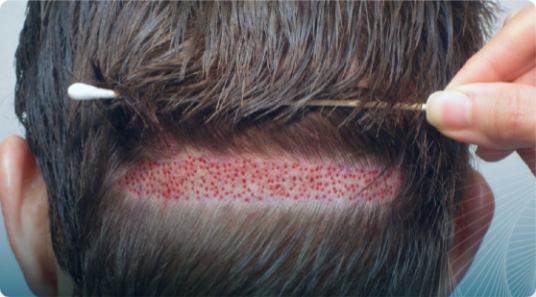

The number of grafts required for a hair transplant depends on the extent of hair loss, donor hair density, scalp condition, and desired coverage. Every patient has different hair restoration needs, so there is no fixed graft number suitable for everyone. During a consultation for FUT Hair Transplant in Dubai, the surgeon evaluates the donor area and recipient region to estimate how many follicular units may be needed to achieve natural-looking results. A graft usually contains one to four hair follicles, meaning the total number of hairs transplanted can be higher than the graft count.
How Hair Loss Severity Influences Graft Numbers
Mild Hair Loss
Individuals experiencing early hairline recession or limited thinning may require approximately 500–1,500 grafts. The main objective is to improve coverage while maintaining the natural appearance of existing hair.
Moderate Hair Loss
Patients with noticeable recession and thinning across the frontal or middle scalp may need approximately 1,500–2,500 grafts. The surgeon distributes the available follicles to improve density across the affected regions.
Advanced Hair Loss
Extensive baldness may require approximately 2,500–4,000 or more grafts, depending on donor availability. In some cases, treatment may need to be divided into multiple sessions to avoid overharvesting the donor area.
Important Considerations When Calculating Grafts
Donor Hair Density
The thickness and density of hair in the donor area determine how many follicular units can be safely collected. Patients with stronger donor density may have more grafts available for transplantation.
Scalp Elasticity
FUT requires removing a strip of scalp and closing the incision. Scalp flexibility helps the surgeon determine the appropriate strip size and how many grafts can be collected safely.
Hair Thickness and Texture
Thicker or naturally curly hair may provide the appearance of greater coverage with fewer grafts. Fine or straight hair may require a different distribution strategy.
Future Hair Loss
Hair loss can continue after transplantation. Surgeons consider the possibility of future thinning when planning graft distribution to maintain balanced results over time.
Can FUT Provide 3,000 or More Grafts in One Session?
Yes, some patients may be suitable for receiving 3,000 or more grafts in a single FUT session. However, this depends on donor hair density, scalp elasticity, strip dimensions, and individual anatomy. A higher graft count is not automatically better because excessive harvesting can affect donor-area appearance and healing. Safe graft collection should always take priority over achieving a particular number.
Why Professional Graft Planning Matters
Accurate graft planning helps the surgeon distribute available follicles according to the patient's hair restoration priorities. It also reduces the risk of overharvesting and helps preserve donor hair for potential future procedures. The surgeon evaluates the hairline, crown, mid-scalp, and existing hair density before developing an individual treatment plan.
Conclusion
The number of grafts required for FUT hair transplantation varies according to the extent of hair loss, donor hair availability, scalp flexibility, and desired coverage. Some patients may need around 1,000 grafts for limited thinning, while individuals with extensive baldness may require several thousand. A professional scalp assessment is essential for estimating the appropriate graft number and planning natural-looking, long-term results.
Frequently Asked Questions
1. Is 2,000 Grafts Enough for a FUT Hair Transplant?
Two thousand grafts may be sufficient for moderate hair loss affecting the hairline or mid-scalp. However, extensive baldness may require additional grafts or multiple sessions.
2. Can FUT Provide 4,000 Grafts?
Yes, selected patients with suitable donor density and scalp flexibility may receive approximately 4,000 grafts. The surgeon must determine whether this amount can be collected safely.
3. How Many Hairs Are Present in 3,000 Grafts?
If each graft contains an average of two hair follicles, 3,000 grafts may represent approximately 6,000 individual hairs. The actual number depends on the patient's follicular composition.
4. Does Crown Hair Loss Require More Grafts?
Crown restoration may require a considerable number of grafts because of the area's size and circular growth pattern. The exact requirement depends on the degree of thinning and desired coverage.
5. Can 1,000 Grafts Cover a Receding Hairline?
Yes, 1,000 grafts may improve a mildly receding hairline. More extensive recession may require additional grafts.
6. What Happens if There Are Not Enough Donor Grafts?
If donor hair is limited, the surgeon may prioritise important areas, reduce the planned density, or consider alternative restoration approaches. Not every patient is suitable for extensive transplantation.
7. Does More Grafts Mean Better Hair Density?
Not necessarily. Hair thickness, follicular composition, placement, and distribution also influence the final appearance. Proper planning is more important than simply increasing graft numbers.
8. Can FUT Grafts Be Used for Both the Hairline and Crown?
Yes, grafts can be distributed across different scalp regions. The surgeon decides how to allocate them according to hair loss severity and treatment priorities.
9. Can I Undergo Another FUT Session Later?
An additional session may be possible if sufficient donor hair and scalp flexibility remain. Previous surgery and scar condition must be evaluated first.
10. How Is the Exact Number of FUT Grafts Determined?
The surgeon examines donor density, scalp elasticity, recipient-area size, hair characteristics, and future hair loss patterns. These findings help establish a realistic graft estimate.

