

Young baseball players love to play. Give them the chance, and many would play every day, all year long. That enthusiasm is one of the best things about youth sports. But growing bodies need time to recover, and rest is just as important to a young athlete's development as practice.
For parents and coaches, building rest into the season is one of the simplest ways to keep kids healthy, happy, and in the game for years to come.
Why Young Bodies Need Recovery
Young athletes are still growing. Their bones, muscles, tendons, and growth plates are developing, and they can be more vulnerable to repeated stress than an adult's.
Every practice and game puts a load on the body. Rest gives muscles time to repair and get stronger. Without enough recovery, small amounts of strain can build up over time and lead to injury.
The Risk of Overuse Injuries
Overuse injuries happen when the same motion is repeated again and again without enough time to recover. In baseball, the throwing arm is especially at risk. Pitching, throwing from the outfield, and playing catch all put stress on the shoulder and elbow.
Warning signs that a young player may need rest include:
· Pain in the shoulder, elbow, or another joint that doesn't go away
· Soreness that lasts into the next day or gets worse over time
· A drop in throwing speed or accuracy
· Changes in how a player throws or moves to avoid discomfort
· Unusual tiredness or a loss of interest in playing
If a child complains of pain, especially in the arm, the best response is to stop, rest, and talk with a doctor if it doesn't improve.
Follow Pitch Count and Rest Guidelines
Organizations like Little League and MLB and USA Baseball's Pitch Smart program publish age-based guidelines for how many pitches young players should throw and how many days of rest they need afterward. These guidelines exist to protect developing arms.
Coaches and parents should know the guidelines for their players' age group and follow them every time, even in big games. It also helps to keep track of all the throwing a child does, including travel teams, lessons, and backyard practice, not just league games.
Take Breaks From Baseball
Playing one sport all year can increase the risk of overuse injuries and burnout. Many sports medicine experts recommend that young athletes take time off from their main sport each year and try other activities.
Playing different sports helps kids build a wider range of skills, uses different muscles, and keeps the game fun. A break from baseball doesn't set a player back. It often helps them come back stronger and more excited to play.
Sleep Is Part of Training
Sleep is when the body does much of its repair work. School-age children generally need 9 to 12 hours of sleep a night, and teenagers need about 8 to 10 hours. Late games, early practices, and busy schedules can cut into that time, so it's worth planning around it.
A well-rested player has better focus, faster reaction times, and a lower risk of injury.
Fuel and Hydration
Recovery also depends on what kids eat and drink. Balanced meals with protein, whole grains, fruits, and vegetables help young bodies rebuild after activity. Water before, during, and after games is especially important on hot days.
Recovery Starts With Prevention
Rest and recovery help young players heal. But the best injury is the one that never happens. That's why safety on the field matters just as much as rest off it.
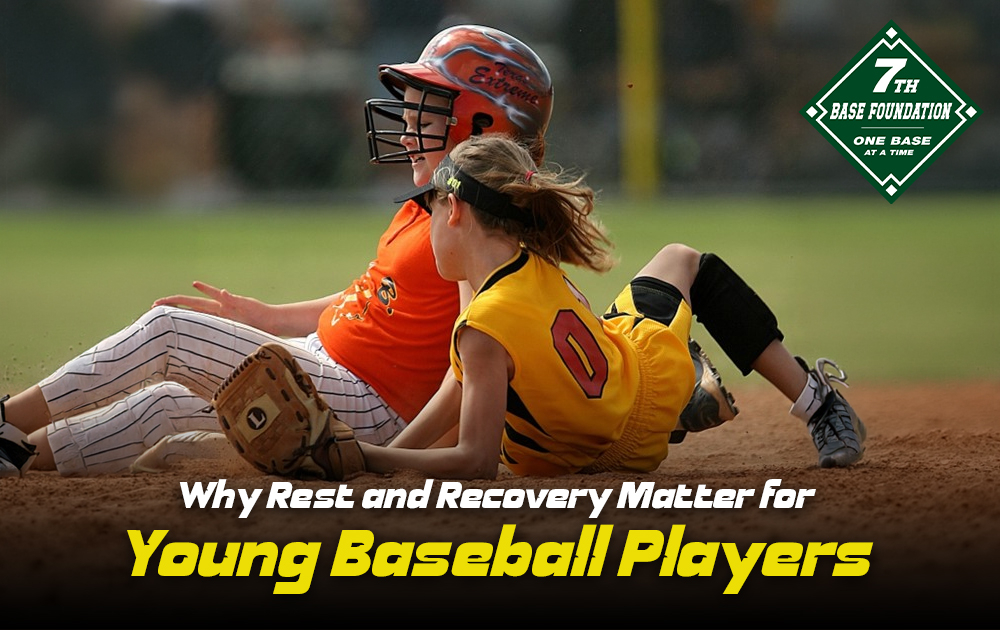
Some injuries come from overuse. Others come from sudden impacts, like sliding into a fixed base. Traditional stationary bases are bolted in place, so when a player slides into one hard, their foot or ankle takes the full force. Research shared on our site shows that sliding into stationary bases is one of the most common causes of injury in recreational baseball and softball.
Breakaway bases release on forceful impact, which can prevent many of these injuries before they ever require recovery time. An injury avoided means no missed games, no weeks on the bench, and no medical bills for a family.
How Seventh Base Foundation Helps
Seventh Base Foundation funds new breakaway bases for youth baseball and softball programs that need them. Our founder, Zach Ritts, saw firsthand how worn and unsafe bases led to injuries, and he started the foundation so every child could play on a safe, well-maintained field.
Keep Kids Healthy and in the Game
Rest, recovery, good habits, and safe fields all work together to protect young players. When adults pay attention to all of them, kids can focus on what they do best: playing the game they love.
Want to help make youth fields safer? Donate today, become a volunteer, or apply for base support for your league. Together, we can protect young athletes, one base at a time.

