


Today, customers care about more than just the products they buy. They also want to know how brands protect the environment. Many people prefer businesses that use less waste, choose better materials, and take steps toward a cleaner future.
This change has made sustainable packaging an important part of modern business. Brands are now looking for packaging that protects their products while creating less harm to the planet.
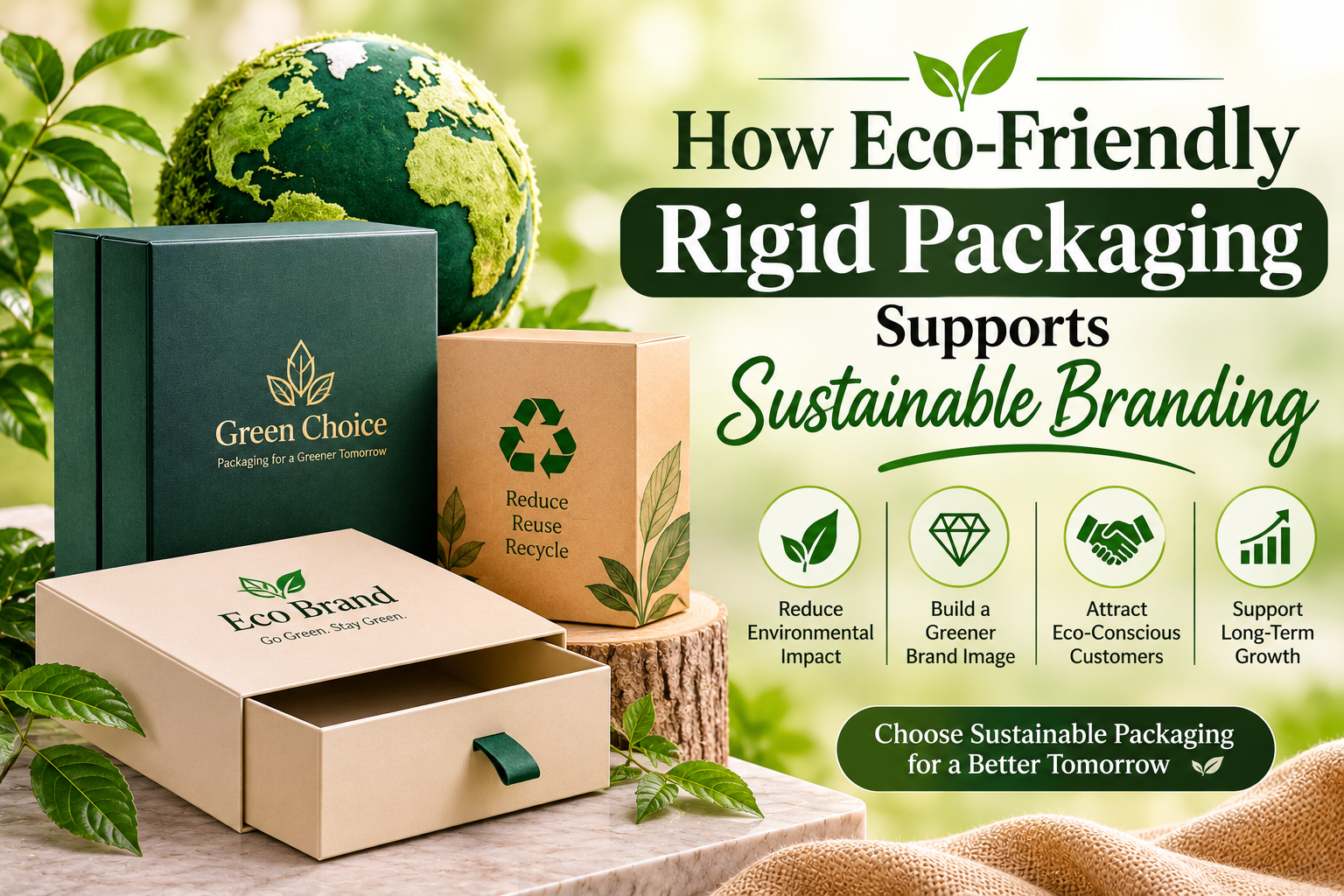
Eco-friendly rigid packaging is one option that can support this goal. It combines a strong structure with thoughtful material choices and attractive designs. It can also help businesses build trust, improve their brand image, and connect with customers who care about the environment.
In this article, we will explore how eco-friendly rigid packaging supports sustainable branding and why it matters for growing businesses.
1. Reduces Packaging Waste
One of the main goals of sustainable packaging is to reduce waste. Traditional packaging may use too much material or include parts that are difficult to recycle.
Eco-friendly rigid packaging can help businesses make better choices. They can use responsibly sourced paperboard, recycled materials, and simple box designs to reduce unnecessary waste.
For example, a skincare brand can choose a box that fits its cream jar properly instead of using a much larger box. This can reduce extra material and make storage easier.
Businesses should also avoid adding too many decorative layers, plastic parts, or unnecessary inserts. A simple design can still look beautiful while using fewer resources.
2. Supports Environmentally Friendly Brand Values
Customers often want to support brands that care about the environment. Sustainable packaging gives businesses a way to show that they are thinking about their impact.
When a company chooses recyclable materials and reduces unnecessary packaging, it sends a positive message to customers.
For example, a beauty brand that uses paper-based packaging and clear recycling instructions can show that sustainability is part of its business approach.
However, brands should make sure their environmental claims are honest. They should not call packaging completely eco-friendly without having clear facts to support that statement.
Being honest about materials and recycling options helps build customer confidence.
3. Uses Recyclable and Recycled Materials
Material choice is one of the most important parts of sustainable packaging. Businesses can look for paperboard made with recycled content or materials from responsibly managed forests.
These materials can help reduce the need for new raw materials. They may also support better waste management when the packaging is designed for recycling.
For example, a business can choose paper-based boxes and avoid unnecessary plastic coatings or mixed materials that may make recycling harder.
It is also important to remember that not every paper box is automatically recyclable. Coatings, magnets, ribbons, and other parts can affect how a box is processed. Businesses should check local recycling rules and ask suppliers for clear material details.
4. Builds Customer Trust
Trust is important for every successful brand. Customers want to know that a business is honest about its products and its environmental choices.
Eco-friendly packaging can help show that a company cares about more than sales. It can show that the brand is thinking about waste, materials, and the future.
For example, a business can print clear information about recycled content on its packaging. It can also explain which parts of the box can be recycled and how customers should dispose of them.
Brands should avoid making claims they cannot prove. The US Federal Trade Commission advises businesses to use clear and specific environmental claims instead of broad statements such as "100% eco-friendly." (FTC Green Guides)
Honest communication helps customers make informed choices and builds stronger relationships with a brand.
5. Creates a Professional Brand Image
Sustainable packaging does not mean that businesses must give up attractive designs. Rigid boxes can look stylish while using thoughtful material choices.
Brands can choose natural colors, simple printing, clean designs, and paper-based finishes. These details can create a modern look that matches an environmentally aware brand.
For example, a skincare company can use soft green, beige, or brown colors to create a natural feel. A gift brand can use a simple printed logo and a neat box design.
The key is to make the packaging match the brand message. When the design and material choices work together, customers can understand the brand's values more easily.
6. Supports Reusable Packaging Ideas
Another useful benefit of rigid boxes is that they are strong and can often be used again. Customers may keep them for storing small items, jewelry, documents, or personal accessories.
This gives the box another purpose after the product has been removed.
Businesses can encourage reuse by creating boxes that are easy to open, close, and store. A useful design may help customers keep the packaging instead of throwing it away immediately.
For example, a jewelry company can use a strong box that customers can reuse to store rings and necklaces.
However, reuse should be planned carefully. A reusable box may use more material at the start, so brands should consider its full life cycle and whether customers are likely to use it again.
7. Helps Reduce Unnecessary Packaging Costs
Sustainable packaging can also support better business planning. Using the right box size and avoiding extra materials can help reduce waste and improve storage.
For example, a box that fits the product properly may need fewer fillers and less extra packaging. This can also make it easier to arrange products in storage and prepare orders for shipping.
Businesses can compare different material options, box sizes, and order quantities before choosing a packaging design.
It is important to look beyond the price of one box. Shipping weight, product damage, storage space, and minimum order quantities can all affect the total cost.
A smart packaging plan can help businesses balance quality, cost, and environmental goals.
8. Makes Products More Attractive
Packaging plays a big role in how customers see a product. A beautiful box can make a product look more special and help it stand out on store shelves.
Businesses can use different shapes, sizes, colors, and printing styles to create packaging that matches their products.
Custom sustainable rigid boxes allow brands to combine attractive designs with thoughtful material choices. They can be made with suitable paper-based materials and custom features that support a brand's look.
This is useful for skincare, cosmetics, jewelry, clothing, and gift businesses that want to improve product presentation.
9. Supports Long-Term Business Growth
Sustainability is not just a short-term trend. It can become an important part of a company's long-term business plan.
When businesses make better packaging choices, they can build a clear brand message and attract customers who value responsible products.
For example, a beauty brand can start by using recycled paperboard boxes for a few products. As the business grows, it can improve its packaging materials and reduce unnecessary parts.
Premium rigid boxes can also support a brand's image while giving businesses room to explore more responsible material and design options.
The important thing is to make changes that are practical, affordable, and supported by real information.
10. Helps Businesses Choose Better Packaging Suppliers
Choosing the right packaging supplier is an important step toward sustainable branding. A good supplier can help businesses understand different materials, printing methods, and box designs.
Before placing an order, ask the supplier a few simple questions:
-
What materials are used to make the boxes?
-
Is recycled paperboard available?
-
Can you provide information about material sources?
-
Are the printing inks and finishes suitable for the chosen packaging?
-
Can you reduce unnecessary plastic parts?
-
Do you provide samples before bulk production?
-
Can you share documents to support environmental claims?
These questions can help you make a better decision.
Do not choose a supplier only because it offers a low price. Material quality, product protection, clear communication, and reliable service are also important.
A trusted packaging partner can help your business make better choices as it grows.
11. Gives Customers Clear Recycling Information
Even good packaging needs proper disposal. Customers should know what to do with a box after using the product.
Businesses can add simple recycling instructions to their packaging. For example, they can explain how to separate a paper box from plastic inserts or other materials.
Clear instructions make it easier for customers to understand which parts can be recycled.
Brands should also remember that recycling rules are different in different areas. A material accepted in one city may not be accepted in another.
For this reason, businesses should check local recycling options before printing recycling claims on their boxes.
Conclusion
Eco-friendly rigid packaging can help businesses build a strong and responsible brand image. It supports better material choices, reduces unnecessary packaging waste, improves product presentation, and creates more opportunities for reuse and recycling.
It also helps businesses connect with customers who care about the environment. However, sustainable branding is not only about using a paper box. It is about making honest choices, selecting suitable materials, and sharing clear information with customers.
If you want to grow your business while making better packaging decisions, start with small and practical changes. Choose the right materials, work with a reliable supplier, and create packaging that protects your products without using unnecessary resources.
A thoughtful packaging strategy can help your brand build customer trust and support a more sustainable future.

