


Quick summary
- Pick one customer problem, such as claims or payments, before you plan any features.
- APRA, ASIC, AUSTRAC and Privacy Act rules shape the build from the first workshop.
- Identity checks, security and integrations take longer than the screens.
- A small first release tested with real customers beats a big launch.
- Your development partner affects the result as much as your idea does.
If you want to develop an insurance and fintech app in Australia, you are building in two of the most regulated industries in the country. The two have a lot in common: sensitive data, high trust and customers who leave quickly after one bad experience.
This guide covers what to build first, which rules apply and how to avoid the mistakes that slow most projects down. Teams that treat insurance mobile app development as a compliance-first project, rather than a design exercise, tend to launch faster and with fewer rewrites. You can read more about Insurance mobile app development from the 7Pillars team.
Start with one customer problem
Write one sentence that says who is struggling and with what. “Policyholders wait nine days for a simple home claim” is a good one. “We want to disrupt financial services” is not.
A narrow problem gives you a clear measure of success. It also keeps the first budget under control.
Talk to customers and frontline staff before you plan features. Sit in on a claims call. Watch someone try to open an account on their phone. You will see where people give up.
Insurance mobile app development: what to build first
Insurers often start by digitising everything at once. That usually stalls. Pick the part of the customer journey that causes the most phone calls.
Claims first, then policy management
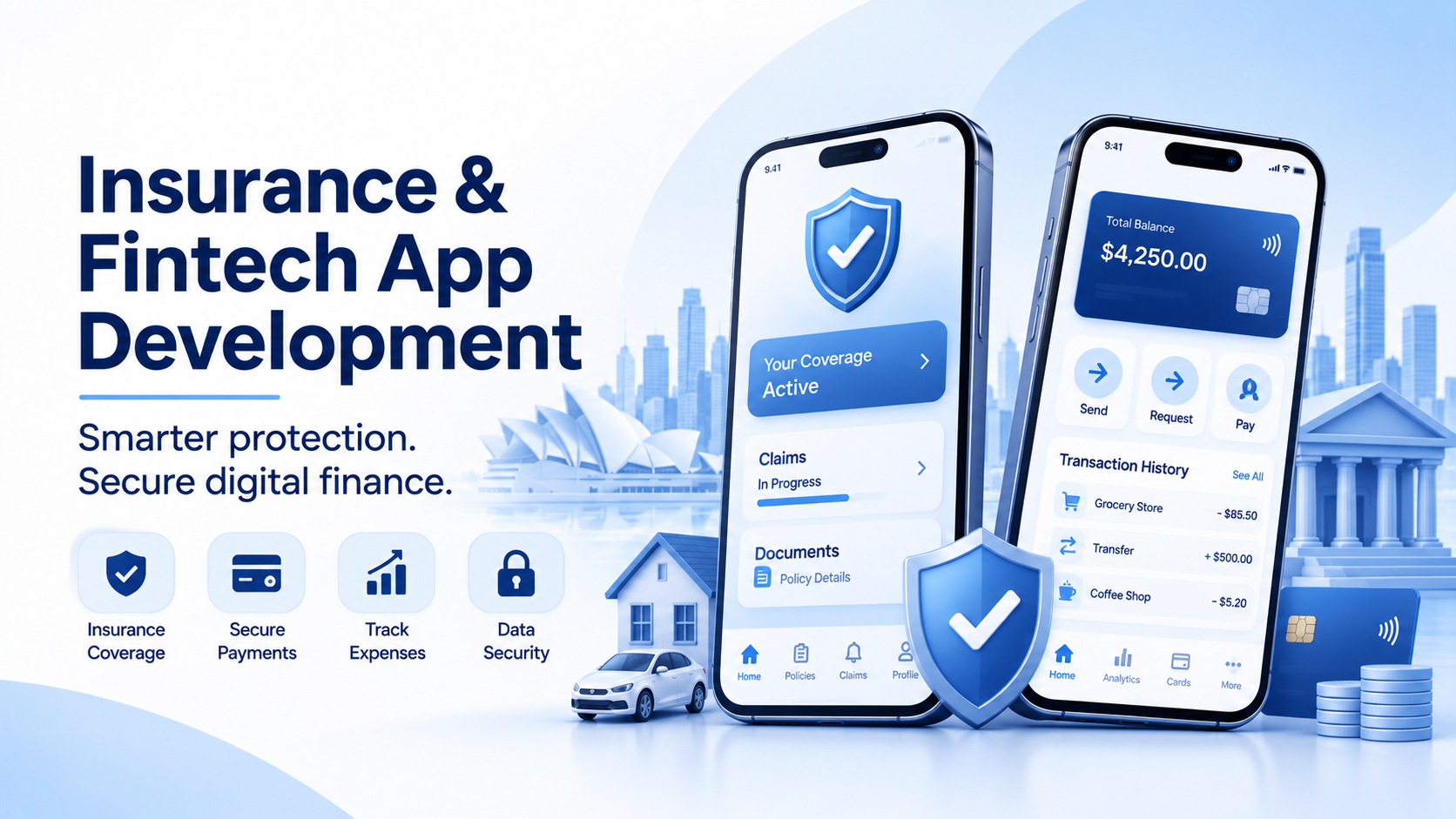
For most insurers, claims is the best starting point. Customers are stressed, the process is slow and every improvement is easy to measure. A good claims flow lets someone lodge a claim, upload photos, track progress and get updates without calling.
After that, add policy management. Customers should be able to view cover, update details and download certificates in a few taps. Telematics or usage-based pricing can come later, once the basics work.
Fintech app development: what changes for payments and lending
Fintech projects share the same discipline, but the risks are different. Money moves in real time, and mistakes are visible straight away. Teams doing Fintech app development in Australia usually need to plan for the New Payments Platform, PayID support and real-time fraud checks from the start.
Decide early whether your app holds money, moves money or only displays it. That one choice decides which licences you need. A lending app may need an Australian Credit Licence, while a financial product advice app may need an Australian Financial Services Licence from ASIC.
Identity checks and anti-money laundering
Digital identity verification is the first screen most fintech customers see, and it is where many drop off. Use document scanning with a liveness check, and keep the form short. Behind the scenes, you must meet the AML/CTF Act obligations that AUSTRAC enforces if your service counts as a designated service.
Australian rules that shape both products
Compliance is much cheaper to design in than to add later.
APRA and ASIC expectations
Insurers regulated by APRA must follow CPS 234 on information security and CPS 230 on operational risk, which took effect in July 2025. Third-party vendors fall inside CPS 230, so your app partner has to be ready for scrutiny. ASIC sets conduct rules for how products are sold, explained and priced.
Privacy and data sharing
Financial and health-related details are sensitive under the Privacy Act 1988. Encrypt data in transit and at rest, limit staff access by role and keep audit logs. The Notifiable Data Breaches scheme gives you 30 days to assess a suspected breach, so have a response plan before launch.
The Consumer Data Right already covers banking in Australia. If your fintech app reads bank data, plan for CDR accreditation or work with an accredited provider.
Build a sound technical foundation
You do not need a complicated stack for version one. You need secure basics.
- A secure back end with multi-factor authentication and biometric sign-in on the app.
- Cloud hosting in an Australian region, with tested backups and a recovery plan.
- APIs for core systems such as policy admin, payment gateways and credit bureaus.
- Fraud monitoring and logging from day one.
Many teams use Flutter or React Native to cover iOS and Android from one codebase. Native builds make sense for heavy device features, such as camera-based damage assessment.
Integration is where most timelines slip. Legacy policy systems often have limited APIs, so budget time for middleware or a staged migration.
How to choose a development partner
Look for a team that has shipped regulated products in Australia and can explain APRA, ASIC and AUSTRAC requirements in plain language. Ask who owns the source code, how they handle security testing and what support costs after launch.
Be careful with any vendor who agrees to every feature you suggest. A good partner pushes back and tells you what to leave out. A paid discovery phase of three to six weeks is a low-risk way to see how they work.
Typical timeline and cost
| Stage | Typical duration |
|---|---|
| Discovery and compliance review | 3 to 6 weeks |
| Design and prototype | 4 to 6 weeks |
| Build and integrations | 3 to 6 months |
| Security testing and launch | 4 to 8 weeks |
A focused insurance app often costs between AUD 80,000 and 200,000. A fintech app with payments or lending usually costs AUD 100,000 to 300,000. These are ranges, not quotes.
Your next step
This week, write your one-sentence problem statement and list the three systems your app must connect to. Then ask two or three partners for a discovery proposal. Their questions will tell you more than their portfolios.
FAQs
How much does it cost to develop an insurance app in Australia?
A simple claims and policy app can start around AUD 80,000. Apps with telematics, quoting engines or several integrations often pass AUD 200,000.
How long does fintech app development take?
A focused first version usually takes six to ten months, including discovery, build and security testing. Apps needing licences or CDR accreditation take longer.
Do I need a licence to launch a fintech app?
It depends on what the app does. Lending may need an Australian Credit Licence, and advice or product issuing may need an AFSL. Get legal advice before you design the product.
What security standards should an insurance app meet?
APRA-regulated insurers must follow CPS 234 and CPS 230. Most also expect penetration testing and ISO 27001-aligned practices from vendors.
Should I build one app or two?
Start with one product and one audience. Many teams build a shared back end and launch separate apps later.

