

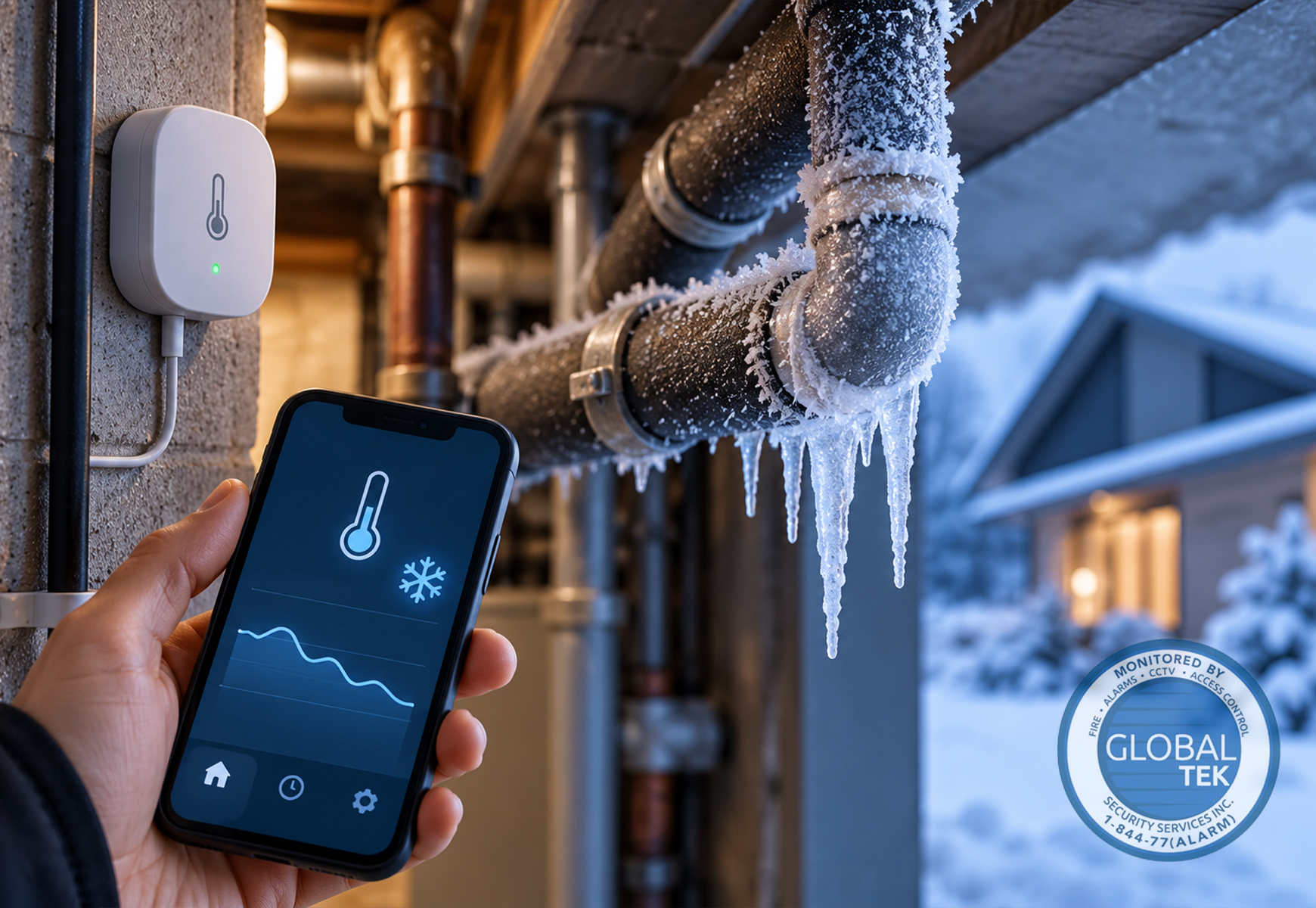

Every Canadian winter, thousands of property owners wake up to one of the most expensive surprises a home or business can face: a burst pipe. Water pours through ceilings, floods basements, soaks drywall and ruins flooring, furniture and inventory. The repairs can take weeks, the insurance process can take months and the stress can last much longer.
The frustrating part is that most frozen pipe disasters are preventable. Pipes rarely freeze without warning — the temperature inside the property drops first. The problem is that nobody is there to notice. That is exactly the gap that temperature monitoring fills. In this article, we explain how frozen pipes happen, how temperature monitoring works, and why it is one of the smartest investments you can make before winter arrives.
Why Pipes Freeze and Burst
Water expands when it freezes. When water inside a pipe turns to ice, it pushes against the pipe walls and builds up pressure between the ice blockage and the closed tap. Eventually, that pressure can split the pipe. Often, the real damage happens when the ice thaws — water suddenly flows through the crack and floods the area.
Pipes are most at risk when they are in:
-
Exterior walls with poor insulation
-
Unheated basements, crawl spaces and garages
-
Attics and ceiling spaces
-
Kitchen and bathroom cabinets on outside walls
-
Outdoor hose bibs and sprinkler lines
The Most Common Causes of Frozen Pipes
Frozen pipes usually happen when something goes wrong while nobody is watching. Common causes include:
-
Furnace failure in the middle of the night or while you are away
-
Power outages during a cold snap
-
Running out of fuel for oil or propane heating
-
Thermostats set too low to save energy while travelling
-
Vacant properties such as cottages, rental units or homes for sale
-
Businesses closed for holidays or long weekends
-
Extreme cold snaps that overwhelm poorly insulated areas
For snowbirds who spend the winter in warmer places, cottage owners and landlords with vacant units, the risk is even higher — a furnace can fail on day two of a three-month trip, and nobody would know until spring.
What Is Temperature Monitoring?
A temperature monitoring system uses small sensors placed in key areas of your property. These sensors continuously measure the temperature and are connected to your security system. When the temperature drops below a set point — well before pipes are in danger of freezing — the system sends an alert.
GlobalTek Security’s temperature devices track conditions in real time and alert you before pipes freeze or systems fail, helping prevent frozen and burst pipes, water damage from leaks and equipment failure due to temperature changes.
How the alerts work
When the temperature falls below your chosen threshold:
-
The sensor detects the drop and signals your security panel.
-
The monitoring station receives the alert — 24/7, even if you are asleep or travelling.
-
You and your emergency contacts are notified by phone, text or app.
-
Action is taken — a neighbour checks the furnace, a technician is called or you adjust the heat remotely.
Because the alert comes early, there is usually time to fix the problem before a single pipe freezes. Many systems can also alert you to high temperatures, which helps protect server rooms, freezers, coolers and sensitive equipment.
Where to Place Temperature Sensors
For the best protection, sensors should be placed where cold is most likely to show up first:
-
Near the main water line or water meter
-
In basements, crawl spaces and utility rooms
-
Near pipes in exterior walls
-
In bathrooms and kitchens on outside walls
-
In garages or workshops with plumbing
-
In mechanical rooms in commercial buildings
A professional assessment helps identify the most vulnerable areas of your property, so sensors are placed where they matter most.
Pair Temperature Monitoring With Flood Sensors
Temperature sensors warn you before pipes freeze. Flood sensors warn you the moment water is detected — whether from a burst pipe, a leaking water heater, an overflowing sump pump or a failed washing machine hose.
Together, they give you two layers of protection:
-
Early warning when temperatures drop
-
Immediate alert if water is already leaking
Some systems can also connect to an automatic water shut-off valve, stopping water flow as soon as a leak is detected.
Who Benefits Most From Temperature Monitoring?
-
Homeowners who travel in winter or are away for long periods
-
Snowbirds spending months outside of Canada
-
Cottage and vacation property owners
-
Landlords and property managers with rental or vacant units
-
Businesses that close for weekends or holidays
-
Churches, schools and community buildings that are not used every day
-
Restaurants and grocery stores with coolers and freezers
-
Families of seniors who want peace of mind that heat is working in a loved one’s home
Insurance and Peace of Mind
Water damage is one of the most common types of home insurance claims in Canada. Many home insurance policies also include conditions for vacant properties, such as requiring the heat to be maintained or the property to be checked regularly while you are away. It is always a good idea to review your policy with your insurance provider.
Some insurers may also offer discounts for homes and businesses with monitored safety devices, so it is worth asking your insurance provider what savings may be available.
Simple Tips to Prevent Frozen Pipes This Winter
Temperature monitoring works best alongside good winter habits:
-
Keep the heat on — even when you are away, avoid setting the thermostat too low.
-
Insulate exposed pipes in basements, garages and crawl spaces.
-
Disconnect garden hoses and shut off outdoor water lines before winter.
-
Seal drafts around windows, doors and where pipes enter the building.
-
Open cabinet doors under sinks on exterior walls during cold snaps.
-
Have your furnace serviced before winter starts.
-
Know where your main water shut-off is — and make sure family members do too.
-
Ask a trusted person to check your property if you will be away for a long time.
Frequently Asked Questions
At what temperature should a freeze alert be set?
Alerts are usually set well above freezing so there is enough time to respond before pipes are at risk. Your security provider can recommend the right setting for your property.
Can temperature sensors work during a power outage?
Sensors connected to a monitored security system with backup battery and a reliable communicator can continue sending alerts during an outage.
Do I need temperature monitoring if I’m home all winter?
Yes. A furnace can fail overnight while you sleep, and temperature monitoring also protects areas you do not check often, like basements and crawl spaces.
Can temperature monitoring protect my business?
Absolutely. It protects buildings closed over weekends and holidays, as well as server rooms, coolers and freezers.
Don’t Let Winter Catch You Off Guard
A burst pipe can cause serious damage in a short time. A temperature sensor costs a fraction of the price of a single water damage repair. GlobalTek Security offers temperature monitoring, flood sensors and complete life safety solutions for homes and businesses across Ontario.
Call +1-905-928-8564 or +1-844-772-5276, email info@globalteksecurity.ca, or request a free quote before the next cold snap.

