

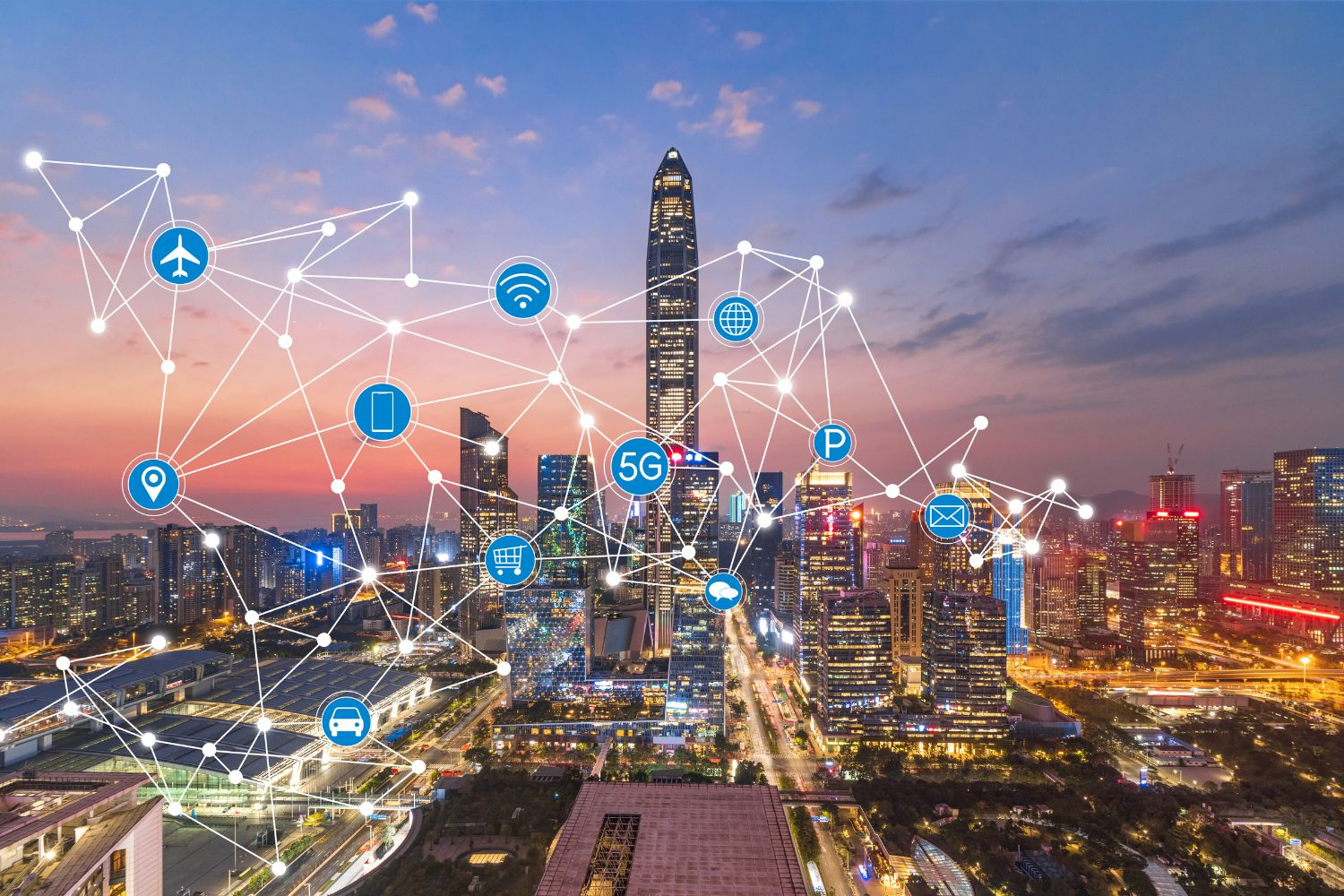
Smart City Market: Driving Sustainable Urban Development and Digital Innovation

Rapid urbanization, climate commitments, and breakthroughs in artificial intelligence are fundamentally reshaping how modern municipalities operate. Rather than simply installing isolated sensors, today’s urban planners are building federated, insight-driven ecosystems. As cities evolve into living data platforms, investments across the global Smart City Market are surging—with industry projections valuing the sector at well over $1.1 trillion to $2.7 trillion in 2026 and accelerating rapidly toward the next decade.
Breakthrough Technologies Powering Next-Gen Cities
The leap from basic automation to autonomous urban management is driven by a convergence of transformative technologies:
-
Agentic AI and Digital Twins: Digital twins act as the virtual "brain" of a municipality, continuously sensing real-world conditions and simulating infrastructure scenarios before costly physical changes are made. Paired with reasoning-capable Agentic AI, cities can autonomously optimize traffic grids, balance renewable energy loads, and schedule predictive maintenance at machine speed.
-
Sovereign Data Spaces and the Citiverse: To eliminate data silos between transit, utilities, and emergency services, cities are adopting sovereign data spaces—secure, interoperable frameworks that allow cross-agency information sharing while protecting citizen privacy. Meanwhile, metaverse-style virtual environments, known as the "Citiverse," are emerging to revolutionize civic participation and digital public services.
-
Smart Grids and IoT Expansion: Low-latency 5G connectivity and billions of connected IoT devices allow municipalities to deploy intelligent street lighting, SCADA-monitored water networks, and smart real estate asset management that dynamically adjusts HVAC and energy consumption based on real-time occupancy.
Global Regional Highlights and Recent Developments
Innovation and infrastructure spending are unfolding uniquely across major global hubs:
Asia-Pacific: Scale and Rapid DigitalizationAsia-Pacific remains a powerhouse of urban transformation. Massive state-backed infrastructure rollouts, ubiquitous 5G coverage, and AI-driven public governance continue to propel the China Smart City Market forward. Simultaneously, the India Smart City Market reached a major milestone in 2026: under India’s Smart Cities Mission, nearly 97% of over 8,000 planned projects have been completed, operationalizing Integrated Command and Control Centres (ICCCs) across all 100 mission cities and introducing the new market-linked Urban Challenge Fund. In East Asia, the Japan Smart City Market is pioneering human-centric "Society 5.0" initiatives, focusing heavily on disaster-resilient grids, robotics, and sustainable mobility for aging urban populations.
Europe: Sovereign Data and Green Mobility Backed by European Commission initiatives like the Data Spaces Support Centre, the Europe Smart City Market prioritizes decarbonization, interoperability, and citizen-centric design. Within the continent, the Germany Smart City Market leads in industrial IoT integration and smart energy grids—bolstered by major tech alliances like Siemens and NVIDIA collaborating on AI-driven building and infrastructure digital twins. The France Smart City Market continues to expand clean transit corridors and circular urban economies, while the Spain Smart City Market is making headlines as Barcelona hosts cutting-edge European CitiVerse pilots and smart port logistics. Across the Channel, the Uk Smart City Market is scaling open-data urban platforms, net-zero municipal zones, and AI-powered traffic management.
North America and the Middle East: Mega-Projects and Grid Modernization In North America, federal broadband spectrum repurposing, public-private partnerships, and aging infrastructure overhauls are accelerating growth in the Us Smart City Market, where smart utilities, EV charging corridors, and AI-enhanced public safety lead municipal budgets. Meanwhile, the Gcc Smart City Market represents some of the world's most ambitious greenfield urban development. Powered by economic diversification agendas in Saudi Arabia and the UAE, mega-developments are embedding renewable microgrids, autonomous transit, and cognitive city architectures directly into their foundations.
As cities worldwide transition from pilot projects to full-scale digital ecosystems, the synergy between AI analytics, sustainable infrastructure, and public-private collaboration will define the next era of urban prosperity.

