

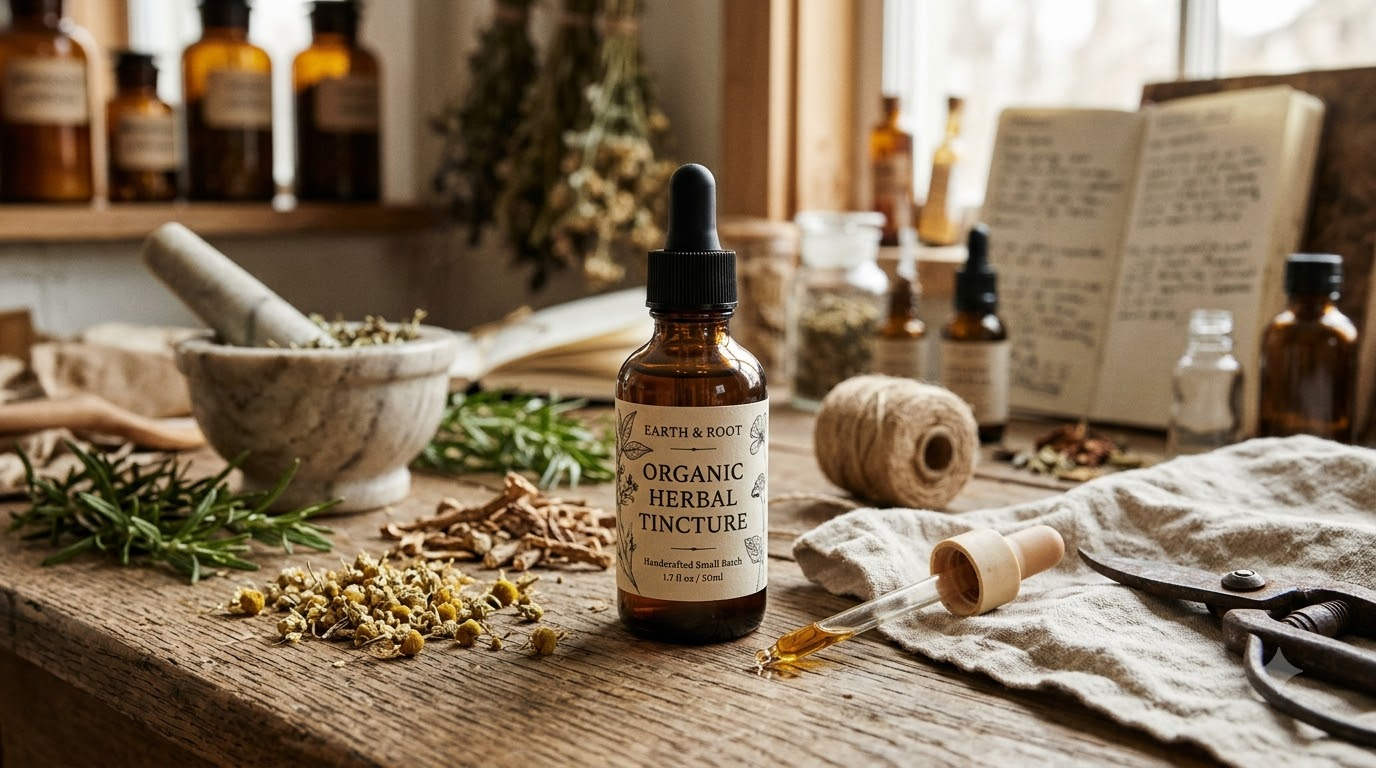
Organic Herbal Tinctures: How to Organise Your Routine and Avoid Common Use Mistakes

Adding a new product to a personal wellness routine can seem straightforward. You read the label, open the bottle, and follow the instructions. But when you use several herbal products, it can become difficult to remember which ingredients you are taking, when you started using them, and whether different products contain overlapping botanicals.
If you are considering organic herbal tinctures as part of a more organised wellness routine, it is worth establishing a simple system before introducing a new product. Good organisation helps you keep track of ingredients, product directions, storage requirements, and questions that may need professional advice.
Herbal products are not automatically suitable for everyone because they are plant-derived or described as natural. Some herbs may interact with medicines, affect existing health conditions, or be unsuitable during pregnancy or breastfeeding. This guide focuses on responsible product organisation rather than recommending treatments or doses.
1. Understand What a Herbal Tincture Is
A tincture is a liquid preparation made by extracting constituents from plant material into a liquid, often alcohol or another solvent. The exact ingredients and extraction method depend on the product.
A tincture may identify:
-
The botanical or common plant name
-
The plant part used
-
The liquid base or extraction medium
-
The concentration or extraction ratio, where provided
-
Additional ingredients
-
Directions for use
Not all tinctures are prepared in the same way. Two products made from the same plant may have different extraction methods or concentrations.
This is why it is important to read the specific product label instead of assuming that products with similar names are interchangeable.
2. Build an Ingredient Record Before Adding Products
One of the easiest ways to lose track of a wellness routine is to rely on memory.
If you use more than one herbal product, create a simple record. This can be a notebook, spreadsheet, or document stored somewhere you can access when needed.
Include the following information:
|
Record field |
What to write down |
|
Product name |
The full name shown on the bottle |
|
Botanical name |
The plant name, if provided |
|
Plant part |
Root, leaf, flower, seed, or other part, if stated |
|
Other ingredients |
Solvents, carriers, preservatives, or additional botanicals |
|
Product directions |
The manufacturer's stated instructions |
|
Date started |
When you first began using the product |
|
Batch or lot details |
Information printed on the packaging |
|
Questions |
Anything you need to confirm with the manufacturer or a healthcare professional |
This record can help you avoid confusion when products have similar names or when you purchase a new bottle.
Keep the original packaging or take a clear photograph of the label so you can refer to the complete ingredient information later.
3. Check for Overlapping Botanicals
Different products can contain the same botanical ingredient, even when their names and intended uses appear unrelated.
For example, one tincture may contain a single herb, while a blended product may include that same herb alongside several others.
Before adding a new product:
-
Compare its complete ingredient list with the products you already use.
-
Look for repeated botanical names.
-
Check whether different products contain related ingredients.
-
Note any unfamiliar ingredients.
-
Ask a qualified healthcare professional to review potential interactions when relevant.
Do not assume that using two products separately means their ingredients cannot overlap.
This is particularly important if you take prescription medicines, over-the-counter medicines, or other supplements. A pharmacist or healthcare professional can help assess potential interactions using the exact product labels.
4. Do Not Treat “Natural” as a Safety Guarantee
Plant-based products can contain biologically active substances. Their natural origin does not guarantee that they are harmless or appropriate for every person.
Extra care is important if you:
-
Take prescription or non-prescription medication
-
Have a diagnosed health condition
-
Are pregnant or breastfeeding
-
Are preparing for surgery
-
Have a known plant allergy
-
Are considering giving a product to a child
Some herbal ingredients may interact with medicines or affect how the body responds to them. The risk depends on the specific plant, preparation, amount, and individual circumstances.
Do not start, stop, or replace prescribed treatment with an herbal product without discussing it with a qualified healthcare professional.
5. Read the Label Beyond the Product Name
A product name may identify the main botanical, but the remaining label details can be just as important.
Check these areas:
Botanical identity: Look for the plant's full name, ideally including its botanical name when provided.
Plant part: The root, leaf, flower, or seed may be used in different preparations. Do not assume that all parts of a plant are interchangeable.
Extraction information: Check whether the manufacturer explains the solvent, extraction ratio, or concentration.
Additional ingredients: Look for alcohol, glycerine, water, flavourings, or other listed components.
Directions: Read the manufacturer's stated directions and warnings. Do not exceed them.
Batch and expiry details: Check that the product is identifiable and that its packaging provides relevant date information.
If the label does not answer an important question, contact the manufacturer. Avoid guessing based on another brand's product.
6. Create a Routine That Is Easy to Review
If a healthcare professional has confirmed that a particular product is appropriate for you, keep its use organised.
A simple record can include:
-
The product's full name
-
The date you started using it
-
The directions provided by the manufacturer
-
Any relevant professional guidance
-
Any unexpected reactions or concerns
-
The date you stopped using it, if applicable
This information can be useful when discussing your routine with a pharmacist or healthcare professional.
Do not create your own dose schedule by combining instructions from different products. Products can vary in concentration and formulation. Follow the specific label and professional guidance relevant to your circumstances.
7. Store Tinctures Carefully
Storage is another part of responsible product management. Liquid herbal products may have different storage requirements depending on their ingredients and packaging.
Check the label for instructions about:
-
Recommended storage temperature
-
Protection from light
-
Whether refrigeration is required
-
How tightly the bottle should be closed
-
Use after opening
-
Expiry or best-before information
Keep bottles away from direct sunlight and heat when the manufacturer advises it.
Store all herbal products out of reach of children and pets. Use the original bottle so the ingredient information and warnings remain available.
If a bottle leaks, the seal is damaged, or the product changes unexpectedly in appearance or smell, stop using it and contact the manufacturer for guidance.
8. Questions to Ask Before Buying a New Tincture
A product description may not answer every question. Asking the right questions can help you assess whether the available information is sufficient.
|
Question |
Why it matters |
|
What is the botanical name? |
Helps identify the exact plant |
|
Which plant part is used? |
Different plant parts may have different properties |
|
What is the extraction medium? |
Helps clarify the liquid preparation |
|
Are there additional ingredients? |
Important for allergies and ingredient preferences |
|
Is an extraction ratio provided? |
Adds context about the preparation |
|
Are sourcing or organic claims explained? |
Helps distinguish specific standards from broad marketing language |
|
What are the storage instructions? |
Helps you handle the product appropriately |
|
Are there product warnings? |
Highlights situations requiring extra care |
When considering organic herbal tinctures, look for specific information about organic claims. Do not assume that a product is certified simply because the word organic appears in its description. Check whether certification is identified and what it covers.
9. A Step-by-Step System for Managing Multiple Products
If you have several bottles at home, use this process to keep them organised.
-
Gather your current products. Place the bottles together so you can review their labels.
-
Record every ingredient. Include individual botanicals and other listed ingredients.
-
Identify overlaps. Highlight any repeated herbs or unfamiliar combinations.
-
Record product directions. Copy the instructions from each label without changing them.
-
Check with a professional when needed. Share the full ingredient lists with a pharmacist or healthcare professional, especially if you take medicines or have a medical condition.
-
Keep original packaging. Preserve batch details, warnings, and expiry information.
-
Review your record regularly. Update it when you finish, replace, or discontinue a product.
This system is not a substitute for medical advice. It is an organisational tool that makes the information easier to review.
10. Two Examples of Better Product Organisation
Example 1: A person using several herbal products
Priya has two herbal products at home and is considering adding a third. The product names are different, so she initially assumes their ingredients will also be different.
Before purchasing, she compares the ingredient lists and notices that one botanical appears in more than one product. She records the overlap and asks her pharmacist to review the products alongside her medication list.
This helps her avoid making a decision based only on the front labels.
Example 2: Someone who forgets when a bottle was opened
Michael has several bottles stored in a cupboard. He cannot remember when he opened one or where its storage instructions are written.
He starts keeping a simple record of product names, opening dates, batch details, and label directions. He also keeps the original packaging together with the bottles.
The system makes it easier to check product information rather than relying on memory.
11. Illustrative Case Study: Making a Wellness Shelf Easier to Manage
The following is a hypothetical example, not a real customer result.
Sophie enjoys exploring plant-based products but has gradually accumulated several bottles. Some are single-herb preparations, while others contain blends. She finds it difficult to remember the ingredients and begins considering another product.
Instead of purchasing immediately, she creates a product inventory. She records the botanical names, plant parts, additional ingredients, directions, and storage instructions. She then shares the information with a healthcare professional because she also takes medication.
The review helps her identify questions that need answering before she makes any changes. Her new system also makes it easier to keep track of expiry information and product details.
The main improvement is not a claimed health outcome. It is having a clearer record and a more responsible process for evaluating products.
12. Common Mistakes to Avoid
-
Assuming all tinctures use the same extraction method
-
Choosing a product based only on its front label
-
Ignoring the full ingredient list
-
Combining products without checking overlapping botanicals
-
Assuming natural ingredients are automatically safe
-
Replacing prescribed treatment with herbal products
-
Guessing how much to use based on another product
-
Discarding the packaging before recording important details
-
Storing bottles without checking the manufacturer's directions
A consistent record and careful label review can help prevent avoidable confusion.
Frequently Asked Questions
1. What are organic herbal tinctures?
They are liquid herbal preparations marketed with organic ingredient or sourcing claims. The exact plant ingredients, extraction method, and certification status depend on the individual product. Check the label and product information for details.
2. Are all herbal tinctures alcohol-based?
No. Some tinctures use alcohol as an extraction medium, while other liquid preparations may use different bases. Check the specific ingredient list and product description.
3. Can I use more than one herbal tincture at a time?
Do not assume that combining products is appropriate. Different herbs may overlap or interact with medicines. Ask a qualified healthcare professional to review the complete ingredient lists before combining products.
4. How should I store herbal tinctures?
Follow the manufacturer's instructions. Storage requirements can differ according to the formulation and packaging. Keep bottles properly closed and out of reach of children and pets.
5. Does the word organic mean a tincture is certified?
Not necessarily. Look for the named certification body or other specific information explaining the claim. The word alone does not establish that the finished product is certified.
6. Should I consult a healthcare professional before using a tincture?
It is particularly important if you take medication, have a health condition, are pregnant or breastfeeding, have an upcoming surgery, or are considering a product for a child. A pharmacist or healthcare professional can review the specific ingredients and your circumstances.
Conclusion
A responsible herbal product routine begins with clear information and good organisation. Read the full label, record the ingredients, check for overlapping botanicals, and follow the manufacturer's storage instructions. If you take medication or have a relevant health consideration, seek professional guidance before adding a new product.
When evaluating organic herbal tinctures, look beyond the product name. Botanical identity, plant part, extraction details, additional ingredients, sourcing information, and certification claims all help you understand what you are considering.
To explore the brand's range, visit Soul Seed Solutions. Keeping accurate product records and asking questions when information is unclear can make your purchasing decisions more informed.

