

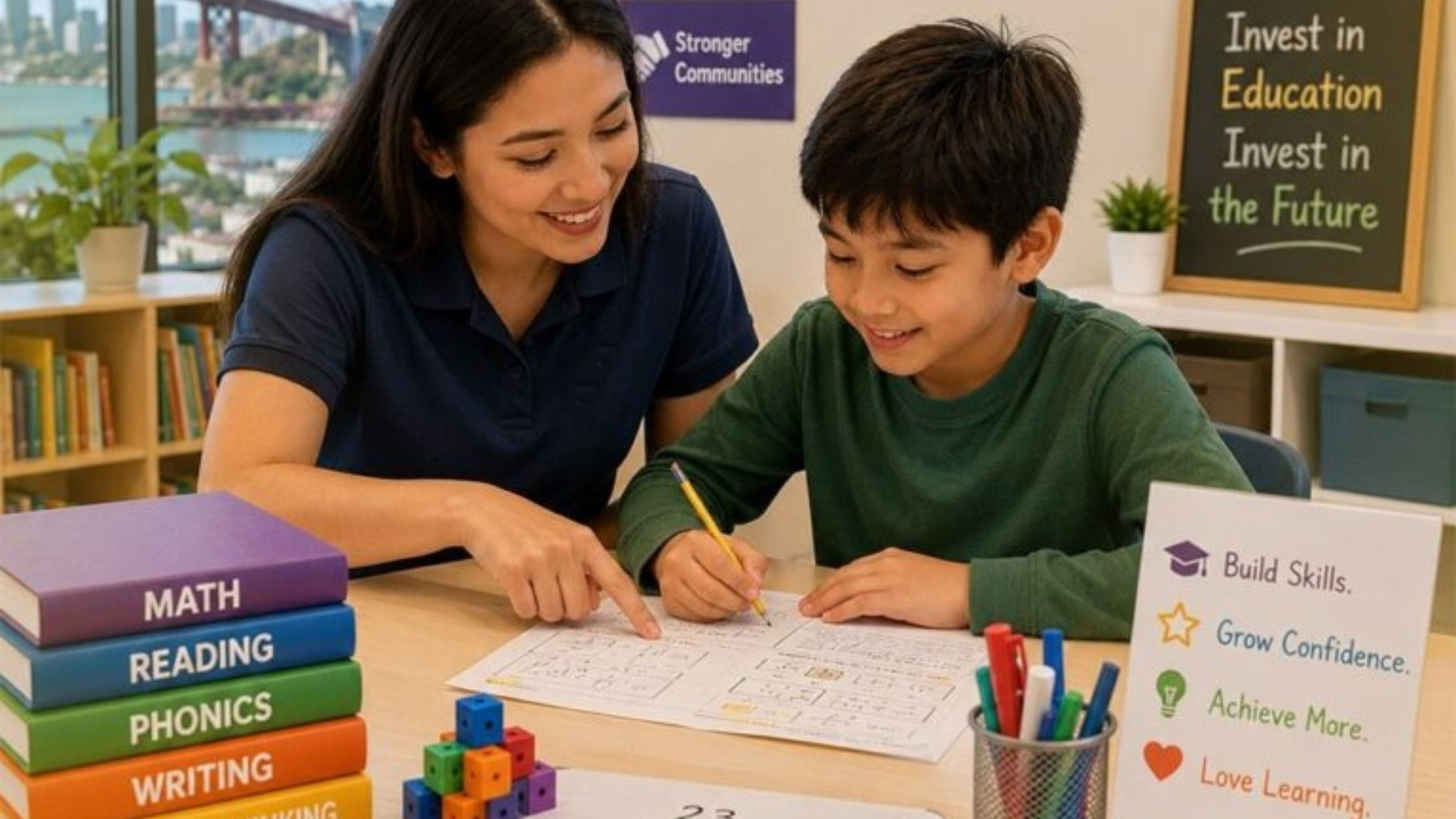

A student can solve ten problems correctly and still feel lost when the eleventh looks different. The steps may work when they appear in a familiar order, but changing the numbers or wording can make the whole process confusing again. This often signals a need for something beyond extra practice. A math tutor in Castro Valley can help students build the reasoning behind each solution so they can use what they learn in unfamiliar situations.
For parents searching for a math tutor in Castro Valley, the bigger question is not simply whether their child can complete homework. Can the student explain why a method works? Can they spot an error without waiting for someone to point it out? Can they connect a new concept to something they already know? These abilities help turn classroom lessons into lasting mathematical understanding.
Why Is Getting the Right Answer Only Part of Learning Math?
Correct answers matter, but they do not always reveal how much a student understands. A child might remember a formula or copy a demonstrated process without knowing why it works. That approach can break down when a teacher introduces a problem in a new format.
Consider fractions. A student may learn to add fractions with matching denominators but struggle when the denominators differ. The issue is not necessarily a lack of effort. The student may need to understand what denominators represent and why fractions sometimes require a common denominator before they can be added.
This distinction applies throughout mathematics. Multiplication supports later work with fractions, fractions help prepare students for ratios, and algebra depends on a solid grasp of arithmetic. When one concept remains unclear, later lessons can become harder than expected.
Effective instruction addresses these connections instead of treating every incorrect answer as an isolated mistake.
How Can Students Learn to Explain Their Thinking?
One useful change is to spend less time asking, "What answer did you get?" and more time asking, "How did you get there?"
Explaining a solution encourages students to organize their thoughts and identify the purpose of each step. If they cannot describe their approach, that gives the tutor a starting point for further instruction. A visual model, a simpler example, or a comparison between two methods may help make the concept clearer.
Students should also have time to solve problems independently after receiving guidance. Watching someone demonstrate a solution creates familiarity, but working through a similar problem alone tests whether the skill has taken hold.
A productive learning session can therefore move through three stages: the tutor explains a concept, the student practices it with support, and the student applies it independently. The amount of help can gradually decrease as the student becomes more capable.
This process also changes how students view mistakes. Instead of seeing an incorrect answer as proof that they cannot do math, they can learn to identify the step that needs attention and try another approach.
Why Are Foundational Skills Still a Concern?
National assessment results show why math learning deserves careful attention. According to the National Center for Education Statistics' 2024 mathematics assessment, the average fourth-grade math score increased by two points compared with 2022 but remained three points below the 2019 level. These national results do not describe every student, but they highlight the continued importance of helping children develop dependable math skills.
Foundational gaps can be easy to overlook because students often move into new grade levels while still working through older concepts. A learner may appear to struggle with algebra when the real difficulty involves negative numbers, fractions, or basic operations.
Identifying these gaps allows instruction to focus on the skills a student needs next. It also prevents practice from becoming a cycle of repeating difficult work without addressing the cause of the problem.
What Should Parents Look for in Math Support?
Parents can start by asking how a tutoring program identifies a student's needs. Does it assess current skills before setting learning goals? Can instruction adjust when a concept proves difficult? Does the student receive opportunities to explain answers and work through problems independently?
Progress should involve more than finishing assignments faster. Look for signs such as fewer repeated errors, clearer explanations, improved problem-solving strategies, and greater willingness to attempt unfamiliar questions. Grades and test results are useful measures, but they are only part of the picture.
It is also important to match instruction to the student's needs. One child may require additional practice with arithmetic, while another may need help applying formulas or interpreting word problems. A structured approach gives each learner an opportunity to address specific weaknesses while continuing to develop new skills.
How Can Better Math Habits Support Long-Term Progress?
The most valuable outcome of math support is not dependence on a tutor. It is the ability to approach a difficult problem with a plan, recognize when an answer does not make sense, and keep working without immediately giving up.
For families considering a math tutor in Castro Valley, PEL Learning Centers offers structured academic support that can help students strengthen mathematical foundations through guided learning and practice. The aim is to help children move beyond memorized steps and develop the confidence to apply their skills on their own.
When students learn to explain their thinking, each solved problem becomes more than a completed exercise. It becomes evidence that they can reason through a challenge, learn from mistakes, and take the next step with greater independence. That is the kind of progress that can continue long after a worksheet is put away.
“We franchise. Check us out at https://pelfranchise.com/ ".

