

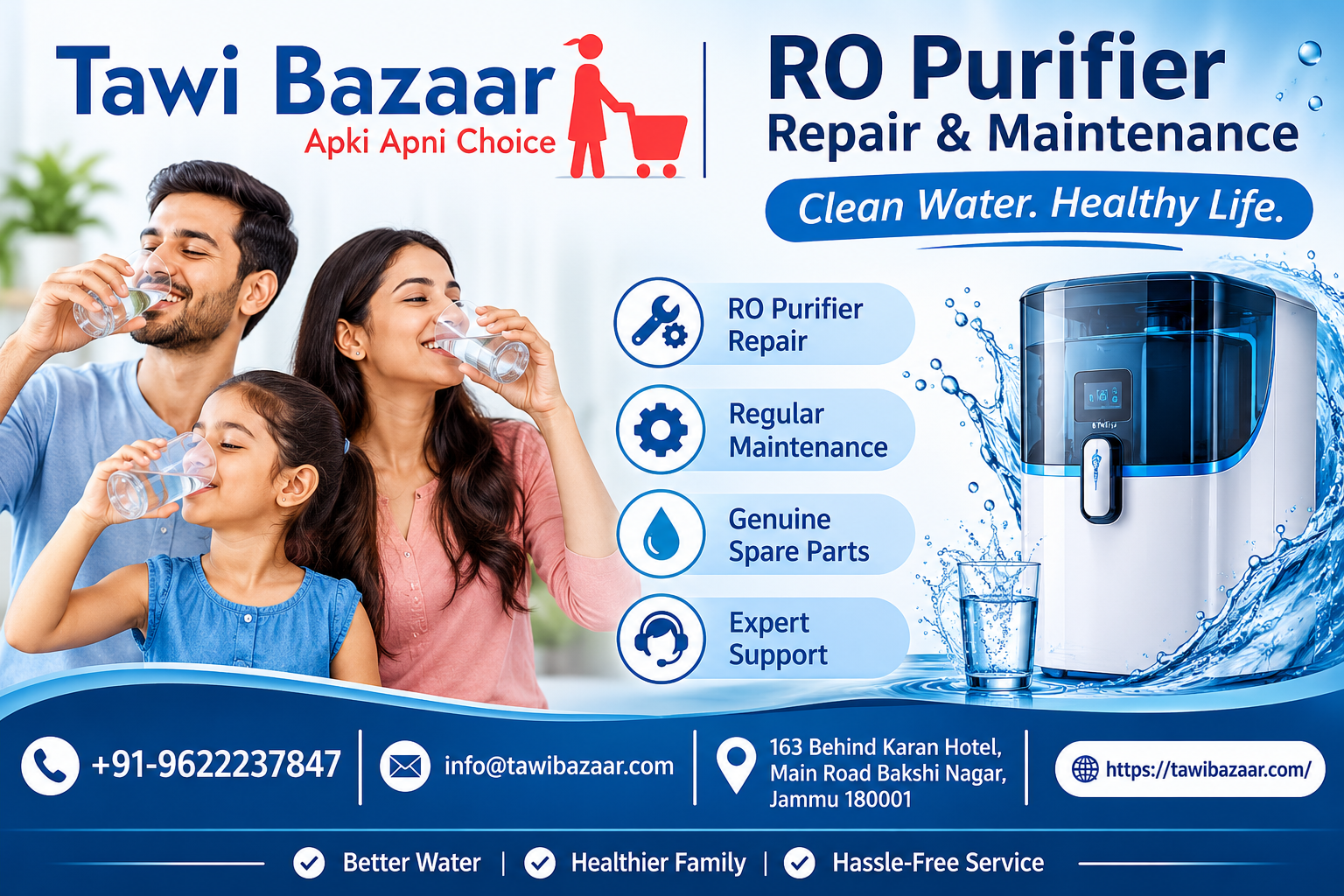
Water Purifier Care: Smart Tips and Better Maintenance Habits for Every Household

A water purifier is often treated as an appliance that can be switched on and forgotten. In reality, it needs regular attention, just like other household equipment. Filters collect particles, membranes operate under specific conditions, storage tanks need hygiene checks, and the system's performance can change over time.
As households become more conscious of drinking-water quality and responsible water use, maintaining a purifier properly is an important everyday habit. Good maintenance is not only about replacing filters; it also involves understanding the equipment, following manufacturer instructions and avoiding unnecessary water wastage.
Here are practical ways to care for a water purifier and manage household drinking-water needs more effectively.
1. Understand Your Purifier Before Using It
The first step towards better maintenance is knowing what type of system you have.
A household may use an RO, UV, UF, gravity-based or combined purification system. Each has different components and maintenance requirements.
For example:
-
RO systems use a membrane to reduce many dissolved substances.
-
UV systems use ultraviolet light to inactivate susceptible microorganisms.
-
UF systems use a membrane to filter suspended particles and certain microorganisms.
-
Gravity-based systems use filtration methods that do not necessarily require electricity.
Read the product manual and note the model number, filter configuration, installation requirements and recommended service schedule.
Understanding the system makes it easier to identify which maintenance instructions apply to your particular unit.
2. Keep a Record of Filter Replacement
One of the simplest ways to manage purifier maintenance is to maintain a service record.
Instead of relying on memory, record:
-
Purchase or installation date.
-
Date of the last filter replacement.
-
Membrane inspection or replacement details.
-
Service visits.
-
Any unusual changes in water flow or taste.
-
The model and replacement-part details.
Filter life can vary according to water quality, usage and product design. Therefore, do not assume that every filter needs replacement at exactly the same interval.
Follow the manufacturer's instructions and ask for an inspection if the purifier's performance changes unexpectedly.
3. Pay Attention to Changes in Performance
Small changes can provide useful clues about the condition of a water purifier.
Watch for:
-
Water dispensing more slowly than usual.
-
Unusual pump noise or vibration.
-
Water leakage near the unit.
-
A change in the taste or smell of water.
-
The storage tank taking longer to fill.
-
Warning indicators, if provided by the model.
These signs do not always indicate the same fault. For example, low water flow could be related to the incoming supply, filters, membrane or pump.
Avoid guessing the cause or opening the internal components without suitable knowledge. Arrange a professional inspection when the issue continues.
4. Build Better Water-Saving Habits
Water conservation is an important part of responsible household water management.
Some RO systems produce reject water during the purification process. The amount depends on the system design, incoming water quality, pressure and operating conditions.
Rather than allowing suitable reject water to go unused, households can explore appropriate non-drinking uses where permitted and safe.
Possible uses may include:
-
Cleaning floors.
-
Washing outdoor areas.
-
Pre-rinsing suitable household items.
-
Other non-consumption purposes that do not create hygiene risks.
Do not use reject water for drinking or cooking. Its suitability for other purposes depends on its composition and the intended use. Avoid using it on plants or surfaces if its quality may cause damage.
Also consider simple habits such as fixing leaking taps, collecting only the drinking water required and avoiding unnecessary purifier operation.
5. Maintain Clean Storage and Surrounding Areas
A purifier's external cleanliness and storage conditions are also important.
Follow these practical habits:
Keep the Area Dry
Wipe accidental spills around the unit. Moisture near electrical connections should be treated carefully.
Avoid Dust Accumulation
Clean the external surface according to the manufacturer's instructions. Do not allow cleaning liquids to enter openings or electrical sections.
Follow Tank Cleaning Guidance
If the manufacturer provides instructions for cleaning or sanitising the storage tank, follow them carefully. Do not use household chemicals unless specifically permitted by the product instructions.
Check the Dispensing Area
Keep the tap or dispensing point clean and avoid touching it with unwashed hands or contaminated containers.
6. Choose Replacement Parts Carefully
When a filter or component needs replacement, compatibility matters.
Before purchasing a replacement, confirm:
-
Purifier brand.
-
Exact model number.
-
Component type.
-
Compatible part specification.
-
Manufacturer or supplier guidance.
-
Warranty implications of the replacement.
A part that looks similar may not be suitable for your model.
Tawi Bazaar lists water purification products and RO-related spare-parts categories. Customers can check product information and ask the business about the availability of compatible components.
7. Understand the Value of Professional Inspection
Some maintenance tasks are suitable for basic user checks, while others require a qualified technician.
Professional inspection may be appropriate when:
-
The purifier has a persistent leak.
-
The unit does not start.
-
The pump produces unusual sounds.
-
Water flow remains low after basic external checks.
-
A filter housing or membrane requires replacement.
-
The water's taste, smell or appearance changes unexpectedly.
A technician can examine the model-specific components and help identify the cause rather than relying on assumptions.
8. What to Consider When Buying a New System
Maintenance habits should also influence the buying decision.
Before selecting a new RO water purifier, consider the availability of replacement filters, the manufacturer's service instructions, product warranty and the accessibility of compatible spare parts.
A system that matches the household's water quality and can be maintained properly is often a more practical choice than one selected only for its feature list.
Tawi Bazaar's website provides access to different purifier categories and products, along with RO-related spare-parts listings. Customers can compare available options and review product details before making a decision.
Frequently Asked Questions
1. What is the best way to maintain a water purifier?
Follow the manufacturer's service schedule, keep records of filter replacements, maintain external cleanliness and monitor changes in water flow, taste or sound. Arrange an inspection when the system shows persistent problems.
2. How can I reduce water wastage from an RO purifier?
Understand the reject-water output of your particular system and explore safe, appropriate non-drinking uses where suitable. Do not use reject water for drinking or cooking. Also avoid unnecessary operation and repair leaks promptly.
3. Can I clean my water purifier at home?
You can generally clean external surfaces according to the manufacturer's instructions. Internal components, storage-tank sanitisation and filter replacement should follow the product manual or be handled by an appropriate service professional.
4. Why should I maintain a filter replacement record?
A record helps you track servicing, identify overdue maintenance and understand how the purifier has performed over time. It is also useful when discussing the system with a technician or checking warranty requirements.
5. Are all RO filters interchangeable?
No. Filters can differ in size, connection type, specifications and compatibility. Always confirm the exact purifier model and the replacement component required before purchasing.
6. When should I arrange a professional purifier inspection?
Arrange an inspection when you notice persistent leakage, unusual noise, low water flow, a power issue or an unexpected change in water quality. Internal repairs should not be attempted without suitable training.
7. Does a new water purifier still need regular maintenance?
Yes. A new purifier also has filters and other components that operate according to the manufacturer's specifications. Following the recommended care schedule from the beginning can help you monitor its condition and identify issues early.
Conclusion
Good water purifier care is a combination of informed use, timely maintenance, responsible water management and attention to performance changes. Simple habits such as maintaining service records, checking for leaks and following replacement instructions can make household purifier management easier.
Choose a system suited to your water quality, understand its maintenance requirements and seek professional assistance when needed.
For water purification products, RO spare parts and product enquiries, explore Tawi Bazaar.
Tawi Bazaar – Apki Apni Choice
Website: https://tawibazaar.com/
Phone: +91-9622237847
Email: info@tawibazaar.com
Address: 163 Behind Karan Hotel, Main Road Bakshi Nagar, Jammu 180001

