

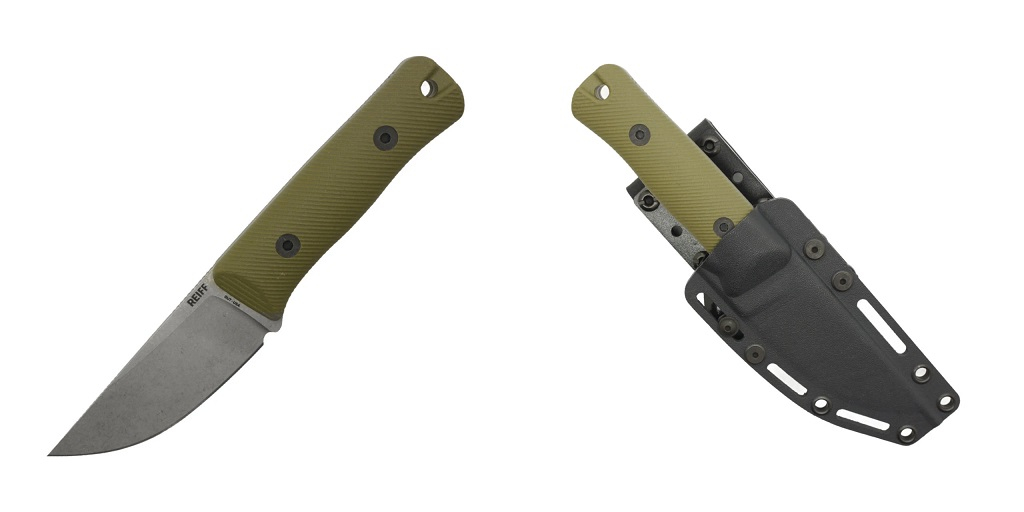

You want a bushcraft or a survival knife with a stout build and a full-tang construction. You want a skinner with a swept blade and plenty of belly for making long, arcing, sweeping cuts that suit the profile well to the task its name suggests.
But what do you want in a fishing knife? That ultimately depends on what you will use it for, but here are a few things that drive value, each of which should be determined by the type of fishing knife you are looking for.
Corrosion-Resistance
Whether you are primarily a sweetwater or a saltwater angler will determine just how critical it is that fishing knives exhibit a degree of corrosion resistance, but rest assured, a corrosion resistant knife is valuable nonetheless.
That being said, while any steel will rust if you give it the opportunity after introducing moisture (regardless of what you may have read about steel alloys) it is the case that marine environments are much harsher on steel.
In other words, if you frequently fish saltwater or spend a lot of time on a boat (especially on the ocean or in brackish environments) a knife made with a higher-end stainless blade, such as 14C28N or MagnaCut is a great option.
Of course, these are just two out of literally dozens. There are many others; what you should look for as a general rule is a knife blade that contains more chromium or even a smidge of nitrogen, as both can help prevent corrosion.
A Thin, Flexible Blade
If you are in the market for fishing knives that will not just be used for utility, but for processing, specifically fileting, then the knife profile you want is called a filet knife, but it isn’t just about the shape of the blade, it’s about the temper of the steel.
A filet knife, which is used for carving the filet off both sides of a fish, has a long, thin (and this part is critical) flexible blade, which can bend around the spine and ribs of the fish’s rack to effectively remove meat.
Even if you have a long, thin blade, it will certainly frustrate you if the blade is not flexible enough to effectively carve the filet off the rack, so make sure you know what you’re getting.
Some Even Float
While this is by no means a common feature among fishing knives, and should not be considered a dealbreaker, it is also the case that some fishing knives, such as select Mora knives, are made with cork handles and float if they are knocked overboard. In a knife that might be carried on a boat, or even on a kayak or canoe, it should be self-evident why this is a potentially valuable feature.
Other Features
In addition to what has been covered here so far, there are some other features that you might consider value drivers in fishing knives.
For one thing, a knife made with high-end synthetic scales will resist rot and be easier to clean. If the scales are overmolded or rubberized, that will improve grip, control and safety, even when your hands are covered with fish slime or blood or are otherwise wet.
Another good feature to look for is a knife that contains a scaler, or which has a serrated spine that can be used for that application, as some anglers prefer to scale their fish and pan-dress them before cooking them whole, rather than fileting them.
Where to Shop a Dedicated Collection of Fishing Knives
Want to see what the market bears as far as fishing knives are concerned? The first place you should take a look is The Knife Connection. They represent the top brands and also carry a wide range of hunting, survival, bushcraft, fishing knives, and more, among many other tools. Check.
For more informtaion About Bradford Guardian 3 and Smith And Sons Knives please visit: The Knife Connection.

