

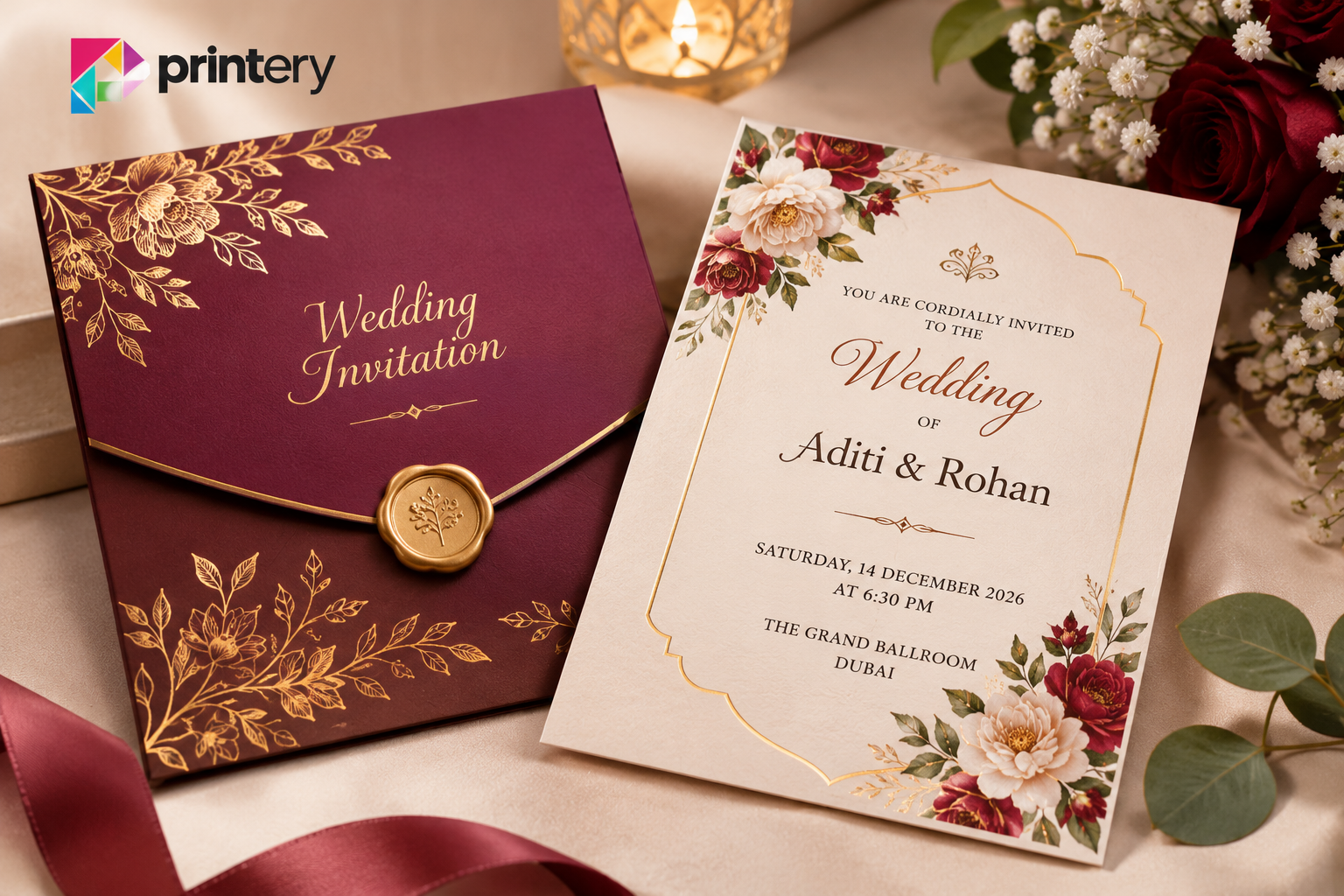
How Can Thoughtfully Designed Wedding Invitations Set the Mood for a Memorable Celebration?

A wedding celebration begins long before the actual ceremony. From selecting the venue and choosing outfits to planning decorations and guest arrangements, every detail contributes to the overall experience. Among these preparations, wedding invitations printing plays an important role because invitations introduce guests to the style and atmosphere of the occasion. A carefully designed invitation communicates essential event information while offering a glimpse of the couple's personality, cultural traditions, and celebration theme.
Why Are Wedding Invitations Important for a Celebration?
Wedding invitations are more than information cards. They serve as the first formal communication between the couple and their guests.
A thoughtfully prepared invitation can:
-
Announce the wedding date and location.
-
Communicate the celebration's theme.
-
Introduce the couple's preferred visual style.
-
Share important event details.
-
Create excitement among invited guests.
The design also helps guests understand whether the celebration is traditional, contemporary, intimate, formal, or destination-based.
What Information Should a Wedding Invitation Include?
An invitation should be visually appealing without making important details difficult to find.
The essential information generally includes:
-
Names of the couple.
-
Names of the hosts, where applicable.
-
Wedding date and day.
-
Ceremony timing.
-
Venue name and complete address.
-
Reception details, if separate.
-
RSVP instructions.
-
Dress code, if required.
For celebrations involving multiple functions, additional inserts can provide information about mehendi, sangeet, haldi, reception, or other events.
Keeping the layout organised helps guests understand the schedule without searching through decorative text.
Which Wedding Invitation Styles Are Popular?
Wedding invitation styles can vary according to personal preferences, cultural traditions, and celebration themes.
1. Traditional Wedding Invitations
Traditional designs may feature ornamental borders, floral patterns, religious motifs, and classic typography. Rich colours such as maroon, red, gold, and cream are commonly selected for this style.
2. Minimalist Invitations
Minimal designs focus on clean layouts, simple typography, limited colours, and carefully balanced spacing.
3. Floral Invitations
Floral artwork can create a romantic appearance through illustrated flowers, botanical patterns, and delicate colour combinations.
4. Luxury Invitations
These may incorporate textured paper, foil stamping, embossing, layered cards, and decorative envelopes.
5. Contemporary Invitations
Modern layouts may feature geometric patterns, unusual typography, illustrations, and creative arrangements.
The most suitable design is one that reflects the couple's celebration rather than following trends without considering personal preferences.
How Does Paper Selection Affect Wedding Invitation Printing?
Paper is one of the most noticeable physical elements of a printed invitation. Its texture, thickness, finish, and colour can influence both appearance and readability.
Some commonly considered options include:
-
Matte paper: Provides a subtle appearance with limited surface reflection.
-
Textured paper: Adds a tactile element and can complement traditional designs.
-
Glossy paper: Offers a smooth surface with a reflective finish.
-
Cotton paper: Can provide a soft and distinctive feel.
-
Kraft paper: Works well with rustic and natural invitation themes.
-
Premium cardstock: Offers additional thickness and structure.
Paper selection should be based on the artwork, printing method, finishing requirements, and overall budget.
Which Printing Techniques Can Enhance Wedding Invitations?
Printing techniques can add character to invitation designs and help highlight important details.
Digital printing: Suitable for detailed artwork, colourful layouts, and smaller quantities.
Offset printing: Can be considered for larger print runs where consistent reproduction is important.
Foil stamping: Adds metallic accents to names, borders, or decorative elements.
Embossing: Creates raised impressions that can be felt on the paper surface.
Debossing: Produces recessed impressions for a subtle textured effect.
Die-cutting: Allows invitations to have custom shapes and decorative edges.
Not every invitation needs multiple finishing techniques. Selecting a few appropriate details often creates a more balanced result.
How Can Wedding Invitations Reflect Cultural Traditions?
Indian weddings often involve several ceremonies, regional customs, and family traditions. Invitations can incorporate these elements through illustrations, motifs, colour combinations, and language choices.
For example, a traditional celebration might feature paisley artwork, floral borders, or cultural symbols. A contemporary wedding could use a minimal design with subtle references to the couple's heritage.
Bilingual invitations are also useful when guests speak different languages. Important information can be presented in Hindi, English, or another preferred language while maintaining a consistent layout.
The objective is to celebrate cultural identity without overcrowding the design.
Should You Choose Printed or Digital Wedding Invitations?
Both formats serve different purposes.
Printed invitations provide a physical keepsake and allow greater use of paper textures, special finishes, and decorative packaging.
Digital invitations are convenient for sharing through messaging platforms and email. They can also be useful for sending updates or reminders.
Some couples prefer a combination. Printed invitations can be sent to close family and guests, while digital versions provide convenient communication for additional details.
What Should You Check Before Finalising Wedding Invitation Printing?
Printing mistakes can affect the appearance and usefulness of an invitation. Reviewing the artwork before production is therefore essential.
Check the following:
-
Spelling of all names.
-
Wedding date and ceremony timing.
-
Venue address and contact information.
-
Font size and readability.
-
Colour accuracy.
-
Paper size and quality.
-
Envelope dimensions.
-
Quantity required.
Always review a final proof before approving the complete print run. A physical sample is especially helpful when the invitation includes special finishes or multiple layers.
How Early Should Wedding Invitations Be Prepared?
Wedding invitation planning should begin once the date, venue, and main event details are reasonably confirmed.
Allow time for concept development, wording, artwork approval, sample printing, production, and delivery. Invitations for destination weddings or celebrations involving guests travelling from different cities may need to be shared earlier.
Preparing a guest list and estimating the required quantity also helps avoid last-minute printing decisions.
Frequently Asked Questions
1. What is included in wedding invitation printing?
It generally includes the design preparation, paper selection, printing, finishing, cutting, and production of invitation cards and related inserts.
2. Which paper is suitable for wedding invitations?
Cardstock, textured paper, matte paper, cotton paper, and other premium paper stocks can be selected according to the design.
3. Can wedding invitations be customised?
Yes. Names, colours, illustrations, typography, layouts, wording, and finishing options can be customised.
4. What is foil stamping in wedding invitations?
It is a finishing technique that applies metallic foil to selected areas, such as names, borders, or decorative elements.
5. How many invitation cards should be printed?
The quantity depends on the guest list, family requirements, and the number of households receiving invitations.
6. Are bilingual wedding invitations possible?
Yes. Invitations can include two or more languages, provided the layout remains clear and readable.
7. Should I request a sample before printing wedding invitations?
Yes. Reviewing a sample helps check paper quality, colours, typography, and finishing before the full order is produced.
Conclusion
Wedding invitations establish the tone of a celebration by combining essential information with visual storytelling. Their design can reflect cultural traditions, personal preferences, and the atmosphere of the wedding. From selecting suitable paper to exploring printing techniques and decorative finishes, every decision contributes to the final presentation. Careful planning, accurate wording, and professional print preparation help create invitations that guests can appreciate as both an announcement and a keepsake.

