

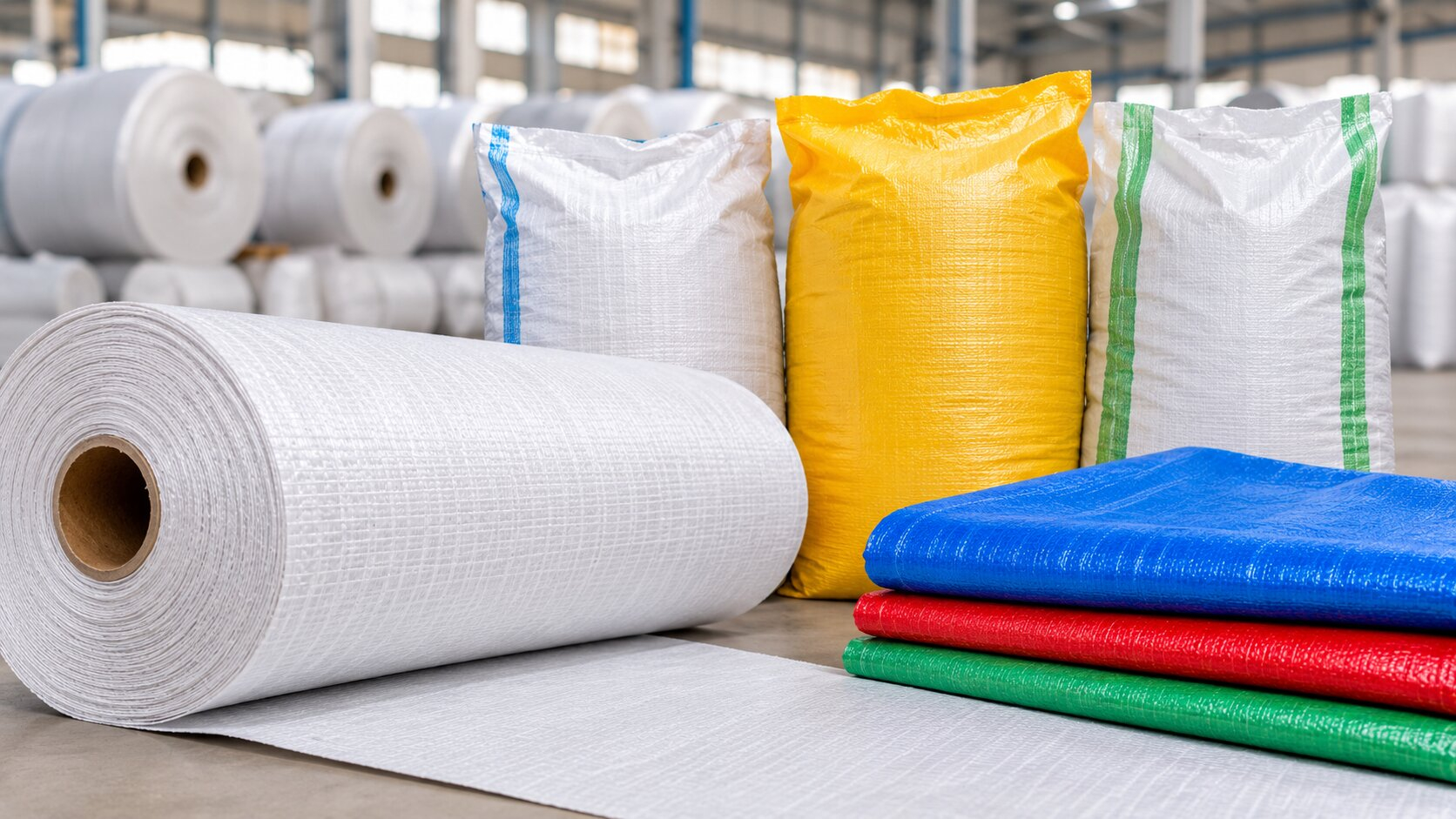

Polypropylene woven fabric sits inside more supply chains than most buyers notice. It becomes cement sacks, bulk bags, crop covers and road underlayers. But not every roll suits every job. A fabric that works well for grain sacks can fail fast on a sunny building site.
This guide covers the main types, where each one is used, and how to pick the right grade. It also lists what to check before you sign up with a PP woven fabric manufacturer.
What Is Polypropylene Woven Fabric?
It starts as PP granules. The granules are melted and cast into a thin film. The film is slit into flat tapes, then stretched to make them stronger. These tapes are woven on looms, much like a basket, into a tight and strong fabric.
Circular looms make tubular fabric. It is used for bags with no side seam. Flat looms make open-width sheets for wraps, covers and ground fabrics. Either way, the result is light, strong and resistant to moisture, rot and most chemicals. It is also recyclable.
Main Types of Polypropylene Woven Fabric
The base weave is the same. What changes is the finish and the treatment. Here are the types buyers ask for most:
-
Uncoated fabric: breathable, so air and moisture can pass. It suits grain, sugar, onions and other produce that needs to breathe.
-
Coated or laminated fabric: a thin PP layer seals the weave. It keeps out moisture and dust and stops fine powders leaking. It suits cement, fertiliser and chemicals.
-
UV-stabilised fabric: made with additives that slow sunlight damage. It is a must for covers, wraps and fabrics stored or used outdoors.
-
Heavy-duty fabric: higher GSM and thicker tapes for bulk bags and loads of a tonne or more.
-
Food-grade fabric: made from virgin resin under clean conditions, for products that come into direct food contact.
-
Printable fabric: a smooth surface for sharp, multi-colour branding on retail and export packs.
Where PP Woven Fabric Is Used
Each industry asks something different of the fabric. Here is where it does the most work:
-
Agriculture and food grains: sacks for rice, wheat, pulses, seeds and animal feed.
-
Cement and construction: valve and block bottom sacks, plus wraps for lumber and building materials.
-
Infrastructure and roads: geotextiles for soil separation, slope control and silt fences on project sites.
-
Fertilisers and chemicals: coated sacks and liners that keep moisture out and contents in.
-
Landscaping and horticulture: weed control fabric and ground covers.
-
Industrial packaging and logistics: bale covers, metal wraps and bulk bags for safe transport.
How to Pick the Right Grade
Start with two questions. What will the fabric carry or hold? And where will it spend its life? Your answers shape every spec below.
-
GSM: the weight per square metre. Light grades of around 50 to 80 GSM suit small packs. Mid grades of 80 to 120 GSM handle most 50 kg sacks. Grades of 150 GSM and above go into bulk bags, covers and ground fabrics.
-
Denier and mesh: tape thickness and tapes per inch. Two fabrics can share a GSM and still behave differently, so ask for both.
-
Tensile strength: ask for values in both the warp (length) and the weft (width).
-
Coating: choose coated for moisture and powders, uncoated where air flow matters.
-
UV treatment: needed for any outdoor use. Ask for the rated exposure hours.
-
Width and roll length: match these to your converting or bag-making machines to cut waste.
-
Colour and printing: confirm shades, print colours and print area early.
Once you have a shortlist, test samples in real conditions. Fill them, stack them, and leave some outdoors if that is their job. A short trial saves costly surprises in bulk.
Questions to Ask a PP Woven Fabric Manufacturer
A good spec only works if the supplier can repeat it. Before you place a bulk order with any PP woven fabric manufacturer, ask:
-
Can you share batch test reports for GSM and tensile strength?
-
What GSM tolerance do you hold from roll to roll?
-
Do you use virgin or recycled resin for this grade?
-
What are the MOQ and lead time per grade and colour?
-
Which certifications do you hold?
-
How do you pack rolls for export, and what documents do you supply?
Why Process Control Matters
Fabric quality is set at every step: tape making, weaving, coating and finishing. When these steps happen under one roof, the supplier can catch drift early and keep each batch on spec.
Mewar Polytex has made woven fabric since 1979. With 46+ years in business, 14+ manufacturing facilities and over 8,000 MT of monthly capacity, it handles weaving, lamination, printing, stitching and finishing in-house. The company is ISO 9001 certified, an EFIBCA member, and exports to 25+ countries.
The right polypropylene woven fabric comes down to a clear brief: load, setting, GSM, coating and UV needs. Define those, test samples, and work with a PP woven fabric manufacturer that can prove its numbers batch after batch.

