

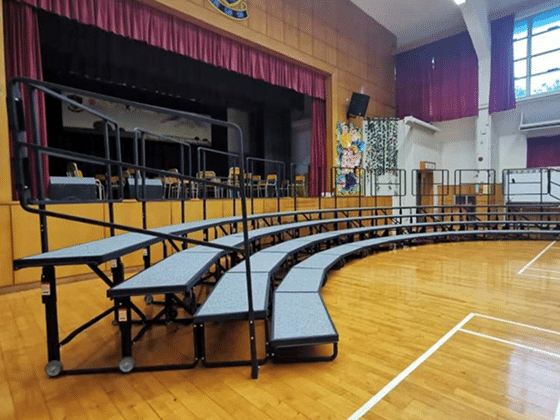
How Music Risers and School Risers Can Transform Ordinary School Spaces into Performance Venues

Quick Summary
Schools do not always need dedicated auditoriums to host memorable performances. With the right staging equipment, classrooms, gymnasiums, multipurpose halls, and open spaces can become functional performance venues. Music risers provide structured elevation, improve audience visibility, and help performers maintain better arrangements. Similarly, school risers offer flexibility for concerts, assemblies, theater productions, and other school events. Choosing suitable staging solutions allows educational institutions to make better use of their existing spaces while creating engaging performance experiences.
How Music Risers and School Risers Make Ordinary Spaces Performance-Ready
A school gymnasium might normally host basketball games, physical education classes, and student gatherings. However, with thoughtful planning and suitable staging equipment, that same space can become a venue for a choir concert, school band performance, or awards ceremony.
Music risers help create different performance levels, allowing audiences to see performers more clearly. Instead of arranging everyone on one flat surface, elevated platforms create organized rows that support better visibility and presentation.
For educational institutions with limited dedicated performance areas, school risers provide a practical way to introduce temporary staging without permanently changing the building. They help schools use existing facilities for multiple activities while maintaining flexibility throughout the academic year.
1. Better Visibility Creates More Engaging Performances
One common challenge during school performances is ensuring that every participant remains visible to the audience. When students stand in straight rows on a flat floor, performers in the back can easily become hidden behind those in front.
Elevated staging helps address this problem by creating different viewing heights. Choir members, instrumentalists, and other performers can occupy designated levels, making the overall presentation easier to follow.
For example, during a school choir concert, elevated rows allow audience members to see more students without constantly adjusting their seating positions. Proper spacing also gives performers room to hold instruments, read music, and maintain comfortable positions.
When selecting school risers, schools should consider platform height, depth, weight capacity, and the age of the students who will use them.
2. One Space Can Support Multiple School Activities
Modern educational facilities often need to serve several purposes. A gymnasium may function as a sports area in the morning, an assembly hall in the afternoon, and a performance venue during an evening event.
Flexible staging makes these transitions easier. Portable music risers can be arranged for concerts and removed when the floor needs to return to its original purpose.
This flexibility can be especially useful for schools that cannot dedicate an entire room to music or theater activities. Rather than investing in permanent construction, administrators can consider movable staging arrangements that support changing event requirements.
Well-designed school risers can also help schools create consistent performance layouts across different locations, provided the equipment is suitable for each space.
3. Supporting Better Organization During Group Performances
A successful performance involves more than talented students. It also requires careful organization, appropriate spacing, and clear movement arrangements.
Risers help directors divide performers into sections and assign positions according to instruments, vocal groups, or performance requirements. This can make rehearsals easier to manage and help students understand where they need to stand.
For example, a school band may arrange musicians according to instrument groups, while a choir director may position singers to support balanced sound and clear sightlines.
The right arrangement depends on the venue, number of performers, equipment requirements, and the director's preferences. Music risers provide a structured foundation that can support these different arrangements.
4. Making School Events More Professional
The appearance of a performance space can influence how students, parents, and visitors experience an event. A thoughtfully arranged stage creates a clear focal point and helps distinguish performers from the audience.
Even a simple multipurpose room can look more organized when its performance area includes suitable staging, music stands, seating arrangements, and appropriate lighting.
Schools can also use coordinated staging layouts for annual concerts, graduation celebrations, talent shows, and cultural programs. This creates a more consistent presentation without requiring major changes to the building.
Choosing suitable school risers can help educational institutions create a polished setting while keeping their facilities adaptable.
5. What Schools Should Consider Before Choosing Risers
Not every staging arrangement is appropriate for every school. Administrators should evaluate their available space, expected audience size, performer requirements, and storage facilities before purchasing equipment.
Important considerations include:
-
Weight capacity: Confirm that each platform supports the intended number of performers and their equipment.
-
Stability: Choose properly engineered systems with secure connections and suitable support structures.
-
Surface quality: Look for durable, slip-resistant surfaces that support safe movement.
-
Storage: Consider how easily the equipment can be stored when not in use.
-
Setup requirements: Understand assembly instructions and whether trained staff are needed.
-
Accessibility: Plan safe access routes and suitable arrangements for performers with different mobility needs.
Schools should also follow manufacturer instructions, applicable safety requirements, and appropriate supervision practices whenever staging is installed or used.
6. Creating Long-Term Value Through Flexible Staging
Investing in versatile performance equipment can help schools make better use of existing facilities. Instead of limiting performances to one dedicated location, institutions can prepare different spaces according to the needs of each event.
A choir rehearsal may require a different arrangement from a school orchestra concert or a student presentation. Flexible staging allows these spaces to be adapted without rebuilding the venue every time.
Alges Corporation offers a range of performance-related equipment for educational and professional environments. Schools exploring staging solutions can consider its product offerings when planning functional performance spaces that support different activities.
Conclusion
Transforming an ordinary school space into a performance venue does not always require expensive construction or permanent changes. With thoughtful planning, suitable equipment, and flexible staging arrangements, educational institutions can create spaces that support music, theater, assemblies, and community events.
Music risers help improve performer visibility and organization, while adaptable staging gives schools greater freedom to use their existing facilities. By selecting suitable equipment and prioritizing safety, schools can create more engaging performance environments that benefit students, educators, and audiences alike.

