

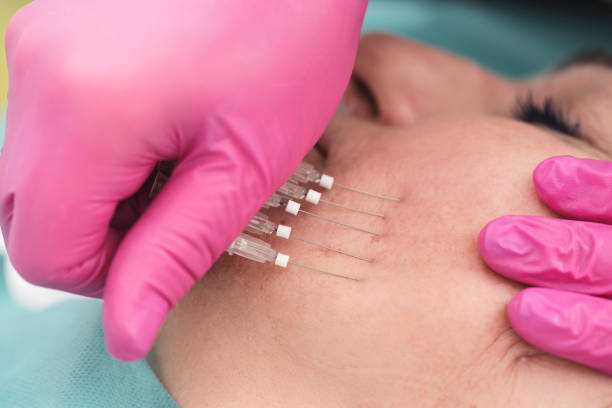
Thread Lift in Dubai vs Ultherapy (HIFU): Mechanical Lift vs Ultrasound Tightening

Choosing a non-surgical facial rejuvenation treatment involves more than comparing before-and-after photographs. Different technologies address different aspects of facial ageing, and the best option depends on whether the primary concern is tissue descent, skin laxity, or changes in skin quality. A Thread Lift in Dubai and Ultherapy are two approaches that may be discussed for facial lifting, but they work through different mechanisms.
A thread lift provides physical support to selected tissues using absorbable sutures. Ultherapy uses focused ultrasound energy to create controlled thermal effects within targeted tissue layers. Neither treatment is suitable for every patient, and their outcomes should not be considered interchangeable.
Understanding the Main Difference Between the Treatments
The most important distinction is how each treatment produces its intended effect.
A thread lift uses sutures placed beneath the skin to engage and support selected facial tissues. Ultherapy uses focused ultrasound energy to deliver controlled thermal stimulation at selected depths. It does not insert threads or mechanically anchor tissue.
| Treatment feature | Thread lift | Ultherapy |
|---|---|---|
| Main mechanism | Physical tissue engagement and support | Focused ultrasound energy |
| Treatment method | Absorbable sutures placed beneath the skin | External ultrasound applicator |
| Main objective | Repositioning selected sagging tissue | Improving tissue firmness through thermal stimulation |
| Entry points | Small entry points are generally required | No thread insertion |
| Downtime | Swelling, bruising, and tenderness may occur | Temporary redness, swelling, or tenderness may occur |
| Results | Mechanical lifting may be visible after treatment, with changes as tissues settle | Improvement generally develops gradually |
The table provides a broad comparison. Actual treatment protocols, devices, and recovery experiences can vary.
How a Thread Lift in Dubai Creates Mechanical Support
A thread lift is designed to support and reposition selected areas of soft tissue. With Silhouette Soft, bidirectional cones engage tissue along the thread pathway, helping create a lifting effect when the sutures are appropriately placed.
The practitioner evaluates the face and determines the direction of support based on the location of tissue descent. The treatment may be considered for selected concerns involving the cheeks, lower face, or jawline.
The Role of Silhouette Soft PLLA Threads
Silhouette Soft uses absorbable PLLA-based threads. Their cones provide mechanical engagement, while the gradual absorption of the material may contribute to a collagen-related tissue response.
These are two distinct processes. The initial lifting effect is associated with tissue engagement, whereas the biological response develops over time and varies between patients.
A thread lift may be considered when mild-to-moderate tissue descent is the primary concern and the patient has suitable skin and soft-tissue characteristics.
How Ultherapy Uses Focused Ultrasound
Ultherapy uses focused ultrasound energy to create controlled thermal points beneath the skin. These points are intended to stimulate a tissue response associated with collagen remodeling.
Unlike a thread lift, the procedure does not physically reposition tissue using sutures. The treatment aims to improve firmness over time rather than provide immediate mechanical support.
Gradual Tissue Response
After treatment, the body's healing response may lead to changes in collagen structure over the following months. The visible degree of improvement varies with age, skin condition, treatment settings, and individual response.
Ultrasound-based tightening may be considered for patients with suitable degrees of skin laxity who prefer a treatment without thread insertion. It is not a substitute for surgery when significant excess skin is present.
Mechanical Lifting vs Ultrasound Tightening
The distinction between mechanical lifting and ultrasound tightening is important when setting expectations.
A thread lift may be more relevant when a practitioner identifies mild tissue descent that could benefit from physical support. Ultherapy may be considered when the treatment objective is gradual improvement in tissue firmness without placing sutures.
Neither method guarantees a specific degree of lifting. The underlying anatomy, tissue quality, treatment area, and practitioner experience influence the outcome.
Which Treatment Addresses Early Jowls?
Early jowls can involve both skin laxity and downward movement of soft tissue. A thread lift may be considered when tissue repositioning is an appropriate goal.
Ultherapy may be discussed when mild laxity and firmness are the main concerns. However, it does not mechanically reposition jowls in the same way as a thread-supported lift.
A clinical assessment is necessary to identify which factor contributes most to the patient's lower-face appearance.
Which Treatment Is Better for Skin Firmness?
Ultherapy is designed around focused ultrasound energy and a gradual tissue response. A thread lift is primarily intended to support selected tissues, although PLLA absorption may also contribute to collagen-related changes.
The choice should be based on the patient's concern rather than assuming that one technology is universally more effective.
Comparing Candidacy and Treatment Considerations
A practitioner may evaluate several factors before recommending either treatment:
-
Degree of laxity: Mild changes may be appropriate for non-surgical approaches, while significant skin excess may require surgical assessment.
-
Facial anatomy: Tissue thickness, fat distribution, and structural support influence treatment suitability.
-
Skin quality: Elasticity and overall condition affect expected results.
-
Treatment preference: Some patients prefer to avoid thread insertion, while others may be interested in mechanical tissue support.
-
Medical history: Previous procedures, medications, and health factors can affect eligibility and risk.
Patients should also understand that both treatments have limitations and potential adverse effects.
Can Thread Lifting and Ultherapy Be Combined?
In selected cases, practitioners may consider different treatments as part of a broader facial rejuvenation plan. However, combining procedures does not automatically improve results and may increase cost, complexity, or treatment-related risks.
The timing and suitability of combination treatments should be determined by a qualified practitioner. The plan should account for tissue recovery, treatment areas, and the mechanisms of each technology.
Read More: DHI Direct Hair Implant in Dubai for Hairline to Temple Transition
Risks and Recovery
A thread lift may cause bruising, swelling, tenderness, tightness, temporary dimpling, asymmetry, infection, thread visibility, or extrusion. Rare complications may involve injury to nearby structures.
Ultherapy may cause temporary redness, swelling, tenderness, bruising, or altered sensation. Less common complications can occur, so device-specific safety information and practitioner assessment are important.
Patients should receive clear aftercare instructions and know when to contact the clinic if symptoms worsen or unusual changes develop.
Clinic Note: A thread lift and Ultherapy should be selected according to the tissue changes being treated. Mechanical support and ultrasound-based tightening are different approaches, so treatment planning should begin with an accurate facial assessment.
Frequently Asked Questions
Does a thread lift produce faster results than Ultherapy?
A mechanical lifting effect may be noticeable after a thread lift, although swelling and tissue settling can affect the early appearance. Ultherapy results generally develop gradually. Individual experiences vary.
Is Ultherapy the same as HIFU?
Ultherapy is a specific microfocused ultrasound treatment. HIFU is a broader term used for high-intensity focused ultrasound technologies, and devices may differ in design, settings, and regulatory status.
Which treatment is better for sagging cheeks?
A thread lift may be considered when selected cheek tissues need support. Ultrasound treatment may be considered for suitable cases where gradual firmness is the goal. A consultation is needed to determine the cause of the sagging.
Does Ultherapy involve needles or threads?
Ultherapy delivers energy through an external applicator and does not require the placement of lifting threads.
Can either treatment replace a surgical facelift?
Neither treatment provides the same degree of correction as a surgical facelift. Patients with significant sagging or excess skin may need a surgical consultation.
Discuss Facial Lifting Options at Tajmeels Clinic
Understanding the difference between tissue repositioning and ultrasound-based tightening can make treatment decisions more informed. Tajmeels Clinic encourages an individualized assessment of facial structure, skin quality, and aesthetic goals before selecting a rejuvenation approach. A consultation can help clarify whether a thread lift, ultrasound treatment, another option, or no procedure is appropriate.

