

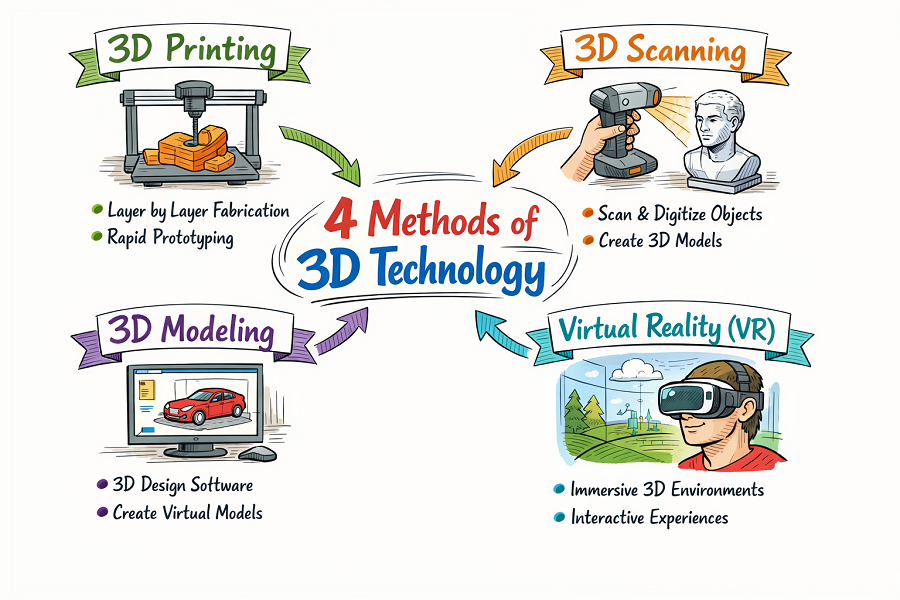

This 3D Technology Market Analysis examines the forces shaping adoption patterns and vendor strategies across global markets. The analysis reveals a market driven by compelling imperatives—healthcare personalization, manufacturing modernization, and immersive entertainment—while constrained by material limitations, capital requirements, and skills gaps. Understanding these dynamics is essential for stakeholders seeking to navigate the market's evolution from specialized tooling toward mainstream industrial and consumer capability. The balance between drivers and restraints varies significantly by application segment, organizational size, and geographic market maturity. As technological barriers diminish and accessibility improves, the market's trajectory suggests continued expansion, though challenges remain for organizations seeking to capture value from 3D investments.
Primary Demand Drivers Across Application Segments
Multiple converging forces propel 3D technology investment. Healthcare personalization creates demand for customized implants, prosthetics, and surgical models that improve patient outcomes. Manufacturing modernization drives adoption of additive manufacturing for rapid prototyping and production-grade components. Entertainment and media demand immersive experiences enabled by 3D graphics, virtual reality, and interactive content. Education and training applications leverage 3D visualization to enhance learning outcomes and provide hands-on experience in safe environments. Government and defense applications utilize 3D printing for rapid prototyping, spare parts production, and customized equipment. These drivers reinforce each other, creating compounding demand across application segments and organizational contexts. The common thread is the recognition that 3D technology enables rather than constrains innovation, supporting faster development cycles and greater customization.
Implementation Challenges and Organizational Friction
Despite compelling drivers, 3D technology adoption faces significant obstacles. Material limitations constrain the range of applications, with some industries requiring properties that current 3D printing materials cannot deliver. Capital requirements for industrial-grade systems and post-processing equipment create barriers for smaller organizations. Skills gaps affect both system operation and design for additive manufacturing, requiring training and organizational development. Integration complexity with existing workflows and legacy systems delays time-to-value and increases implementation costs. Quality assurance and certification requirements in regulated industries create additional hurdles. These challenges require vendors and implementation partners to address technical, financial, and organizational factors alongside product deployment, supporting customers through training, workflow design, and ongoing optimization.
Segment-Level Analysis: Solutions, Services, and Application Verticals
The market segments reveal distinct dynamics across hardware, software, and services. Hardware—printers, scanners, and display systems—represents the core market, but software for design, simulation, and workflow management constitutes a growing and increasingly valuable component. Services for implementation, training, and managed operations represent a significant and growing segment as organizations seek expertise to navigate complexity. Application analysis shows healthcare as the largest segment, driven by surgical planning, prosthetics, and bioprinting research. Manufacturing and prototyping represent the fastest-growing application segment, as industries adopt additive manufacturing for production-grade components. Media and entertainment, aerospace and defense, and architecture each contribute distinct demand patterns and requirements. The common thread across verticals is the recognition that 3D technology delivers value through improved outcomes, faster cycles, and greater customization.
Strategic Implications for Organizations and Vendors
For organizations evaluating 3D technology investments, the analysis suggests several imperatives. First, align investments with specific business outcomes—faster time-to-market, improved patient outcomes, or enhanced product differentiation—rather than pursuing technology adoption as an end in itself. Second, prioritize workflow integration and design-for-additive-manufacturing capabilities alongside hardware acquisition to ensure that systems deliver expected value. Third, invest in skills development and organizational change management to address cultural resistance and build internal capabilities. For vendors, opportunities exist in application-specific solutions, materials innovation, and services that bridge the gap between platform capabilities and realized value. The analysis indicates that successful vendors will be those that address the complete ecosystem—hardware, software, materials, and services—rather than focusing on individual product categories.
➤ Featured Insights from Market Research Future:

