

The New Business Opportunities Emerging in Property Tokenization Platform Development

The real estate industry is gradually moving beyond traditional property investment and asset management models. Blockchain technology, digital ownership infrastructure, and evolving investment structures are creating new opportunities for businesses to participate in the growing property tokenization market.
Property tokenization is emerging as an approach that allows real estate-related interests to be represented as digital tokens on a blockchain. Depending on the underlying legal structure, these tokens can represent fractional ownership, investment interests, rental income entitlements, debt instruments, or other contractual rights connected to real estate assets.
As interest in real-world asset (RWA) tokenization increases, businesses are beginning to explore dedicated property tokenization platforms to support digital asset issuance, investor participation, property management, and investment administration.
This development is creating opportunities for several business categories, including real estate developers, property investment firms, asset managers, financial institutions, and blockchain technology providers.
For companies planning to enter this market, property tokenization platform development is not simply about creating a digital asset marketplace. It involves building an integrated ecosystem that connects real estate assets, legal structures, investors, financial operations, and blockchain infrastructure.
Let's explore the emerging business opportunities, platform models, revenue possibilities, and technology requirements shaping this market.
Understanding the Growing Demand for Property Tokenization Platforms
Traditional real estate investment often involves significant capital commitments, lengthy documentation processes, complex ownership arrangements, and limited access to certain investment opportunities.
Property tokenization introduces a digital framework that can help businesses organize and manage real estate-related investments.
For example, a commercial property owner may establish a legally structured investment vehicle and issue digital tokens representing eligible interests in that entity. Investors can acquire tokens according to the offering terms, while the platform manages ownership records, investor information, and permitted transactions.
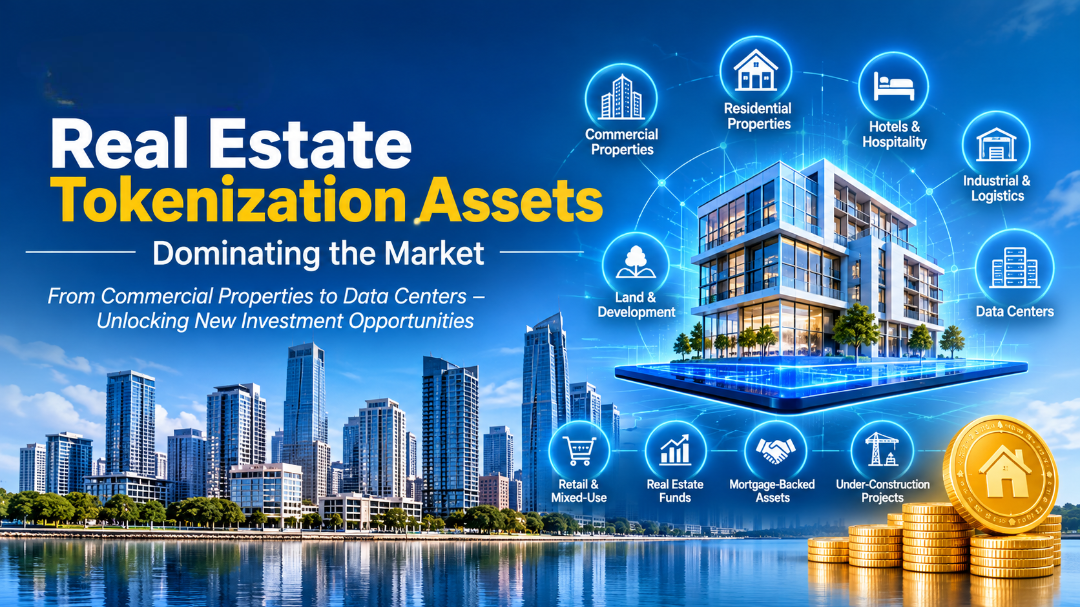
This model can support several property categories:
-
Residential apartments and housing developments.
-
Commercial buildings and office spaces.
-
Retail properties and shopping complexes.
-
Industrial warehouses and logistics facilities.
-
Hospitality properties and hotels.
-
Undeveloped land and development projects.
-
Rental-income-generating properties.
-
Real estate funds and property portfolios.
The expanding range of potential applications creates demand for specialized platforms that can accommodate different asset structures and investment requirements.
10 New Business Opportunities in Property Tokenization Platform Development
The property tokenization market offers opportunities beyond launching conventional fractional property investment platforms. Businesses can develop specialized solutions for different real estate segments and financial models.
1. Fractional Property Investment Platforms
Fractional property investment is one of the most recognizable applications of real estate tokenization.
Instead of requiring an investor to purchase an entire property, a platform can facilitate participation through digital tokens representing legally defined interests in a property-owning entity or investment arrangement.
Businesses can develop platforms that allow property owners to list eligible assets, structure investment offerings, onboard investors, and manage token allocations.
Business opportunity: Entrepreneurs and real estate companies can launch dedicated fractional property investment platforms targeting residential, commercial, and income-generating properties.
Potential platform revenue models include:
-
Property listing fees.
-
Transaction fees.
-
Investment administration fees.
-
Asset management fees.
-
Platform subscription charges.
2. Commercial Real Estate Tokenization Platforms
Commercial real estate involves substantial property values and complex investment structures. Office buildings, shopping centers, business parks, and industrial facilities often require significant capital for acquisition, expansion, and management.
Tokenization platforms can help commercial property businesses structure digital investment opportunities around eligible ownership or financial interests.
For instance, a commercial property investment company could use a custom platform to manage multiple properties, organize investor participation, issue tokens, and maintain digital investment records.
Business opportunity: Technology providers can build commercial real estate tokenization platforms specifically designed for institutional investors, property funds, asset managers, and commercial developers.
Such platforms may include portfolio management, investor reporting, distribution management, compliance workflows, and secondary transaction capabilities.
3. Rental Income Tokenization Platforms
Rental-generating properties provide another business opportunity for tokenization platform developers.
Residential apartments, commercial offices, warehouses, and hospitality properties can generate recurring rental income. Under appropriate legal arrangements, businesses may structure investment interests connected to these revenue streams.
A rental income tokenization platform can help manage:
-
Property and lease information.
-
Investor allocations.
-
Rental income calculations.
-
Distribution schedules.
-
Digital ownership records.
-
Investor statements.
-
Financial performance reporting.
Business opportunity: Real estate asset managers can launch platforms focused on managing portfolios of rental-generating properties and administering investor participation.
This creates a specialized business model that goes beyond simply listing properties for token-based investment.
4. Land and Undeveloped Property Tokenization Platforms
Undeveloped land can hold considerable economic potential, particularly when it has favorable zoning conditions, infrastructure access, or approved development plans.
However, land development often requires substantial upfront investment before generating returns.
Tokenization platforms can support legally structured investment models connected to land ownership entities, development projects, or eligible financial interests.
Businesses could develop specialized solutions for:
-
Agricultural land investment structures.
-
Residential land development.
-
Commercial land projects.
-
Industrial land portfolios.
-
Land acquisition financing.
-
Development rights-related investment arrangements.
Business opportunity: Land aggregators, real estate developers, and investment companies can explore dedicated land tokenization platforms to organize project financing and investor participation.
5. Real Estate Development Financing Platforms
Property development projects require funding across multiple stages, including land acquisition, planning, construction, infrastructure development, and project completion.
Traditional financing may not always provide the flexibility developers need.
A tokenization platform can support alternative financing structures by representing eligible investment interests connected to specific development projects.
For example, a developer planning a residential complex could establish a project-specific legal entity and create a digital investment offering for eligible investors.
The platform can manage investor onboarding, token issuance, project documentation, investment tracking, and contractual distributions.
Business opportunity: Companies can build development-focused tokenization platforms for property developers seeking technology-enabled capital-raising infrastructure.
6. Real Estate Debt and Mortgage Tokenization Platforms
Real estate investment is not limited to property ownership and rental income. Debt instruments, mortgage-backed interests, and property-secured financing arrangements also create opportunities for tokenization.
A specialized platform could support the digital representation and administration of eligible real estate debt instruments.
Potential applications include:
-
Commercial property-backed loans.
-
Real estate development loans.
-
Mortgage-related investment interests.
-
Property financing instruments.
-
Private real estate credit.
-
Debt participation structures.
Business opportunity: Financial institutions, private credit firms, and alternative investment managers can explore tokenization platforms designed for property-related debt issuance and administration.
These platforms require robust legal documentation, repayment tracking, investor eligibility controls, and distribution management.
7. Multi-Property Portfolio Tokenization Platforms
Some real estate businesses manage portfolios containing multiple properties across different locations and categories.
Managing these assets through separate systems can create operational complexity.
A multi-property tokenization platform can bring different real estate assets into a unified digital investment environment.
For example, an asset management company may operate a portfolio containing:
-
Residential rental properties.
-
Commercial office buildings.
-
Retail developments.
-
Industrial warehouses.
-
Hospitality assets.
-
Mixed-use developments.
The platform can support asset-level token issuance, investor allocation, portfolio reporting, and consolidated investment administration.
Business opportunity: Asset management firms and real estate investment companies can develop multi-asset tokenization platforms that support diversified property investment products.
8. White-Label Property Tokenization Platforms
Not every real estate business wants to develop blockchain infrastructure from the ground up.
White-label solutions offer an alternative by providing a customizable technology foundation that businesses can launch under their own brand.
A white-label property tokenization platform can include:
-
Customizable investor dashboards.
-
Digital asset issuance.
-
Smart contract integration.
-
KYC and AML workflows.
-
Property listing management.
-
Investment administration.
-
Wallet integration.
-
Reporting and analytics.
Business opportunity: Blockchain development companies can create configurable white-label property tokenization solutions for real estate agencies, asset managers, property investment firms, and financial service providers.
This model can create recurring revenue through licensing, implementation, maintenance, and technical support.
9. Secondary Market Infrastructure for Tokenized Properties
The ability to manage permitted secondary transactions is another important opportunity within property tokenization.
Traditional real estate transactions can involve lengthy negotiations, extensive documentation, and multiple intermediaries.
Tokenized asset platforms can provide digital infrastructure for recording and facilitating eligible transfers between investors.
A secondary market module may include:
-
Investor-to-investor transfer functionality.
-
Token transfer restrictions.
-
Order management.
-
Transaction history.
-
Ownership verification.
-
Compliance checks.
-
Settlement integration.
Business opportunity: Businesses can develop dedicated secondary transaction infrastructure for tokenized real estate assets, subject to applicable securities, trading, and financial regulations.
Tokenization alone does not guarantee liquidity. A functioning secondary market also requires regulatory authorization where applicable, sufficient investor participation, and actual demand for the assets.
10. Real Estate Asset Management and Investor Administration Platforms
As property tokenization expands, managing investors and assets efficiently becomes increasingly important.
Real estate businesses need systems that connect asset performance, investment records, financial distributions, and investor communication.
An asset management platform can provide centralized administration for tokenized property portfolios.
Key capabilities may include:
-
Property performance monitoring.
-
Investor portfolio dashboards.
-
Income and expense tracking.
-
Distribution management.
-
Ownership record administration.
-
Project milestone updates.
-
Financial reporting.
-
Document management.
Business opportunity: Technology companies can offer specialized real estate tokenization management software to property funds, asset managers, and investment businesses.
Revenue Models for Property Tokenization Platform Businesses
Developing a property tokenization platform creates opportunities to generate revenue through different commercial models.
The right approach depends on the target audience, platform functionality, regulatory structure, and business strategy.
|
Revenue model |
How businesses generate revenue |
|---|---|
|
Listing fees |
Charge asset owners for listing eligible properties |
|
Transaction fees |
Collect fees on permitted investment transactions |
|
Platform subscriptions |
Offer monthly or annual platform access |
|
Tokenization service fees |
Charge for asset structuring and token issuance technology |
|
Asset management fees |
Charge for ongoing investment administration |
|
White-label licensing |
License customizable platform infrastructure |
|
Maintenance services |
Generate recurring revenue through technical support |
|
Integration services |
Charge for connecting wallets, payment systems, and compliance tools |
Businesses may combine several models to establish diversified revenue streams.
For example, a white-label property tokenization provider could generate initial revenue through implementation and customization, followed by recurring licensing and maintenance fees.
Essential Features to Include in a Property Tokenization Platform
A successful property tokenization platform requires an integrated technology infrastructure that supports the complete investment lifecycle.
The following modules can form the foundation of a business-ready solution.
|
Feature |
Functionality |
|---|---|
|
Property listing module |
Displays property details, documents, and investment information |
|
Token issuance module |
Creates and distributes blockchain-based tokens |
|
Smart contract module |
Automates predefined token and investment operations |
|
Investor onboarding |
Handles registration, identity verification, and eligibility |
|
Wallet integration |
Supports secure digital asset storage and transactions |
|
Compliance module |
Manages regulatory and transfer restrictions |
|
Payment integration |
Supports approved investment payment workflows |
|
Investor dashboard |
Displays holdings, transactions, and distributions |
|
Asset management |
Tracks property portfolios and performance |
|
Distribution management |
Handles contractual income and profit distributions |
|
Secondary market module |
Supports permitted token transfers and trading |
|
Analytics and reporting |
Provides investment and operational insights |
The Importance of Smart Contract Development
Smart contracts are a core component of property tokenization infrastructure.
They define and automate selected rules associated with token issuance, ownership records, investor allocations, and permitted transfers.
For example, a smart contract can restrict token transfers to verified wallet addresses and automatically calculate distributions based on predefined contractual rules.
Businesses should also consider smart contract audits, upgrade mechanisms, access controls, and integration with reliable off-chain data sources.
Custom vs. White-Label Property Tokenization Platform Development
Businesses entering property tokenization often need to choose between custom platform development and white-label solutions.
Both approaches can support different business objectives.
|
Comparison |
Custom platform |
White-label platform |
|---|---|---|
|
Development approach |
Built around specific business requirements |
Based on configurable existing infrastructure |
|
Customization |
Extensive |
Depends on solution capabilities |
|
Initial investment |
Generally higher |
Generally lower |
|
Development timeline |
Depends on platform complexity |
Often shorter |
|
Branding |
Fully customizable |
Usually customizable |
|
Feature flexibility |
High |
Depends on architecture |
|
Best suited for |
Businesses with specialized requirements |
Businesses seeking faster deployment |
When Should Businesses Choose Custom Development?
Custom property tokenization platform development is suitable for businesses that require specialized investment models, unique workflows, advanced asset management features, or integrations with existing financial systems.
When Should Businesses Choose White-Label Development?
White-label solutions can be appropriate for businesses that want to launch under their own brand without building every blockchain and platform component independently.
The decision should consider long-term scalability, security, regulatory requirements, customization needs, and total ownership costs.
Challenges Businesses Must Consider Before Entering the Market
Although property tokenization offers new commercial possibilities, platform development involves several important considerations.
1. Regulatory Compliance
Tokenized property interests may qualify as securities or regulated investment products depending on their legal and economic characteristics.
Businesses must evaluate applicable securities laws, investor eligibility, licensing requirements, and offering restrictions before launching.
2. Property Ownership Verification
A platform must have reliable processes to verify property ownership, legal interests, valuation, encumbrances, and supporting documentation.
Blockchain records cannot independently establish legal ownership of an underlying property.
3. Smart Contract Security
Vulnerabilities in smart contracts can create financial and operational risks.
Security audits, testing, access controls, and ongoing monitoring are important parts of development.
4. Investor Protection
Investors need clear information about the underlying asset, legal structure, financial risks, fees, and rights associated with their tokens.
Platforms should provide transparent documentation and appropriate investor communication.
5. Liquidity and Market Participation
Digital tokens do not automatically become liquid investment products.
Businesses must consider investor demand, permitted transfer mechanisms, market infrastructure, and the restrictions applicable to each offering.
How to Start a Property Tokenization Platform Development Business
For entrepreneurs and technology companies looking to enter this industry, a structured development strategy can help establish a commercially viable platform.
Platform launch roadmap
-
Select a target real estate segment
Decide whether the platform will focus on residential properties, commercial assets, rental income, land, development projects, or multiple property categories.
-
Define the business model
Choose between a property investment marketplace, white-label solution, asset management platform, or specialized tokenization infrastructure.
-
Establish the legal framework
Identify the underlying rights, ownership arrangements, investment structure, and applicable regulatory obligations.
-
Plan the platform architecture
Select the blockchain network, token standard, smart contract framework, wallet infrastructure, and integration requirements.
-
Develop the essential modules
Implement asset management, investor onboarding, token issuance, compliance, payments, and reporting capabilities.
-
Test and secure the platform
Conduct functional testing, smart contract audits, security assessments, and workflow validation.
-
Launch and expand
Introduce the platform with suitable assets and gradually expand its property categories, features, and investor capabilities.
Why Choosing the Right Property Tokenization Development Company Matters
Building a property tokenization platform requires expertise across multiple technology and business areas.
A development partner should understand blockchain architecture, smart contract engineering, real estate investment workflows, digital asset management, and platform security.
Businesses should evaluate development partners based on:
-
Experience in real estate and RWA tokenization.
-
Custom and white-label development capabilities.
-
Smart contract development and auditing processes.
-
Multi-chain blockchain integration.
-
Investor onboarding and compliance infrastructure.
-
Wallet and payment integration.
-
Platform scalability and security.
-
Post-launch technical support.
A capable development partner can help translate a business model into a functional platform while accounting for its technical and operational requirements.
Companies such as Inoru, which provides tokenization development services, can support businesses exploring custom real estate tokenization platforms, digital asset issuance infrastructure, and blockchain-based investment management solutions.
The objective is to build a platform that supports the business's long-term requirements rather than simply introducing token issuance functionality.
Conclusion: Where Is the Property Tokenization Platform Market Heading?
Property tokenization is creating new opportunities for businesses that want to combine traditional real estate investments with blockchain-based digital infrastructure.
From fractional property investment and rental income tokenization to land development financing, commercial property portfolios, and secondary market infrastructure, the potential applications extend across multiple real estate segments.
For entrepreneurs, developers, asset managers, and technology providers, these developments create opportunities to introduce specialized platforms and services into an evolving market.
However, commercial success will depend on more than the ability to issue digital tokens. Businesses need legally structured investment models, reliable property verification, secure smart contracts, investor management systems, and sustainable revenue strategies.

