

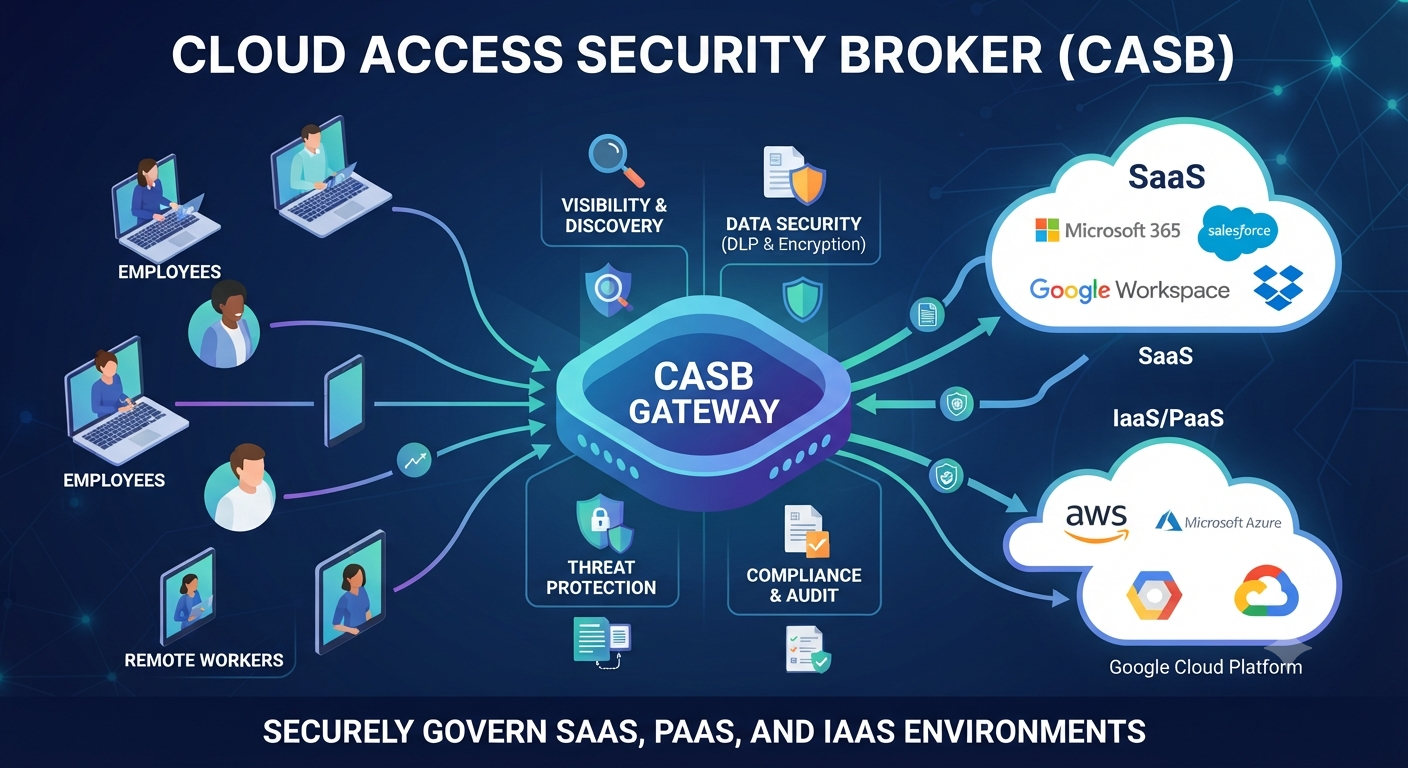

Examining Cloud Access Security Broker Market Statistics provides valuable insights into how organizations are prioritizing their cloud security investments. A striking pattern emerges in the distribution of deployment models: API-based out-of-band deployments currently account for a significant share of implementations, reflecting the desire for visibility without the latency and complexity associated with inline traffic inspection. However, hybrid and multimode deployments are growing at a faster rate, indicating that organizations are maturing in their strategies and seeking to combine the benefits of retrospective scanning with real-time enforcement for high-risk scenarios.
Segment Analysis: SaaS Dominance and IaaS Acceleration
Software as a Service remains the dominant segment for broker protection, reflecting the widespread adoption of productivity suites, CRM platforms, and collaboration tools that house vast quantities of sensitive business data. However, the Infrastructure as a Service segment is experiencing accelerated growth as organizations extend their security policies to cover cloud workloads, containers, and serverless functions. This shift reflects the broader migration of production workloads to public cloud environments and the recognition that infrastructure configurations represent a significant attack surface that requires continuous monitoring and policy enforcement.
Organizational Size Distribution and Growth Rates
Statistics on organizational adoption reveal a nuanced picture. Large enterprises currently represent the majority of broker spending, owing to their complex cloud estates, dedicated security teams, and stringent compliance obligations. However, small and medium enterprises are adopting broker solutions at a faster rate, driven by the availability of cloud-delivered subscription models and managed service offerings that reduce the need for specialized in-house expertise. This democratization of cloud security capabilities is expanding the total addressable market and changing the competitive dynamics, as vendors develop offerings tailored to the resource constraints and requirements of smaller organizations.
Industry Vertical Penetration and Growth Hotspots
Analysis of adoption by industry vertical shows banking, financial services, and insurance as a leading segment, reflecting the sector's stringent regulatory requirements and the high value of financial data. Healthcare and government follow closely, driven by privacy regulations and zero trust mandates. Manufacturing is emerging as a notable growth area, as industrial organizations digitize operations and connect operational technology to cloud platforms, creating new security requirements. The retail and wholesale sector focuses on protecting payment data and customer information, while the education sector addresses the challenge of securing diverse device populations and protecting student records.
Geographic Distribution and Regional Growth Patterns
Geographically, North America represents the most mature market, characterized by high cloud adoption rates, a concentration of major vendors, and a regulatory environment that incentivizes proactive security investments. Europe follows, with growth driven by privacy regulations and digital sovereignty initiatives. The Asia-Pacific region is experiencing the fastest growth, fueled by rapid digital transformation, expanding cloud infrastructure, and increasing regulatory attention to cybersecurity. These regional patterns inform vendor strategies, as companies tailor their offerings and go-to-market approaches to address local requirements and capitalize on growth opportunities in emerging markets.
➤ Related Reports by Market Research Future:

