

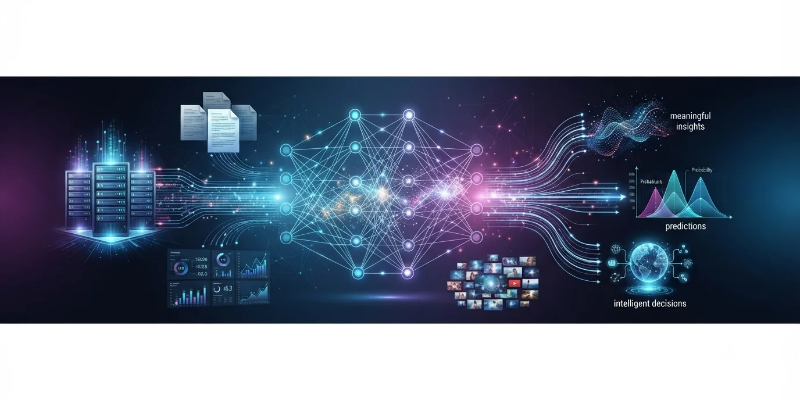
Artificial Intelligence (AI) is changing how computers process information, solve problems, and make decisions. Behind every intelligent application, two important elements work together: data and algorithms. Data provides the information that AI systems need to learn, while algorithms help them understand that information and produce useful results. Grasping this connection is crucial for anyone keen on understanding the workings of artificial intelligence. If you want to build a strong foundation in this technology, consider enrolling in an Artificial Intelligence Course in Trivandrum at FITA Academy to develop your knowledge and practical skills.
What is Data in Artificial Intelligence?
Data refers to the information collected and used by AI systems to identify patterns, understand relationships, and make predictions. It can include text, images, videos, audio recordings, numbers, and other forms of information. For example, an AI application designed to recognize animals needs thousands of images containing different animals to understand their features.
The quality and quantity of data play an important role in AI performance. Accurate patterns are recognized by models when they are provided with high-quality data, whereas incomplete or erroneous data may result in unreliable outcomes. Therefore, collecting, cleaning, organizing, and preparing data are important steps in developing an effective AI system.
What Are Algorithms in Artificial Intelligence?
Algorithms are step-by-step instructions that guide computers in solving problems and processing information. In AI, algorithms help systems learn from data, recognize patterns, and make decisions without requiring specific instructions for every situation.
Different algorithms perform different tasks. For example, classification algorithms organize information into categories, while regression algorithms predict numerical values. Clustering algorithms group similar data points based on shared characteristics.
Machine Learning algorithms use these techniques to identify patterns from existing information. Their performance improves through training, where they analyze examples and adjust their internal parameters to produce better results.
How Do AI Data and Algorithms Work Together?
Data and algorithms are closely connected because neither can deliver effective AI results independently. Data provides the examples and information needed for learning, while algorithms determine how that information should be processed.
Consider an email spam detection system. First, the system receives thousands of emails containing both spam and legitimate messages. These emails become training data. Next, a Machine Learning algorithm examines the words, patterns, sender information, and other characteristics to identify differences between the two categories.
During training, the algorithm learns which patterns are commonly associated with spam messages. Upon completing the training, the AI model is capable of examining incoming emails and determining whether they are spam or genuine. This process demonstrates how data and algorithms work together to produce intelligent outcomes.
The Importance of Data Quality in AI Algorithms
Even advanced algorithms cannot consistently produce accurate results when they receive poor-quality data. Missing information, duplicate records, incorrect values, and inconsistent formats can affect the learning process.
Data preprocessing helps address these challenges by removing errors, handling missing values, and organizing information into suitable formats. Data diversity is equally important because training with examples from different situations helps AI systems perform better when they encounter unfamiliar information.
Another important factor is data relevance. AI models should receive information that closely matches the tasks they are expected to perform. Choosing appropriate datasets helps improve prediction quality and reduces unnecessary complexity.
How Machine Learning Connects Data and Algorithms
Machine Learning provides a practical way to understand the relationship between data and algorithms. It allows computer systems to learn from examples instead of depending entirely on manually written rules.
During the training process, algorithms analyze datasets and identify useful relationships. The resulting model is then evaluated using separate data to understand how well it performs on new information.
Supervised learning uses labeled examples, unsupervised learning discovers hidden patterns, and reinforcement learning improves decisions through rewards and feedback. Each approach uses data differently to achieve specific learning objectives.
The Role of Data and Algorithms in Generative AI
Generative AI takes the relationship between data and algorithms further by creating new content such as text, images, music, and videos. These systems learn patterns from large datasets and use advanced architectures to generate relevant outputs.
Large Language Models, for example, are trained on extensive collections of text to understand language patterns and generate meaningful responses. Similarly, image generation models learn visual patterns from image datasets to create new pictures based on user instructions.
Understanding these concepts helps learners explore how modern AI applications are developed and improved. If you are interested in exploring these technologies and understanding how modern content generation systems work, take the opportunity to join a Generative AI Course in Trivandrum and strengthen your understanding of practical Generative AI concepts.
Data and algorithms form the foundation of Artificial Intelligence. Data supplies the information that AI systems learn from, while algorithms provide the methods needed to process that information and identify meaningful patterns. Their combined performance determines how effectively an AI model can solve problems and make predictions. As AI technology continues to advance, understanding the relationship between data and algorithms will remain an important step toward learning Machine Learning, Deep Learning, and Generative AI.

