

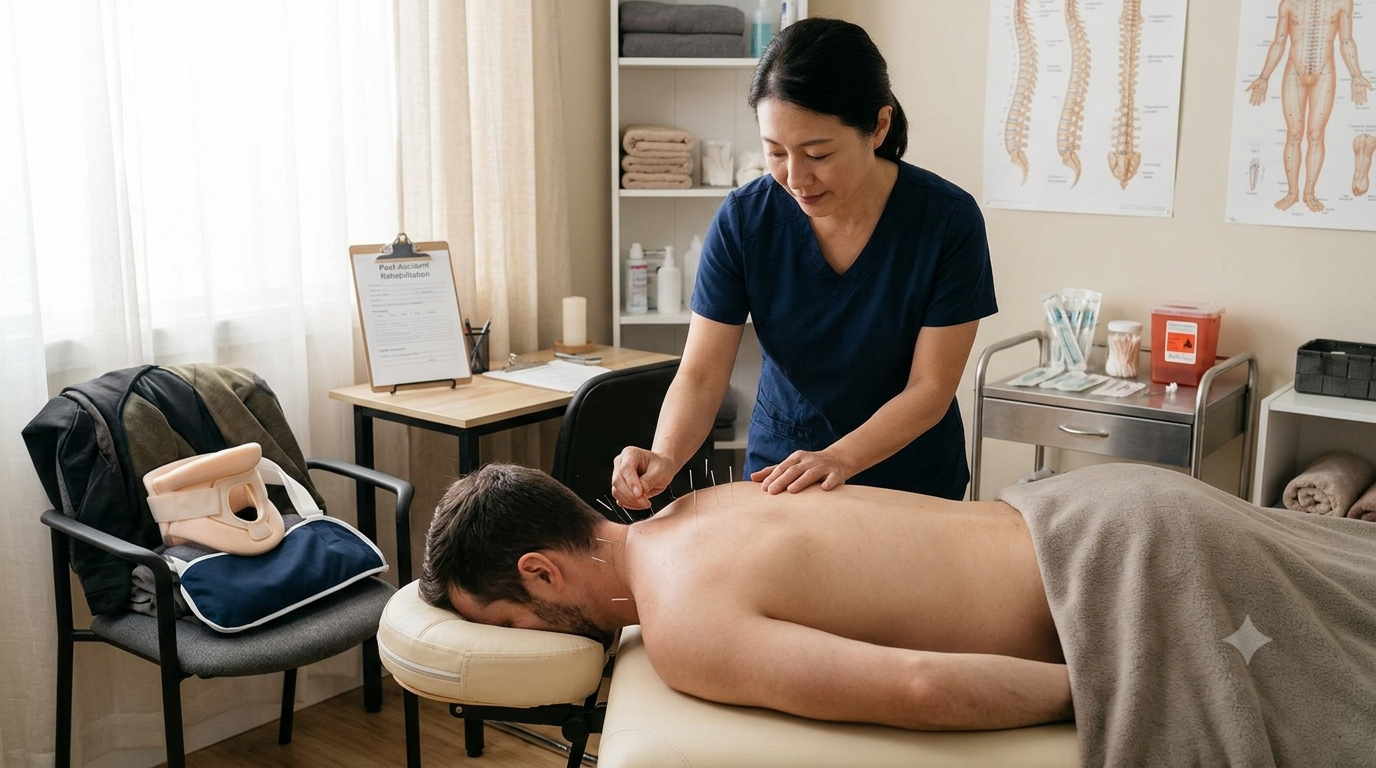
Acupuncture After a Car Accident: What to Do When Neck Pain and Stiffness Do Not Go Away
Neck pain, stiffness, muscle discomfort, and reduced movement can develop after a car accident, sometimes becoming more noticeable hours or days after the collision. Exploring acupuncture after car accident treatment as a complementary option for post-collision discomfort may be appropriate for some people, but the first priority should always be medical assessment and identifying the nature of the injury.
A collision can place sudden forces on the neck, shoulders, back, and surrounding soft tissues. Even a relatively low-speed accident can leave someone experiencing discomfort that interferes with driving, working, sleeping, and everyday activities.
The difficulty is knowing what to do when the initial assessment is complete but symptoms continue. Should you rest? Start physiotherapy? Consider acupuncture? Or return for another medical evaluation?
The answer depends on the injury, symptom severity, recovery progress, and advice from your healthcare provider.
Why Neck Pain Can Continue After a Car Accident
One commonly discussed injury following a vehicle collision is whiplash-associated disorder.
Whiplash occurs when the neck experiences rapid acceleration and deceleration forces. These forces can affect muscles, ligaments, joints, and other structures around the cervical spine.
Symptoms may include:
-
Neck pain and stiffness.
-
Reduced ability to turn the head.
-
Shoulder discomfort.
-
Headaches.
-
Tenderness around the neck muscles.
-
Upper-back discomfort.
-
Dizziness in some individuals.
-
Difficulty concentrating or fatigue in certain cases.
Not everyone develops the same symptoms.
Some people experience mild discomfort that gradually improves, while others develop persistent symptoms requiring further assessment and rehabilitation.
Importantly, symptoms should not automatically be attributed to whiplash. A healthcare professional must consider other possible injuries, particularly when pain is severe or accompanied by neurological symptoms.
What Should You Do Before Considering Acupuncture?
Before choosing any complementary treatment, make sure the injury has been properly assessed.
1. Seek appropriate medical assessment
After a significant collision, medical evaluation is important even if symptoms initially appear manageable.
Emergency assessment is particularly important when there is severe neck or back pain, weakness, numbness, difficulty walking, loss of consciousness, or suspected spinal injury.
Other concerning symptoms include severe headache, repeated vomiting, confusion, breathing difficulties, chest pain, or worsening neurological symptoms.
2. Understand your diagnosis
Ask your healthcare provider what injuries have been identified and whether further imaging or specialist evaluation is necessary.
An accident can involve several structures, and neck stiffness alone does not establish a whiplash diagnosis.
3. Follow the recommended recovery plan
Depending on the injury, treatment may involve medication, physiotherapy, activity modification, rehabilitation, or additional specialist care.
Avoid prolonged unnecessary immobilisation or complete inactivity unless your medical team specifically recommends it.
4. Monitor changes in symptoms
Record whether discomfort is improving, worsening, or spreading.
Pay attention to changes in neck movement, sleep, work capacity, and daily activities.
5. Discuss complementary options
Once the injury has been assessed, ask whether acupuncture is appropriate alongside the recommended treatment plan.
This prevents an optional therapy from delaying necessary medical care.
How Acupuncture May Fit Into Post-Accident Care
Acupuncture involves the insertion of fine needles at selected points on the body.
Some people consider it when dealing with muscular discomfort, persistent tension, or pain following an accident.
Its proposed role should be understood carefully.
Potential treatment objectives may include:
Complementary pain management: Some people explore acupuncture as an additional approach to managing musculoskeletal discomfort.
Muscle-related discomfort: A practitioner may assess whether treatment is appropriate for certain areas of muscular tension.
General well-being: Some patients find appointments relaxing during a demanding recovery period.
Support alongside rehabilitation: Acupuncture may be discussed as an optional addition to a broader recovery plan, depending on the injury and evidence for the specific condition.
However, acupuncture cannot repair a fracture, stabilise a damaged spinal structure, or replace neurological assessment.
It should not be represented as a proven cure for every type of collision-related injury.
What Does Research Say About Acupuncture for Whiplash?
Evidence concerning acupuncture for whiplash is not entirely consistent.
Some studies have reported improvements in pain and physical function, while clinical guidelines have expressed caution because of limitations in the available evidence.
For example, a physiotherapy service evaluation involving 87 people with whiplash-associated disorder after road traffic collisions reported improvements in pain and disability following treatment that included acupuncture.
However, the study was observational rather than a controlled randomised trial. It cannot establish that acupuncture alone caused the improvements.
The University of Queensland's RECOVER Injury Research Centre has also highlighted the limited evidence supporting acupuncture specifically for whiplash.
Guidance from the State Insurance Regulatory Authority of New South Wales classifies acupuncture among treatments that should be used cautiously and monitored for measurable improvement.
This means patients should not assume that every treatment marketed for whiplash has established clinical effectiveness.
Comparing treatment options after a collision
|
Treatment approach |
Main purpose |
Important consideration |
|
Medical assessment |
Identify injuries and complications |
Essential when symptoms are significant |
|
Physiotherapy |
Improve movement, strength and function |
Should reflect the diagnosed injury |
|
Prescribed medication |
Manage pain or other symptoms |
Follow medical instructions |
|
Appropriate activity |
Support gradual functional recovery |
Avoid activity that worsens an injury |
|
Acupuncture |
Optional complementary symptom support |
Evidence varies by condition |
|
Psychological support |
Address distress or trauma-related symptoms |
Useful when emotional effects persist |
A combination of appropriate treatments may be recommended, but the combination must be based on individual assessment.
When Might Acupuncture Be Worth Discussing?
Acupuncture may be worth discussing when:
-
Your injuries have been medically assessed.
-
You have ongoing musculoskeletal discomfort.
-
Your healthcare provider considers complementary treatment reasonable.
-
You want to explore additional symptom-management options.
-
You understand that results vary.
-
You can continue recommended rehabilitation and medical follow-up.
It may not be appropriate when there is an untreated injury, suspected fracture, active bleeding, significant neurological symptoms, or another medical concern requiring priority assessment.
People taking anticoagulant medication or those with bleeding disorders should also discuss additional precautions with their healthcare providers and practitioner.
How to Choose an Acupuncture Practitioner After an Accident
Not every practitioner has the same qualifications or experience.
If you are considering treatment following a collision, ask the following questions.
Step 1: Check professional licensing
In Washington State, verify that the practitioner holds the required acupuncture licence.
Step 2: Explain the accident and diagnosis
Provide information about when the collision happened, the symptoms that followed, medical findings, imaging results, and current treatment.
Step 3: Discuss the treatment objective
Ask whether the proposed sessions are intended to address a particular symptom or provide general complementary support.
Step 4: Confirm coordination with other providers
Your practitioner should understand that physiotherapy, medical reviews, and other prescribed treatments remain part of your recovery.
Step 5: Ask about precautions
Discuss medication, bruising risk, bleeding concerns, needle hygiene, and any areas that should not be treated.
Step 6: Establish how progress will be reviewed
Treatment should not continue indefinitely without considering whether it provides meaningful value.
Ask how symptoms and daily function will be evaluated.
A Practical Way to Monitor Your Recovery
Pain intensity alone does not describe the entire recovery process.
Someone may experience less pain but still struggle to turn their head, drive, or return to work.
A more useful review considers several areas.
|
Recovery measure |
What to monitor |
|
Pain |
Location, intensity and frequency |
|
Movement |
Ability to turn the head comfortably |
|
Sleep |
Whether discomfort interrupts rest |
|
Work |
Ability to complete usual responsibilities |
|
Driving |
Ability to check mirrors and blind spots safely |
|
Daily activities |
Ability to perform normal tasks |
|
General function |
Whether symptoms interfere less with everyday life |
Keeping a simple record can help you and your healthcare provider understand whether the overall recovery plan is working.
Two Practical Examples
Example 1: Neck stiffness affecting driving
A person experiences a rear-end collision and develops neck stiffness the following day.
After medical assessment, no emergency spinal injury is identified. However, turning the head remains uncomfortable, particularly when checking blind spots while driving.
The person follows the recommended rehabilitation plan and asks whether acupuncture could be considered as an additional option.
The decision is based on medical suitability, practitioner assessment, and whether complementary treatment can be coordinated with rehabilitation.
The person avoids driving until head movement is sufficient for safe driving.
Example 2: Shoulder and upper-back discomfort after a collision
Another individual develops discomfort around the shoulders and upper back following a side-impact collision.
The initial assessment identifies musculoskeletal symptoms, and a treatment plan is recommended.
After several weeks, the person still experiences discomfort during prolonged desk work.
Rather than assuming that repeated acupuncture sessions will resolve the problem, the individual returns to the healthcare provider for a progress review.
The clinician reassesses the symptoms and discusses whether adjustments to rehabilitation or complementary treatment are appropriate.
Both situations demonstrate why recovery decisions should reflect changing symptoms rather than a predetermined number of appointments.
Illustrative Case Study: Returning to Everyday Activities After Whiplash
Consider a hypothetical office worker involved in a rear-end collision.
Following the accident, the worker develops neck stiffness and upper-back discomfort. The symptoms make it difficult to sit at a desk for extended periods and turn the head while driving.
Initial problem: Neck movement is uncomfortable, and normal work activities become difficult.
Medical assessment: A healthcare professional evaluates the symptoms and recommends an appropriate recovery plan.
Rehabilitation: The individual follows guidance on gradual activity, movement, and other recommended treatments.
Complementary discussion: Because discomfort continues, the individual asks whether acupuncture may be suitable as an additional option.
Progress monitoring: Rather than focusing only on pain scores, the individual monitors movement, sleep, work tolerance, and driving ability.
Expected lesson: Recovery should be evaluated through meaningful improvements in everyday function, not simply the number of treatments received.
This is an illustrative scenario, not a documented patient testimonial or verified clinical outcome.
How Swiss Acupuncture Can Be Considered in an Accident Recovery Plan
Swiss Acupuncture offers acupuncture services in Redmond, Washington, including a dedicated auto-accident service.
If you are exploring acupuncture following a collision, the initial discussion should include your diagnosis, symptoms, medical history, and existing rehabilitation recommendations.
You can learn more about Swiss Acupuncture's auto accident acupuncture services and discuss whether a consultation may be appropriate.
The clinic should be informed about any ongoing medical treatment and relevant restrictions.
Acupuncture should remain complementary to the care recommended by your physician or other qualified healthcare professional.
Questions to Ask Before Starting Treatment
-
What experience do you have treating people with accident-related musculoskeletal symptoms?
-
Are you licensed in Washington State?
-
Should I obtain medical clearance before treatment?
-
How will the treatment be adapted to my diagnosed injury?
-
What side effects should I expect?
-
How will progress be evaluated?
-
How will appointments coordinate with my rehabilitation schedule?
-
What should I do if symptoms become worse?
These questions help establish realistic expectations and encourage responsible treatment decisions.
Conclusion
Persistent discomfort following a car accident can interfere with work, sleep, driving, and everyday activities. Acupuncture may be considered as complementary support for some musculoskeletal symptoms, but evidence for whiplash specifically remains limited and recommendations differ.
The most important step is obtaining an accurate medical assessment and following an appropriate recovery plan.
If you are considering acupuncture, discuss it with your healthcare provider, choose a qualified practitioner, and monitor meaningful changes in your daily function. A responsible recovery approach prioritises safety, appropriate rehabilitation, and realistic expectations rather than promises of a quick cure.
Frequently Asked Questions
1. Can acupuncture help after a car accident?
Some people explore acupuncture as complementary support for musculoskeletal discomfort following an accident. Evidence varies depending on the injury, and it should not replace medical assessment, rehabilitation, or prescribed treatment.
2. When should I consider acupuncture after a collision?
First obtain appropriate medical assessment and understand your injuries. You can then discuss whether acupuncture is suitable alongside your existing recovery plan.
3. Can acupuncture treat whiplash?
Acupuncture has been investigated for whiplash-associated symptoms, but clinical evidence remains limited and inconsistent. It should not be considered a proven standalone treatment for whiplash.
4. How many acupuncture sessions are needed after a car accident?
There is no universally established number of sessions for accident-related injuries. Frequency should depend on individual assessment, treatment objectives, response, and professional guidance.
5. Can acupuncture replace physiotherapy after an accident?
No. Acupuncture does not replace rehabilitation aimed at restoring movement, strength, and function. Any complementary treatment should be coordinated with the recommended recovery programme.
6. What symptoms after a car accident require urgent medical attention?
Severe neck or back pain, weakness, numbness, difficulty walking, confusion, repeated vomiting, loss of consciousness, or worsening neurological symptoms require prompt medical evaluation. Seek emergency care when a serious injury is suspected.

