

Acupuncture for Athletes: Managing Training Discomfort Without Disrupting Your Workout Routine
Training consistently requires more than completing workouts. Athletes also need to manage physical demands, recover between sessions, recognise early warning signs, and avoid allowing minor discomfort to become a more serious problem. Exploring acupuncture for athletes as a complementary approach to managing training-related discomfort may be worthwhile for some individuals, provided it fits their medical needs and training goals.
Whether you participate in running, weightlifting, cycling, tennis, swimming, or team sports, repetitive physical demands can affect muscles and joints. Some athletes investigate acupuncture because they want additional support for pain management or relaxation while maintaining a structured training schedule.
However, acupuncture is not a substitute for proper conditioning, nutrition, sleep, rehabilitation, or sports medicine assessment. Understanding when it may be appropriate is essential to making an informed decision.
Why Athletes Sometimes Struggle With Training Recovery
Training creates physical demands that the body must adapt to.
When exercise intensity, duration, or frequency increases, muscles and other tissues experience additional stress.
Some discomfort is a normal part of adapting to exercise, but not every symptom should be dismissed as ordinary soreness.
Common training-related concerns include:
-
Delayed-onset muscle soreness.
-
Muscle tightness after demanding sessions.
-
Shoulder discomfort during upper-body training.
-
Hip and lower-back discomfort.
-
Reduced flexibility.
-
Repetitive-use symptoms.
-
Fatigue following intense training blocks.
-
Difficulty returning to training after an injury.
The important distinction is between temporary exercise-related soreness and symptoms that may indicate an injury.
Sharp pain, substantial swelling, joint instability, weakness, or worsening symptoms should be assessed rather than managed by simply reducing discomfort.
How Acupuncture May Fit Into Athletic Care
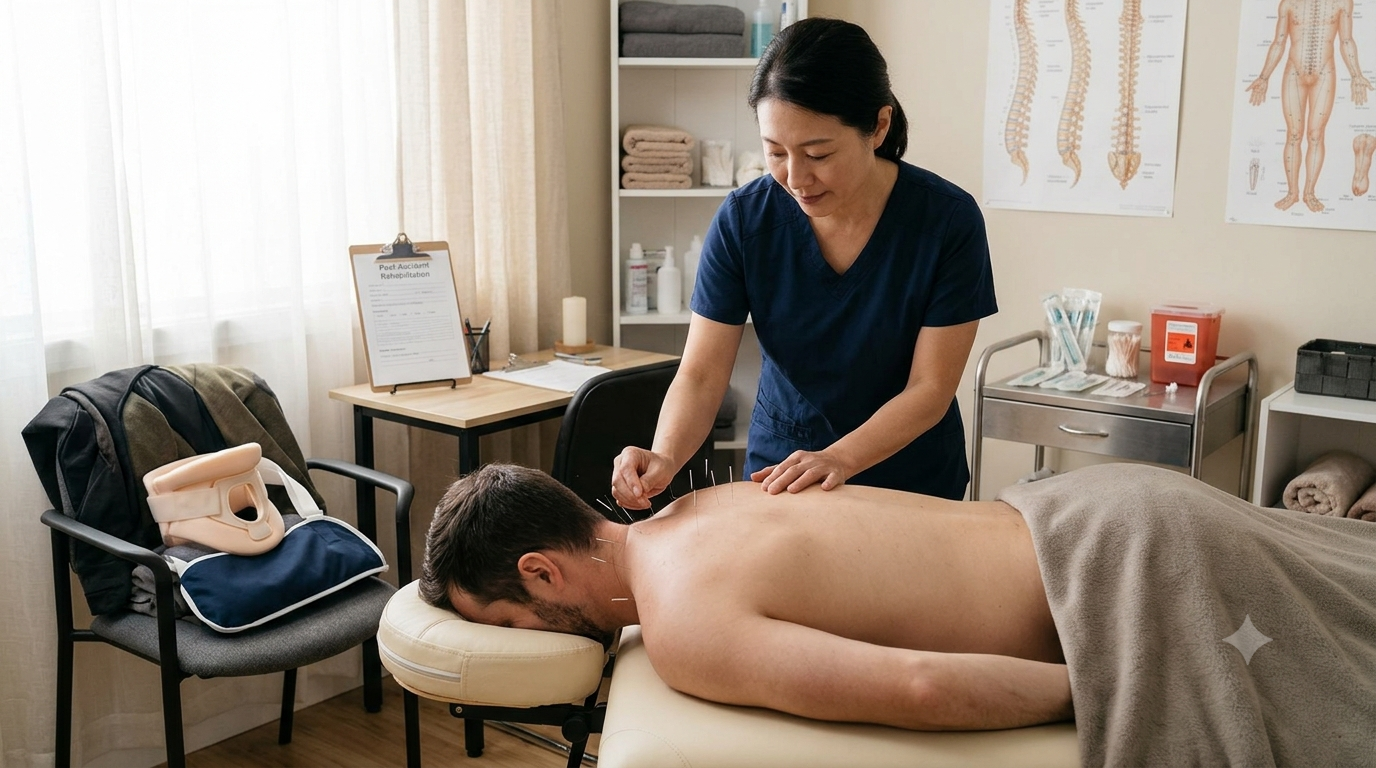
Acupuncture involves inserting fine needles into selected points on the body.
In sports-related settings, it may be considered as a complementary approach to managing certain musculoskeletal symptoms.
Possible reasons athletes explore treatment include:
Managing discomfort: Some research has examined acupuncture for musculoskeletal pain and exercise-related soreness.
Addressing muscle tension: Athletes may discuss whether acupuncture is appropriate for specific areas of muscular discomfort.
Relaxation: Some individuals find treatment sessions relaxing during demanding training periods.
Complementary recovery support: Acupuncture may be considered alongside appropriate exercise recovery and rehabilitation.
These possible applications do not establish that acupuncture increases athletic ability, prevents injuries, or guarantees faster tissue healing.
Different Sports Create Different Recovery Challenges
An effective approach should reflect the physical demands of the sport.
Runners
Running involves repeated loading of the lower body.
Athletes may experience discomfort around the calves, feet, knees, hips, and lower back.
Training volume, running surface, footwear, strength, and recovery habits can all influence symptoms.
Acupuncture may be discussed as a complementary option for certain symptoms, but persistent or localised pain should be assessed to rule out conditions such as stress injuries.
Weightlifters
Weightlifting places substantial demands on the shoulders, back, hips, and other joints.
Technique, load progression, training frequency, and previous injuries influence recovery.
An athlete with pain during a particular lift should not use acupuncture simply to make it possible to continue lifting through an unresolved injury.
Tennis and racket sports players
Racket sports involve repetitive gripping, rapid direction changes, and overhead movements.
Some players experience elbow, shoulder, wrist, or lower-body discomfort.
The treatment approach should account for the affected structure and the player's training schedule.
Cyclists
Cycling involves sustained positioning and repeated lower-body movement.
Some cyclists experience discomfort around the neck, shoulders, back, knees, or hips.
Bike fit, riding duration, posture, and conditioning should be reviewed when symptoms continue.
Team-sport athletes
Football, basketball, and other team sports combine running, jumping, acceleration, sudden stopping, and physical contact.
Athletes may experience muscle soreness or more significant injuries.
Medical assessment is particularly important following a collision, sudden joint injury, or substantial loss of movement.
What Does Research Say About Athletic Recovery?
Research into acupuncture and sports medicine has explored several outcomes, including pain, flexibility, muscle soreness, and physical performance.
A 2022 review published in Current Sports Medicine Reports discussed acupuncture and dry needling in relation to sports performance and recovery. It identified potential applications for pain management, delayed-onset muscle soreness, flexibility, and certain physical performance measures, while also noting the need for higher-quality studies.
A 2020 systematic review and meta-analysis investigated acupuncture for delayed-onset muscle soreness following strenuous exercise. Its findings suggested possible improvements in soreness and recovery, but the authors highlighted limitations in the available evidence.
More recent evidence reviews continue to identify variation in treatment methods and study quality.
This matters because improvement in soreness does not necessarily mean improved athletic performance.
Understanding the difference between recovery outcomes
|
Outcome |
What it measures |
What athletes should understand |
|
Muscle soreness |
Perceived discomfort after exercise |
Lower soreness does not prove tissue recovery |
|
Flexibility |
Range of movement |
Improvement may not translate into better competition results |
|
Strength |
Ability to produce force |
Must be assessed using appropriate performance testing |
|
Endurance |
Capacity to sustain activity |
Cannot be assumed to improve following acupuncture |
|
Training consistency |
Ability to complete planned sessions |
Depends on several recovery and health factors |
|
Injury recovery |
Restoration of affected tissue and function |
Requires condition-specific assessment |
The most responsible approach is to evaluate acupuncture based on the specific symptom or goal being addressed.
How to Decide Whether Acupuncture Fits Your Training Routine
Before booking an appointment, identify what you actually want to achieve.
For example, someone experiencing ordinary post-exercise soreness has a different situation from an athlete with persistent knee pain.
Use the following process.
Step 1: Identify the source of discomfort
Consider when the symptom started, which movement triggers it, how long it lasts, and whether it is becoming worse.
Do not automatically assume that pain is caused by training fatigue.
Step 2: Determine whether medical assessment is necessary
Sharp pain, substantial swelling, joint instability, numbness, weakness, or an inability to bear weight requires appropriate evaluation.
Step 3: Review your training load
Look at recent changes in training intensity, frequency, duration, and exercise selection.
Sudden increases in workload may contribute to recovery problems.
Step 4: Review basic recovery habits
Assess sleep, nutrition, hydration, rest days, and training progression.
These factors remain important regardless of whether complementary treatment is considered.
Step 5: Discuss acupuncture with a qualified practitioner
Explain your sport, training frequency, symptoms, medical history, and any existing rehabilitation plan.
Ask about the treatment objective and potential limitations.
Step 6: Schedule treatment around training
Do not assume that an appointment immediately before competition or an intense workout will improve performance.
Discuss suitable timing and monitor how your body responds.
Step 7: Evaluate practical results
Consider whether treatment helps with the specific discomfort being addressed and whether it interferes with training or recovery.
Common Mistakes Athletes Should Avoid
Mistake 1: Using acupuncture to train through pain
Reducing discomfort does not establish that an injury has healed.
Better approach: Obtain an assessment when pain is persistent, sharp, or associated with functional changes.
Mistake 2: Ignoring training load
Some recovery difficulties result from insufficient recovery time or sudden increases in exercise volume.
Better approach: Review training progression and include appropriate rest.
Mistake 3: Expecting acupuncture to improve every performance measure
Pain relief and athletic performance are different outcomes.
Better approach: Evaluate treatment according to realistic, specific objectives.
Mistake 4: Replacing rehabilitation with complementary treatment
An athlete recovering from an injury may need progressive strengthening, mobility work, or sport-specific rehabilitation.
Better approach: Keep prescribed rehabilitation as the foundation of recovery.
Mistake 5: Booking treatment immediately before competition without testing tolerance
An athlete may not know how they will respond to a new treatment.
Better approach: Avoid experimenting with unfamiliar interventions immediately before an important event.
Two Practical Examples
Example 1: A recreational runner experiencing recurring calf soreness
A runner increases weekly mileage and begins experiencing calf soreness after longer sessions.
The soreness initially appears manageable, but the runner notices that it is lasting longer than usual.
Rather than booking acupuncture immediately, the runner reviews the training increase and seeks assessment to rule out an injury.
After receiving appropriate guidance, the runner considers complementary treatment for symptom management while adjusting the training programme.
Example 2: A weightlifter with shoulder discomfort
A weightlifter develops shoulder discomfort during overhead pressing.
The athlete wants to continue the normal workout routine and considers acupuncture to reduce the discomfort.
However, the athlete first obtains an assessment to identify whether the symptoms indicate a shoulder injury.
Training modifications and rehabilitation are discussed before any additional treatment is considered.
Both situations show why the cause of discomfort matters more than simply finding a way to continue exercising.
Illustrative Case Study: Balancing Training and Recovery
Consider a hypothetical recreational tennis player preparing for a local competition.
The player increases court time and strength training during the same month.
After several weeks, shoulder and forearm discomfort begins affecting serving practice.
Initial problem: Training-related discomfort is interfering with normal practice.
Assessment: The player seeks an appropriate evaluation to understand the symptoms.
Training adjustment: The coach and healthcare professional review workload and identify movements that may need temporary modification.
Complementary discussion: The player asks whether acupuncture could be considered as an additional symptom-management option.
Progress review: The player monitors comfort, serving ability, strength, and tolerance for training.
Transferable lesson: An effective athletic recovery plan balances workload, rehabilitation, rest, and any complementary treatment. It does not rely on symptom reduction alone.
This example is hypothetical and does not represent a verified treatment result.
How Swiss Acupuncture Can Fit Into an Athletic Wellness Plan
When researching an acupuncture provider, athletes should look for clear communication about treatment objectives, qualifications, safety, and coordination with sports medicine care.
Swiss Acupuncture offers acupuncture services in Redmond, Washington, with information about the potential applications of acupuncture for different wellness and musculoskeletal concerns.
You can explore Swiss Acupuncture's acupuncture services and treatment information to learn more about the clinic and arrange an initial discussion.
During a consultation, explain your sport, training schedule, injury history, and performance-related concerns.
The practitioner should distinguish between complementary symptom support and medical treatment for an injury.
Questions Athletes Should Ask Before Treatment
|
Question |
Why it matters |
|
Are you licensed in Washington? |
Verifies professional qualifications |
|
Do you work with physically active individuals? |
Establishes relevant experience |
|
What symptoms can the proposed treatment address? |
Clarifies the treatment objective |
|
Should I obtain a sports medicine assessment? |
Helps identify injuries |
|
Can treatment be coordinated with physiotherapy? |
Supports rehabilitation |
|
What side effects should I expect? |
Addresses safety |
|
When should I avoid training after treatment? |
Helps with scheduling |
Conclusion
Athletes need a balanced approach to training and recovery. Acupuncture may be considered as complementary support for certain musculoskeletal symptoms, but it should not replace injury assessment, rehabilitation, sensible training progression, or adequate rest.
The best approach is to identify the source of discomfort, review training demands, and establish realistic treatment objectives.
If you are considering acupuncture, choose a qualified practitioner and evaluate whether the treatment contributes meaningfully to your overall recovery routine.
Frequently Asked Questions
1. Can athletes receive acupuncture while training regularly?
Some athletes choose acupuncture as complementary care while maintaining their training routine. Suitability depends on the individual's symptoms, medical history, and treatment objectives. Discuss scheduling with your healthcare provider and practitioner.
2. Can acupuncture help with muscle soreness after exercise?
Research suggests acupuncture-related treatments may provide modest short-term relief for some people experiencing delayed-onset muscle soreness. However, findings do not establish that acupuncture replaces normal recovery or improves every athletic performance measure.
3. Does acupuncture improve sports performance?
Some studies have explored flexibility, strength, and other performance measures, but the evidence remains limited and variable. Acupuncture should not be marketed as a guaranteed performance-enhancing treatment.
4. Should I receive acupuncture before or after exercise?
There is no universal timing schedule that guarantees better performance or recovery. Timing should reflect your training demands, symptoms, and response to treatment.
5. Can acupuncture replace sports physiotherapy?
No. Physiotherapy and sports rehabilitation address movement, strength, and functional recovery. Acupuncture may be considered complementary support when appropriate.
6. Is acupuncture suitable for professional athletes?
Professional athletes may consider acupuncture, but treatment should be coordinated with their sports medicine team. Existing injuries, competition schedules, medication, and governing-body requirements should be considered.

