


Ball Valves: The Backbone of Reliable Flow Control in Industrial Piping Systems
What Is a Ball Valve and How Does It Work?
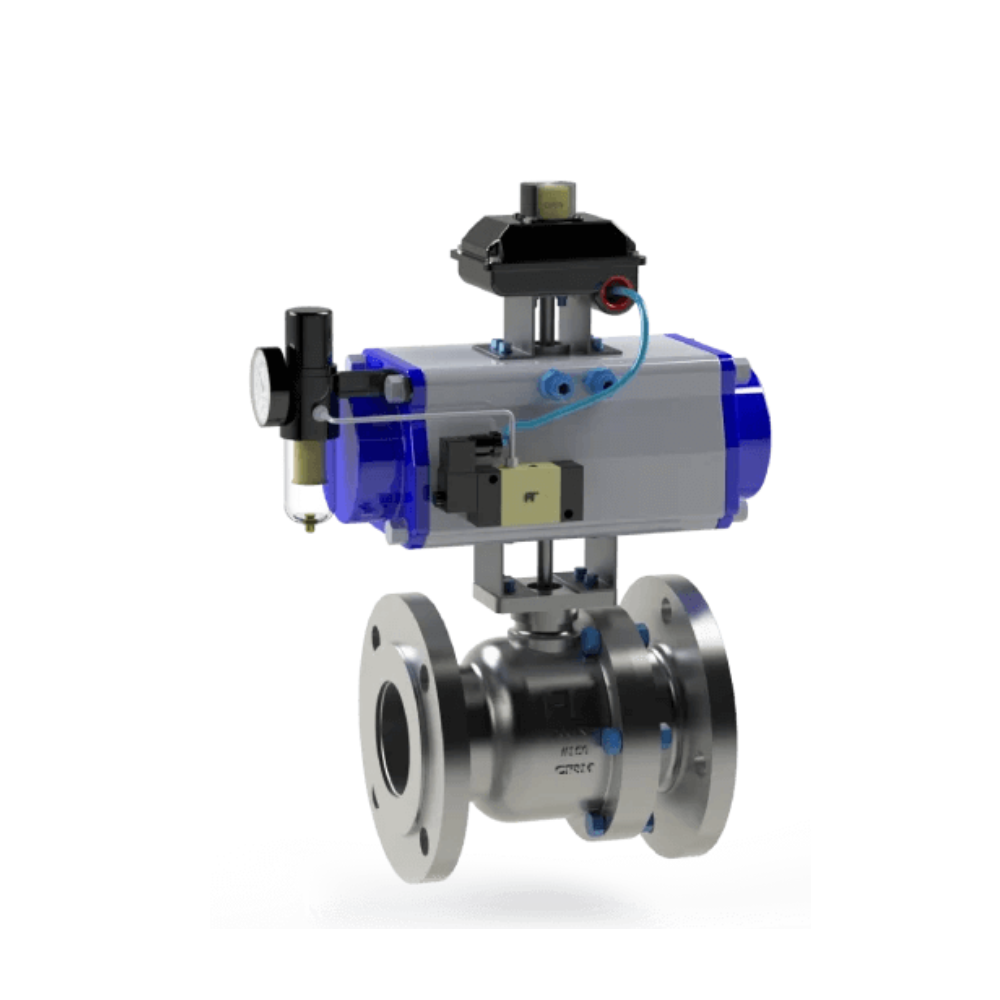
A ball valve is a quarter-turn shut-off valve that uses a hollow, perforated, and pivoting ball to control the flow of liquids and gases through a pipeline. When the valve handle is turned 90 degrees, the bore of the ball aligns with the pipeline to allow flow, or rotates perpendicular to block it completely. This simple yet effective mechanism makes ball valves one of the most widely used valve types across industrial, commercial, and residential piping systems.
Unlike globe or gate valves that require multiple turns to open or close, ball valves offer quick, tight shut-off with minimal operating effort. Their design ensures a bubble-tight seal even after years of service, which is critical in applications where leakage cannot be tolerated, such as hazardous chemical lines or high-pressure gas systems.
Types of Ball Valves Used in Industry
Industrial ball valves are broadly classified by body design and bore size. Floating ball valves use a ball held in place by two seats, with the ball moving slightly downstream under pressure to enhance sealing—ideal for low to medium pressure applications. Trunnion-mounted ball valves, on the other hand, have a fixed ball supported by trunnions at the top and bottom, making them suitable for high-pressure and large-diameter pipelines where torque requirements are significant.
Based on bore configuration, valves are available in full bore (providing unrestricted flow equal to the pipe's internal diameter, minimizing pressure drop) and reduced bore (more compact and economical, suited for applications where slight flow restriction is acceptable). Material selection—ranging from carbon steel and stainless steel to exotic alloys like Monel and Hastelloy—is determined by the fluid's corrosiveness, temperature, and pressure rating.
Key Applications Across Industries
Ball valves are extensively used in oil and gas pipelines, refineries, petrochemical plants, power generation facilities, and water treatment systems. Their ability to provide tight shut-off, low maintenance, and long service life makes them the preferred choice for isolation duty in critical process lines, including crude oil transport, natural gas distribution, and steam systems. In water and wastewater treatment, ball valves regulate flow in filtration and distribution networks, while in chemical processing, specially lined ball valves handle corrosive and abrasive media safely.
Choosing the Right Ball Valve
Selecting the correct ball valve requires evaluating factors such as operating pressure and temperature, fluid compatibility, actuation method (manual, pneumatic, or electric), and applicable industry standards like API 608, API 6D, and ASME B16.34. End connections—threaded, flanged, or welded—should also align with the existing piping configuration to ensure leak-proof installation and ease of maintenance.
Seat material is another critical consideration: PTFE and reinforced PTFE seats offer excellent chemical resistance and low friction for general service, while metal seats are specified for high-temperature or abrasive applications where soft seats would degrade quickly. Engineers must also factor in cavity pressure relief design for trunnion-mounted valves handling liquids, since thermal expansion within a closed cavity can generate dangerously high pressures if not relieved through the upstream or downstream seat.
Maintenance and Service Life
Properly selected and installed ball valves require minimal maintenance, but periodic inspection of seats, seals, and stem packing is recommended to sustain long-term performance, particularly in cyclic or high-temperature service. Routine exercising of valves that remain in a fixed position for extended periods helps prevent seat sticking and ensures the valve operates reliably when called upon during emergency shutdowns. With correct material selection and adherence to recommended torque values, industrial ball valves typically deliver decades of dependable, low-maintenance service life across demanding process environments.
About Freture Techno Pvt. Ltd.
Freture Techno Pvt. Ltd. is one of India's leading industrial valve manufacturers, headquartered in Mumbai and trusted by enterprises across the oil & gas, petrochemical, power, and chemical processing sectors. With a strong focus on engineering precision, quality compliance, and reliable after-sales support, Freture Techno designs and manufactures ball valves engineered to perform in the most demanding industrial environments. Backed by a team of experienced engineers and a commitment to international quality standards, Freture Techno continues to be the preferred valve partner for EPC contractors, plant operators, and process industries across India and abroad.
Categories
- Artificial Intelligence (AI)
- Technology
- Business
- Education
- Science
- Lifestyle
- Healthcare
- Entertainment
- Politics
- Environment
- Travel
- Finance
- Automobile
- News
- Art
- Causes
- Crafts
- career
- Dance
- Drinks
- Film
- Fitness
- Food
- Games
- Gardening
- Health
- Home
- Literature
- Music
- Networking
- Other
- Party
- Religion
- Shopping
- Sports
- Theater
- Wellness
Read More
CNG (Compressed Natural Gas) and LPG (Liquefied Petroleum Gas) vehicles are internal combustion engine vehicles powered by alternative gaseous fuels instead of conventional gasoline or diesel. These vehicles can operate in dedicated fuel configurations or dual-fuel systems and are increasingly recognized as practical transition technologies that help reduce greenhouse gas emissions while...

The Vitamin Mineral And Supplement Market is experiencing continuous growth as consumers worldwide become more focused on preventive healthcare, balanced nutrition, and overall wellness. Vitamin, mineral, and supplement products play an important role in addressing nutritional deficiencies and supporting immunity, energy levels, bone health, digestive wellness, and healthy aging. Increasing...
A clear pool feels like a small luxury. However, that luxury disappears fast under the UAE sun. Swimming pool maintenance in Abu Dhabi demands routine, timing, and the right know-how. Therefore, every owner needs a simple plan. This manual explains what your pool needs each week, each season, and each year. Moreover, it shows how water chemistry, equipment, and weather work together. Atlanta...

As industries increasingly recognize the benefits of silicon carbide in enhancing efficiency and performance, the Silicon Carbide Market Share is set to grow substantially. Forecasts indicate a dramatic increase in market valuation, projected to reach $3.431 billion by 2035, up from $2.07 billion in 2024. This strong performance reflects a CAGR of 4.70% and highlights the expanding role of...

NEWARK, Del., August 6, 2026 — The global Private Label Pet Supplement Market is expected to witness steady growth as pet owners increasingly prioritize preventive care, functional nutrition, mobility support, digestive wellness, and senior pet health. According to Future Market Insights (FMI), the market is projected to grow from USD 1,300.0 million in 2026 to USD 2,654.5 million by...

