


How KYC Verification Services and NFC Verification Services Strengthen Digital Identity Security
Digital businesses need reliable ways to confirm customer identities while maintaining a smooth onboarding experience. As online fraud and identity misuse continue to challenge organizations, KYC verification services and NFC verification services have become valuable technologies for secure digital identity verification.
These solutions help businesses validate customer information, detect suspicious identities, and improve regulatory compliance without relying entirely on manual verification processes.
What Are KYC Verification Services?
KYC verification services enable organizations to verify the identity of customers before providing access to financial products, digital platforms, or other regulated services. The KYC process generally involves collecting identity information and validating official documents such as passports, national identity cards, or driving licences.
Modern KYC verification systems use artificial intelligence, document verification, facial recognition, and biometric checks to automate identity validation. This reduces manual workload and helps businesses process customer applications faster.
Key benefits of KYC verification services include:
- Faster digital customer onboarding
- Improved identity fraud detection
- Reduced manual verification processes
- Better support for regulatory compliance
- Secure and scalable identity verification
Industries such as banking, fintech, insurance, telecommunications, and digital marketplaces can integrate KYC technology into their onboarding workflows.
How NFC Verification Services Improve Identity Checks
NFC verification services use Near Field Communication technology to securely read data stored in the electronic chip of NFC-enabled identity documents. Many modern passports and identity cards contain embedded chips that store verified personal and biometric information.
Using an NFC-enabled smartphone, customers can scan their identity document by placing it near the device. The verification system reads chip data and compares it with the information provided during onboarding.
NFC verification offers an additional layer of identity security because chip-based information is difficult to manipulate compared with standard document images.
Benefits of NFC-Based Identity Verification
NFC technology supports fast and contactless identity verification. It can help businesses validate electronic identity documents while improving the user experience.
Major benefits include secure chip data extraction, accurate document information, faster verification, reduced document fraud risks, and convenient mobile onboarding. NFC verification can also work alongside facial verification and liveness detection for stronger identity authentication.
Combining KYC and NFC Verification for Secure Onboarding
Integrating KYC verification services with NFC verification services creates a stronger digital identity verification process. KYC solutions validate customer identity details, while NFC technology securely extracts trusted data from chip-enabled identity documents.
Businesses can combine document verification, NFC chip reading, facial recognition, and liveness checks to build a multi-layered identity verification workflow.
Conclusion
As digital services expand, secure identity verification remains essential for protecting businesses and customers. KYC verification services simplify customer identity checks and support digital onboarding, while NFC verification services provide secure access to chip-based identity information.
By combining these technologies, organizations can strengthen fraud prevention, improve onboarding efficiency, and create a more secure digital identity verification experience.
Categories
- Artificial Intelligence (AI)
- Technology
- Business
- Education
- Science
- Lifestyle
- Healthcare
- Entertainment
- Politics
- Environment
- Travel
- Finance
- Automobile
- News
- Art
- Causes
- Crafts
- career
- Dance
- Drinks
- Film
- Fitness
- Food
- Games
- Gardening
- Health
- Home
- Literature
- Music
- Networking
- Other
- Party
- Religion
- Shopping
- Sports
- Theater
- Wellness
Read More
The global Industrial High Resolution Camera Market was valued at USD 512 million in 2024 and is projected to reach USD 872 million by 2032, registering a CAGR of 6.1% during the forecast period. This growth is detailed in a comprehensive new report published by Semiconductor Insight, covering market dynamics, sensor technologies, industrial applications, connectivity technologies, regional...

The Web Content Management Market Trends reveal fundamental shifts in how organizations approach digital content strategy and platform capabilities. The Web Content Management Market size is projected to grow USD 25.94 Billion by 2035, exhibiting a CAGR of 6.48% during the forecast period 2025-2035. Headless CMS architecture represents perhaps the most significant trend transforming...

Para Toluene Sulfonic Acid Market Summary As per Market Research Future® analysis, the Para Toluene Sulfonic Acid Market Size was projected to reach USD 3.205 Billion by 2035, growing at a CAGR of 3.46% from 2025 to 2035. This growth will provide significant opportunities for the market during the forecast period, driven by...
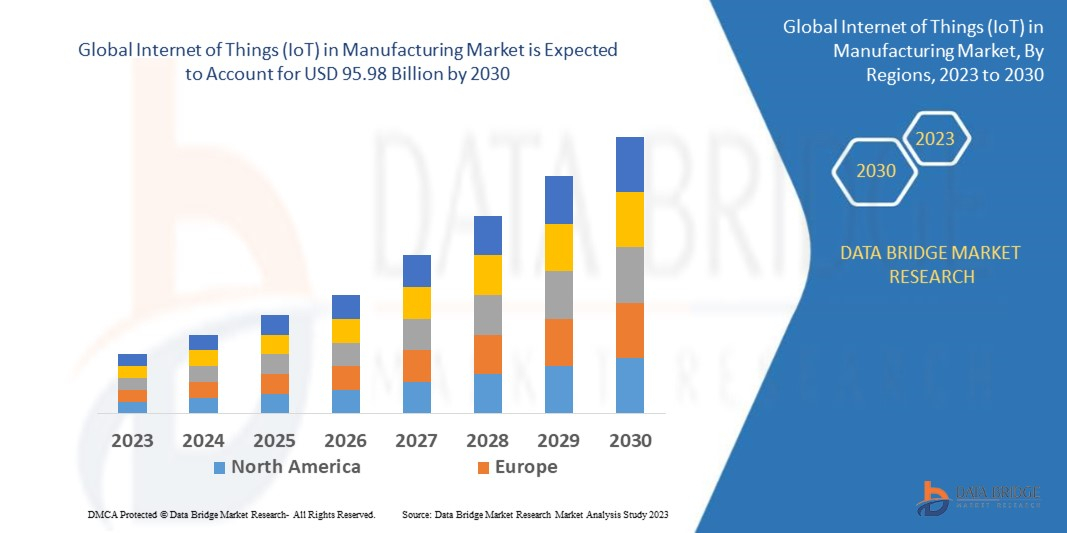
According to the latest report published by Data Bridge Market Research, the Internet of Things (IoT) in Manufacturing Market The internet of things (IoT) in manufacturing market, valued at USD 24.65 billion in 2022, will reach USD 95.98 billion by 2030, growing at a CAGR of 18.52% during the forecast period of 2023 to 2030. The idea of this Internet of Things (IoT) in Manufacturing...
Market Overview and Growth Outlook USD xx million in 2020 is estimated to become USD xx million by 2026 in the separator for super capacitors market. The report establishes 2020 as its base year and 2022–2026 as the forecast timeline. The separator for super capacitors market is expected to grow at a CAGR of xx% during 2022–2026. Market expansion follows developments in super...

