


Unveiling the Transformative and Precision-Driven Global Adaptive Optics Industry Landscape

The Science of Unblurring: A New Vision for Precision Optics
In a world increasingly reliant on capturing and transmitting high-fidelity light-based information, the inherent imperfections of light’s journey pose a significant challenge. The global Adaptive Optics industry has emerged as a revolutionary force, dedicated to solving this fundamental problem by actively correcting optical distortions in real-time. This sophisticated technology functions like a pair of smart, self-adjusting eyeglasses for high-performance optical systems, such as telescopes, microscopes, and lasers. It works by measuring the aberrations—or errors—in a wavefront of light and then using a deformable mirror or a similar corrective element to physically reshape the light wave, effectively canceling out the distortions. Originally developed for astronomical and military applications to see clearly through the Earth’s turbulent atmosphere, the applications of adaptive optics (AO) have expanded dramatically. Today, this industry provides the critical enabling technology for a vast range of fields, from enabling groundbreaking discoveries in life sciences by allowing microscopes to peer deeper into living tissue, to facilitating high-resolution retinal imaging for early disease diagnosis, and ensuring the stability of next-generation laser communication systems. It is the science of achieving a perfect focus in an imperfect world.
The Core Components: The Anatomy of an AO System
Every adaptive optics system, regardless of its application, is built upon three core, interdependent components that work in a high-speed feedback loop. The first is the wavefront sensor, which acts as the "eyes" of the system. This device, most commonly a Shack-Hartmann sensor, measures the distortions present in the incoming wavefront of light. It does this by dividing the light into an array of "lenslets" and measuring the displacement of the focal spots, which directly corresponds to the local slope of the wavefront. The second component is the control system, the "brain" of the operation. This is a real-time computer processor that takes the detailed distortion map from the wavefront sensor and, within microseconds, calculates the precise and complex set of commands needed to counteract those errors. The sophistication of this control algorithm is critical to the system's performance. The final and most dynamic component is the wavefront corrector, which acts as the "hands" of the system. This is typically a deformable mirror (DM), a highly specialized mirror with a surface that can be precisely and rapidly reshaped by an array of actuators on its back. The control system instructs the DM to form a shape that is exactly the inverse of the measured wavefront error, thereby correcting the distortion and producing a near-perfect, diffraction-limited image.
From Starlight to Cells: A Diverse Range of Applications
The impact of the adaptive optics industry is felt across a remarkably diverse spectrum of scientific and commercial domains. Its most famous application remains in astronomy, where it allows ground-based telescopes to correct for the atmospheric turbulence that causes stars to "twinkle." By removing this blurring effect, AO systems enable telescopes on Earth to achieve image clarity that can rival or even exceed that of space-based observatories like the Hubble Space Telescope, leading to sharper images of distant galaxies and the discovery of exoplanets. In the field of ophthalmology, AO has revolutionized retinal imaging. By correcting for the unique aberrations of the human eye, AO-equipped instruments can capture incredibly detailed, cellular-level images of the retina, enabling early diagnosis and monitoring of diseases like macular degeneration and diabetic retinopathy. In microscopy, AO helps researchers obtain clear images deep within living biological samples, which would otherwise be blurred by the tissue itself. Other critical applications include free-space laser communications, where AO maintains a stable link for high-bandwidth data transmission, and in high-power laser systems, where it ensures a perfectly focused beam for industrial and defense applications.
The Strategic Importance of Pushing the Boundaries of Light
The adaptive optics industry holds a position of immense strategic importance because it is an enabling technology that pushes the fundamental limits of what is possible in a wide range of critical fields. It is not an end product in itself but a key that unlocks new levels of performance and discovery. In national security and defense, advanced AO systems are crucial for long-range surveillance, satellite imaging, and the development of directed-energy weapons. In scientific research, the ability to see with greater clarity—whether looking up at the cosmos or down into a living cell—is the very engine of discovery, directly leading to new knowledge about our universe and the nature of life itself. In the telecommunications sector, as the demand for data bandwidth continues to explode, AO-powered laser communication offers a path to higher speeds and more secure connections than traditional radio frequency methods. In medicine, the impact is profound, offering doctors new, non-invasive windows into the human body for earlier and more accurate diagnoses. As such, investment in the adaptive optics industry is not just an investment in a niche optical component; it is an investment in scientific leadership, national security, and the next generation of medical and communication technologies.
Top Trending Reports:
Categories
- Artificial Intelligence (AI)
- Technology
- Business
- Education
- Science
- Lifestyle
- Healthcare
- Entertainment
- Politics
- Environment
- Travel
- Finance
- Automobile
- News
- Art
- Causes
- Crafts
- career
- Dance
- Drinks
- Film
- Fitness
- Food
- Games
- Gardening
- Health
- Home
- Literature
- Music
- Networking
- Other
- Party
- Religion
- Shopping
- Sports
- Theater
- Wellness
Read More
The Germany Dravet Syndrome Market has potential for continued development as Germany strengthens its focus on rare disease research and specialized neurological care. Dravet syndrome presents significant challenges because of its early onset and complex seizure patterns, creating an ongoing need for effective treatment and patient support. Research and innovation are expected to remain central...

A defined and youthful smile can enhance overall facial harmony, particularly when the lips have balanced volume, smooth contours, and a natural shape. Lip fillers injections in Riyadh offer an aesthetic approach for people who want to refine lip definition, restore subtle volume, or improve the overall appearance of their smile. These injectable treatments are designed to complement...

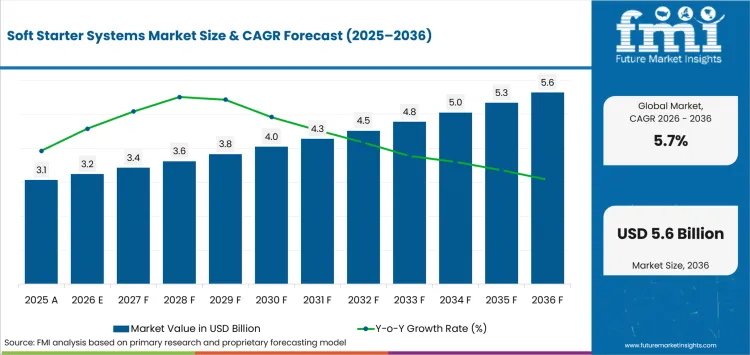
According to Future Market Insights (FMI), the global soft starter systems market is gaining momentum as industrial facilities and infrastructure operators seek to improve motor starting performance, reduce mechanical stress, and optimize energy-intensive fixed-speed applications. The market is estimated at USD 3.2 billion in 2026 and is forecast to reach USD 5.6...
The Vertebral Corpectomy Prostheses Market is gaining traction as spinal oncology, trauma, and infection cases drive demand for advanced vertebral body replacement solutions. Vertebral corpectomy prostheses are specialized implantable devices designed to restore spinal column integrity following the removal of one or more vertebral bodies. These prostheses provide critical mechanical support,...
The Full Body Scanner Market is positioned for continued development as security requirements become increasingly sophisticated. Organizations across aviation, government, transportation, and other sensitive sectors are exploring advanced technologies to strengthen screening capabilities. One of the main factors supporting market demand is the need to identify concealed objects more...
