

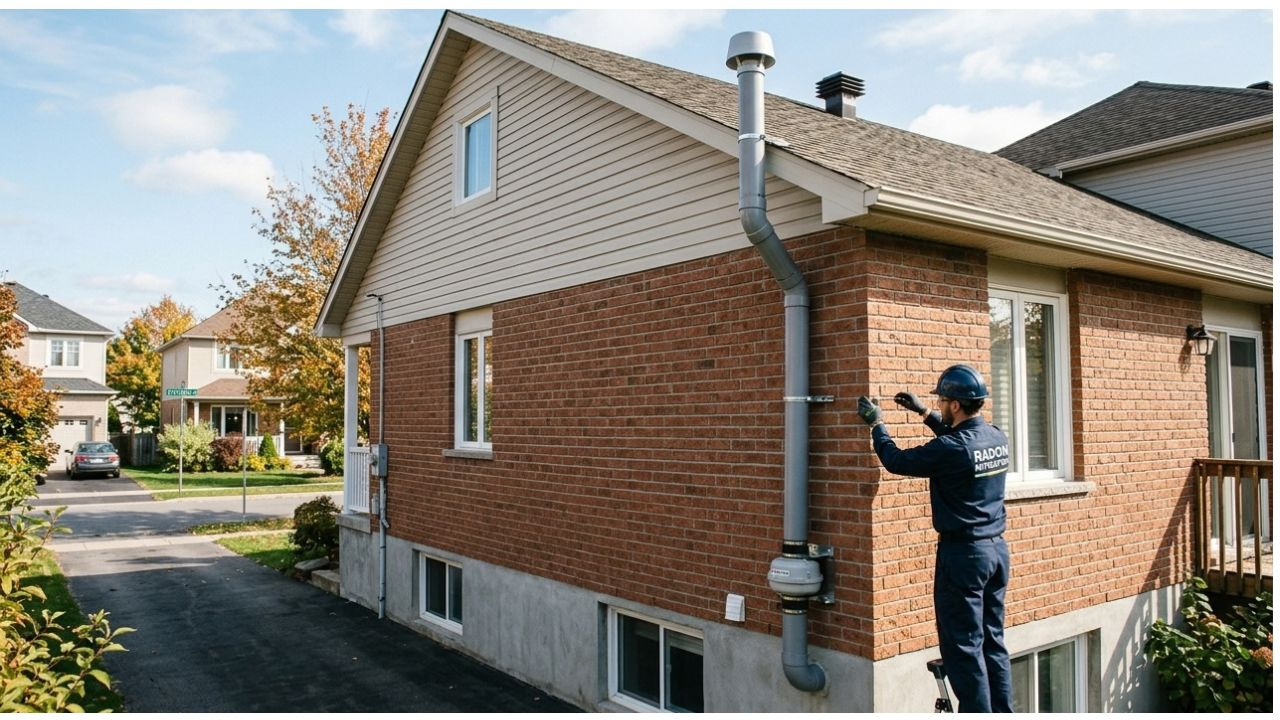

Radon is a naturally occurring radioactive gas that can enter homes through cracks, gaps, foundations, crawlspaces, and other openings connected to the ground. Because it is invisible and has no smell or taste, testing is the only reliable way to determine whether elevated levels are present indoors. When testing shows that radon levels require action, professional mitigation can help reduce the concentration and improve indoor air quality.
Ottawa radon pro mitigation focuses on identifying how radon enters a property and designing a suitable system to move the gas safely outdoors. For Ottawa homeowners, understanding the mitigation process can make it easier to decide what steps to take after receiving elevated radon test results.
Why Is Radon Mitigation Important in Ottawa
Radon exposure can become a concern when people spend significant amounts of time in buildings with elevated indoor concentrations. Health Canada recommends taking action when the long-term average indoor radon concentration is 200 Bq/m³ or higher.
Ottawa homes can have different foundation designs, basement layouts, crawlspaces, and soil conditions. These differences mean that a mitigation system should be designed according to the property rather than relying on a one-size-fits-all installation.
Testing should generally come before mitigation because the results provide important information about the property's radon level and help determine whether corrective measures are appropriate.
How Ottawa Radon Pro Mitigation Works
A professional mitigation system is designed to reduce the amount of radon entering occupied areas. One commonly used approach is Active Sub-Slab Depressurization, or ASD.
With this method, a suction point is created beneath the basement slab. A pipe connects the suction point to a radon fan, which draws soil gases from below the building and vents them safely outdoors. The system is designed according to the structure, pressure conditions, and other characteristics of the property.
For example, a home with a concrete basement floor may be suitable for sub-slab depressurization, while a property with an exposed dirt crawlspace may require a different approach. Active soil depressurization and crawlspace sealing may be considered where appropriate.
Why Professional System Design Matters
Installing pipes and a fan without properly evaluating the building can result in an ineffective system. Professional mitigation involves assessing the property and determining appropriate suction locations, pipe routing, and fan requirements.
Ottawa Radon Pros states that its mitigation process uses radon testing and pressure diagnostics to help determine the appropriate fan, pipe, and suction-point configuration. The company also describes using Schedule 40 PVC piping and professionally selected radon fans.
This type of property-specific planning can help ensure that the system is suited to the building rather than simply installed according to a standard layout.
Common Radon Mitigation Solutions
Different properties may require different solutions. Common options include:
Active Sub-Slab Depressurization
This method draws soil gases from beneath a concrete basement slab and directs them outside through a dedicated pipe and fan system. It is one of the most commonly used mitigation approaches for homes with suitable basement construction.
Active Soil Depressurization
Homes with crawlspaces or exposed dirt floors may require active soil depressurization. The system works by reducing the movement of soil gases into indoor spaces.
Crawlspace Sealing
Where crawlspaces or dirt floors contribute to radon entry, sealing and encapsulation can help reduce pathways through which soil gases enter the building. The appropriate solution depends on the property's structure and test results.
Mitigation System Repairs
Existing radon systems may sometimes require inspection, repair, or upgrades. A malfunctioning fan, damaged pipe, or change in building conditions can affect system performance.
What Happens After Installation
Post-mitigation testing is an important part of the process. Testing after installation helps determine whether the system has successfully reduced indoor radon levels.
According to Ottawa Radon Pros, post-mitigation testing is included to verify system performance and determine whether further adjustment is necessary.
Homeowners should also pay attention to the condition and operation of their mitigation equipment over time. Regular monitoring can provide useful information if indoor radon levels change.
About Ottawa Radon Pros
For homeowners looking for professional ottawa radon pro mitigation, Ottawa Radon Pros provides radon testing, mitigation, removal, repairs, and related services in Ottawa and surrounding communities. The company identifies its service areas as including Ottawa, Vanier, Kanata, Cornwall, and surrounding areas. Its website also outlines mitigation options such as active sub-slab depressurization, active soil depressurization, and mitigation system upgrades.
To learn more about its services, testing options, and mitigation solutions, click here.
Conclusion
Radon mitigation is an important step when indoor testing identifies elevated radon levels. Because every property has different construction and soil conditions, the right solution should be based on testing, building assessment, and appropriate system design.
Ottawa radon pro mitigation can involve sub-slab depressurization, active soil depressurization, crawlspace sealing, or repairs to an existing system. Following installation with post-mitigation testing provides an additional way to verify performance and ensure that radon levels have been reduced.

