

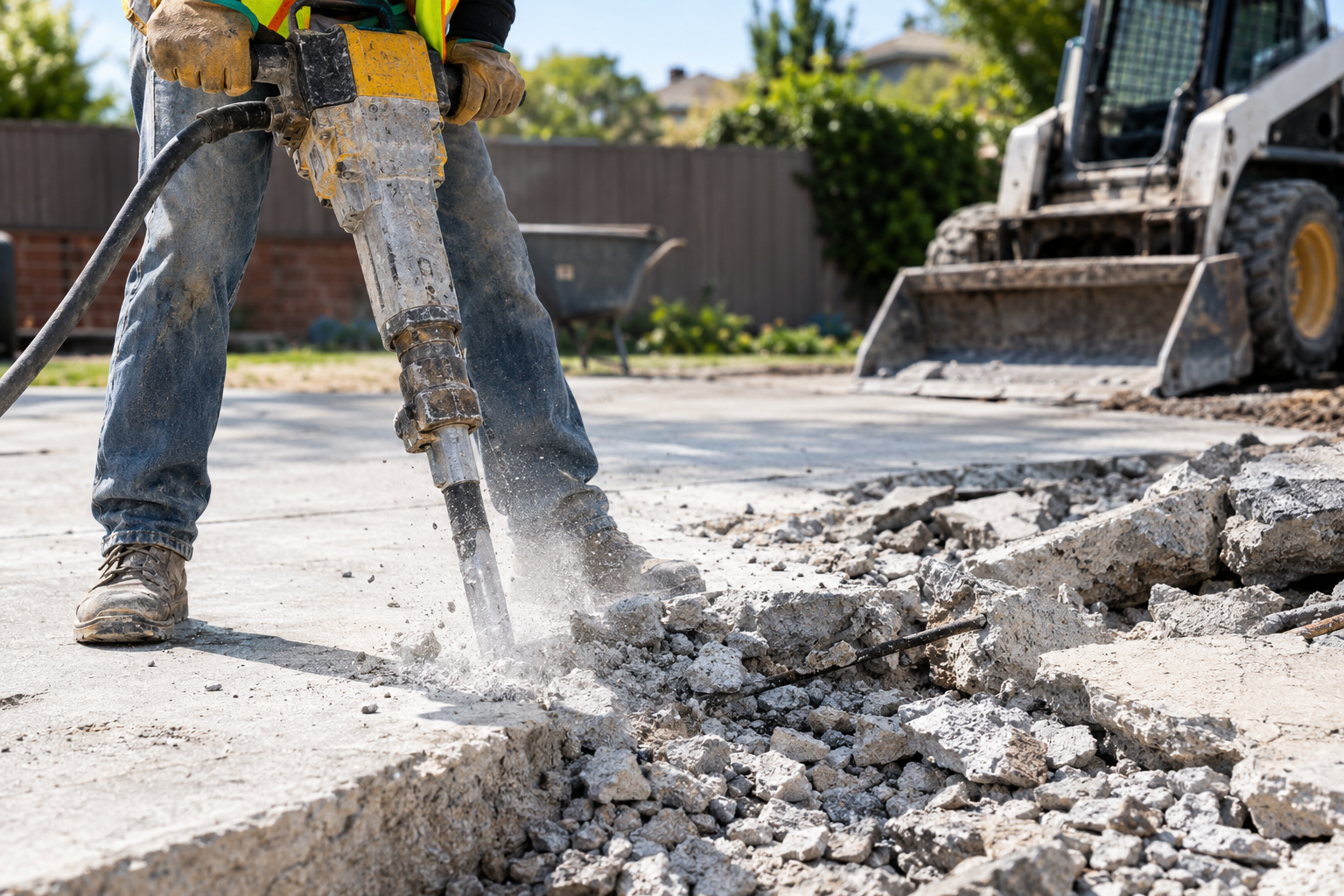

Concrete is one of the most durable construction materials, but there are times when it needs to be removed. Old driveways, damaged patios, cracked slabs, foundations, walkways, and other concrete structures may need demolition before a property can be repaired, remodeled, or rebuilt.
Understanding how concrete demolition works can help property owners plan the project, estimate potential expenses, and avoid common problems. The right demolition method depends on the size, thickness, location, condition, and surrounding structures.
What Is Concrete Demolition?
Concrete demolition is the process of breaking down and removing existing concrete from a residential, commercial, or industrial property. The work can involve small sections, such as a walkway or patio, or larger structures that require specialized machinery.
Demolition is more than simply breaking concrete apart. A successful project also involves planning, site preparation, safe removal, debris handling, and proper cleanup.
For larger projects, professional demolition contractors can evaluate the structure and determine the safest and most efficient approach.
Why Does Concrete Need to Be Removed?
There are several reasons a property owner may need concrete removal. Understanding the underlying problem is important because simply removing damaged material may not address the cause.
Common reasons include:
- Severe cracks or structural damage
- Uneven or sunken concrete
- Water damage and drainage problems
- Driveway or patio replacement
- Foundation or structural remodeling
- Expansion of a building or outdoor area
- Removal of outdated concrete surfaces
- Preparation for new construction
- Installation of utilities or underground systems
- Concrete that has become unsafe to use
For example, a severely settled walkway can create a tripping hazard. Removing the damaged section may allow a new, properly graded surface to be installed.
Common Concrete Demolition Methods
The appropriate demolition technique depends on the project's requirements. Smaller residential jobs may require handheld equipment, while large structures can require heavy machinery.
Manual Concrete Removal
Manual demolition is commonly used for smaller areas or locations where large equipment cannot easily operate. Workers may use tools such as sledgehammers, pry bars, jackhammers, and other handheld equipment.
This approach provides greater control and can be useful around landscaping, walls, utility lines, and other sensitive areas.
Hydraulic Breakers
Hydraulic breakers are powerful attachments used with excavators or skid steers. They can break thick concrete efficiently and are particularly useful for larger slabs, foundations, and commercial demolition projects.
Concrete Saw Cutting
Saw cutting allows contractors to create controlled cuts in concrete before removing a section. This can be useful when only a specific portion of a slab needs to be removed.
Controlled cutting can help reduce unnecessary damage to the surrounding concrete.
Excavator Demolition
For large-scale demolition, excavators can break, lift, and move concrete efficiently. Heavy machinery is generally better suited to open areas where there is enough room for equipment operation.
The equipment selected should match the structure and site conditions rather than simply using the largest machine available.
What Factors Affect Concrete Demolition Costs?
Concrete removal costs can vary considerably from one project to another. There is no single price that applies to every job.
Several factors influence the final cost, including:
- Size of the concrete area
- Thickness of the slab
- Reinforcement such as rebar or wire mesh
- Accessibility of the work area
- Type of demolition equipment required
- Labor requirements
- Disposal and hauling fees
- Location of the project
- Presence of underground utilities
- Site preparation and cleanup
Reinforced concrete can require additional labor and specialized equipment because steel reinforcement must also be cut and removed.
Getting an on-site assessment is often the best way to understand the actual requirements of a demolition project.
Is Concrete Demolition Dangerous?
Concrete demolition can involve heavy equipment, flying debris, dust, sharp metal reinforcement, and unstable materials. Because of these hazards, safety should be treated as a primary concern.
Before demolition begins, the work area should be inspected and secured. Workers should use appropriate personal protective equipment, which may include safety glasses, gloves, hearing protection, hard hats, protective footwear, and respiratory protection when necessary.
Dust control is also important. Breaking concrete can release fine particles into the air, so appropriate measures should be used to reduce airborne dust.
Property owners should also be aware of underground utility lines. Damaging electrical, gas, water, or communication lines can create serious safety and property risks.
What Happens to the Concrete After Demolition?
Concrete demolition does not end when the material is broken apart. The debris needs to be collected, transported, and handled appropriately.
In many cases, old concrete can be recycled. Recycled concrete may be processed into aggregate for use in roads, construction projects, drainage applications, and other purposes.
Proper debris management can reduce landfill waste and keep the construction site organized.
A professional contractor can explain whether recycling, hauling, or another disposal method is appropriate for the specific project.
How to Prepare for a Concrete Removal Project
Good preparation can make demolition more efficient and reduce unexpected problems.
Before work begins, property owners should:
- Identify the exact concrete area that needs to be removed.
- Clear furniture, vehicles, tools, and other movable items.
- Discuss access requirements with the contractor.
- Identify known utility lines and underground services.
- Determine how demolition debris will be handled.
- Ask about dust, noise, and working-hour considerations.
- Confirm what will happen to the site after removal.
If the concrete is close to a house, garage, retaining wall, landscaping, or another structure, make sure the demolition plan accounts for those surrounding features.
When Should You Hire a Professional?
Small, isolated concrete projects may appear straightforward, but demolition can become complicated when the material is thick, reinforced, difficult to access, or connected to another structure.
Professional concrete demolition services can help determine the appropriate equipment, demolition sequence, debris removal method, and safety precautions.
For property owners considering demolition in their area, TCC Concrete Service can be considered when evaluating options for concrete removal and related site work.
What Should You Do After Concrete Removal?
Once old concrete has been removed, the next step depends on the purpose of the project. The exposed area may need grading, soil preparation, drainage improvements, compacting, or installation of a new surface.
If you are replacing a driveway or patio, for example, proper preparation of the base is essential. Installing new concrete over an unstable or poorly prepared surface can lead to cracking, settlement, and drainage problems later.
Taking care of the underlying site conditions before installing new concrete can help improve the long-term performance of the replacement surface.
Final Thoughts
Concrete demolition is an important first step in many repair, renovation, replacement, and construction projects. Choosing the right removal method, preparing the site properly, managing safety risks, and handling debris responsibly can make the process much smoother.
Whether the project involves a damaged driveway, old patio, walkway, slab, or larger concrete structure, understanding the demolition process helps property owners make informed decisions. For complicated or larger-scale removal work, a professional assessment can also help identify potential issues before demolition begins.

