

How Regular Appliance Maintenance Can Reduce Energy Waste and Extend Equipment Life

Household appliances make everyday life more convenient, but their efficiency can decline over time when they are not properly maintained. Refrigerators, washing machines, ovens, dishwashers, and air conditioners depend on clean components, functional controls, and unobstructed airflow to operate effectively. When dirt accumulates, parts wear out, or airflow becomes restricted, appliances may consume more energy while delivering poorer performance. Regular maintenance helps homeowners reduce unnecessary energy waste, prevent avoidable breakdowns, and protect their investment in essential household equipment.
Why Regular Appliance Maintenance Matters
Every appliance contains components that need proper care to maintain their performance. Dust-covered coils, clogged filters, damaged seals, and restricted drainage systems can force equipment to work harder than necessary. Over time, this additional strain may increase electricity consumption and contribute to premature component failure. Simple maintenance routines can help identify these issues before they become costly problems.
For homeowners looking to maintain an efficient and comfortable living environment, practical home solutions include following manufacturer-recommended maintenance schedules, monitoring appliance performance, and addressing minor issues promptly. Combining these habits with professional inspections when needed can help improve efficiency, reduce unexpected repair expenses, and extend the useful life of household equipment.
How Maintenance Helps Reduce Energy Waste
Appliances often consume additional energy when their components cannot perform their intended functions efficiently. Regular cleaning and inspection help restore proper airflow, heat transfer, and mechanical operation, allowing equipment to work under normal operating conditions.
For example, a refrigerator with dirty condenser coils may struggle to release heat, while an air conditioner with a clogged filter may experience restricted airflow. Similarly, a washing machine with drainage problems may require additional effort or repeated cycles to complete a load properly.
Homeowners can reduce unnecessary energy use by cleaning accessible components according to the manufacturer's instructions, selecting appropriate operating settings, and avoiding excessive loads. It is also helpful to replace damaged seals and address persistent performance issues rather than allowing appliances to operate inefficiently for extended periods.
Refrigerator Maintenance for Better Cooling Efficiency
Refrigerators operate continuously or cycle throughout the day to preserve food at safe temperatures. Because they run frequently, their condition can influence household energy consumption. Dirty condenser coils, damaged door gaskets, and blocked internal vents can interfere with efficient cooling.
Cleaning accessible condenser coils when recommended helps the appliance release heat effectively. Checking door seals can reveal gaps that allow warm air to enter, forcing the cooling system to work harder. Keeping food from blocking internal vents also supports consistent airflow throughout the refrigerator.
Homeowners should avoid leaving refrigerator doors open unnecessarily and allow hot food to cool appropriately before storing it, following food-safety recommendations. If the refrigerator runs constantly, struggles to maintain temperature, or develops unusual noises, a qualified technician can investigate potential problems involving fans, sensors, or the refrigeration system.
Washing Machine Care and Water Conservation
Washing machines use electricity and water to clean clothing, making proper maintenance important for both resource conservation and dependable performance. Blocked drain filters, damaged hoses, detergent buildup, and unbalanced loads can interfere with normal operation.
Cleaning the detergent drawer and accessible filters according to the manual can help prevent blockages and unpleasant odors. Using the recommended amount of detergent reduces excess residue, while selecting suitable wash cycles can help avoid unnecessary water and energy use. Running full but appropriately sized loads can also improve efficiency without overloading the machine.
Inspecting accessible water hoses for cracks, bulges, or leaks may help prevent water damage. Persistent drainage issues, excessive vibration, or repeated cycle interruptions should be investigated before they cause further wear or damage.
Air Conditioner Maintenance and Cooling Performance
Air conditioners can lose efficiency when filters become clogged or outdoor units cannot release heat properly. Restricted airflow makes it more difficult for the system to cool indoor spaces, potentially increasing operating time and energy consumption.
Cleaning or replacing filters according to the manufacturer's recommendations is one of the simplest maintenance tasks. Homeowners should also keep the area around the outdoor unit clear of leaves, debris, and other obstructions. Setting a reasonable temperature and using available energy-saving modes can further support efficient operation.
If an air conditioner produces weak airflow, develops ice on its coils, or runs without adequately cooling the room, the cause may involve dirty coils, a faulty component, or a refrigerant-system problem. Refrigerant handling and internal electrical repairs should be left to appropriately qualified professionals.
Preventing Costly Repairs Through Early Detection
Small appliance problems can become more expensive when ignored. A loose component, worn seal, blocked filter, or leaking hose may initially cause only minor inconvenience. Continued operation, however, can place additional strain on other parts and lead to more extensive repairs.
Homeowners should pay attention to warning signs such as unusual noises, burning smells, water leaks, inconsistent temperatures, and repeated error codes. Keeping a simple maintenance record can make it easier to identify recurring problems and track when cleaning or servicing was last performed.
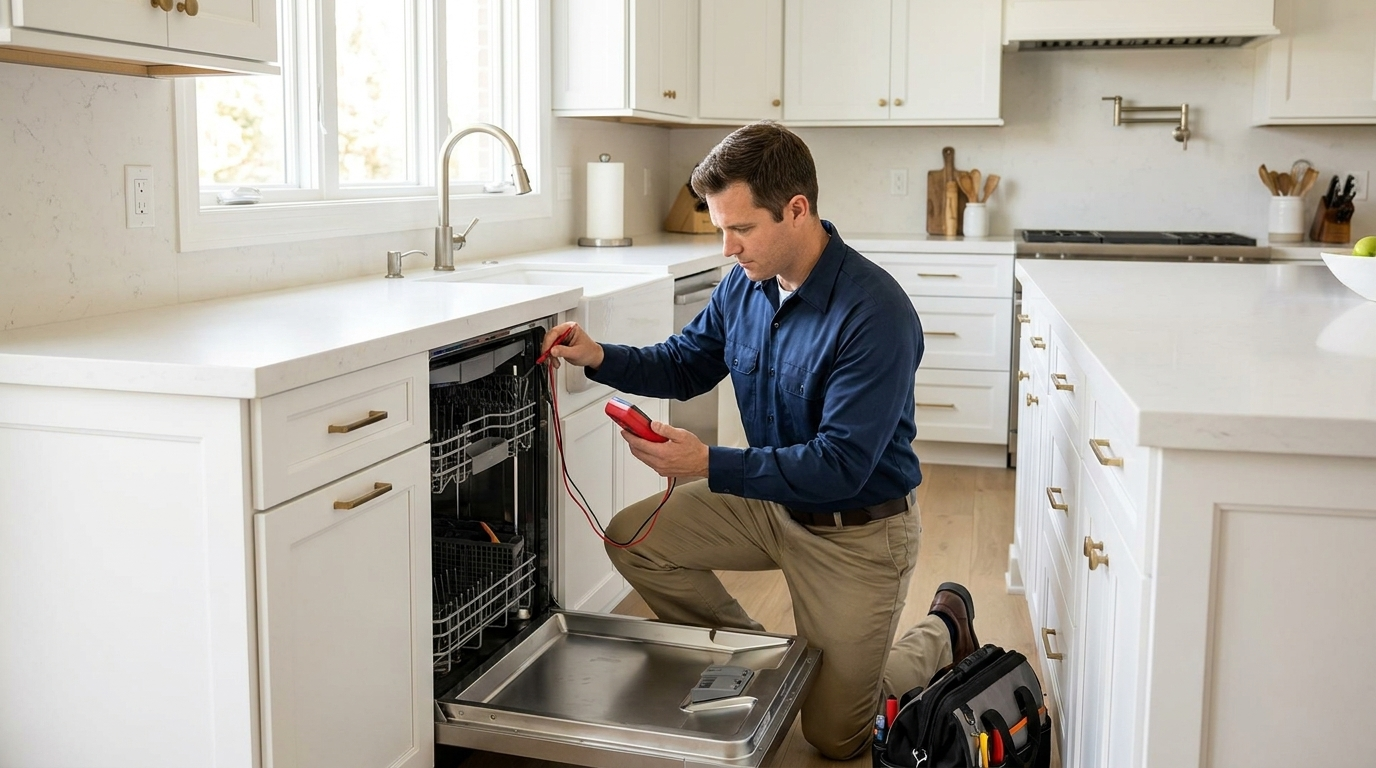
When an appliance shows signs of electrical damage, repeatedly trips a circuit breaker, or produces a burning odor, stop using it and seek qualified assistance. Early diagnosis can help determine whether a straightforward repair is possible or whether a more significant component has failed.
Building a Practical Appliance Maintenance Routine
A consistent maintenance schedule makes appliance care easier to manage. Rather than waiting for equipment to malfunction, homeowners can divide tasks into simple monthly, seasonal, and annual checks, adjusting the schedule to suit the appliance and the manufacturer's recommendations.
Monthly tasks may include checking accessible filters, inspecting refrigerator door seals, and looking for visible leaks around washing machines and dishwashers. Seasonal tasks may include cleaning accessible ventilation areas and checking air conditioner filters more thoroughly. Professional inspections can be arranged when recommended by the manufacturer or when performance problems appear.
It is important to follow the appliance manual and disconnect power before carrying out any maintenance that requires it, provided doing so is safe. Internal electrical work, gas-system repairs, and sealed refrigeration-system servicing should be handled by qualified technicians.
Extending Appliance Life Through Responsible Use
Maintenance works best when combined with proper everyday use. Overloading washing machines, blocking ventilation openings, using unsuitable cleaning products, or operating appliances outside their recommended conditions can increase wear and reduce efficiency.
Choosing the correct cycle, keeping appliances clean, and responding promptly to performance changes help components operate under appropriate conditions. Homeowners should also consider the age, condition, repair history, and energy performance of an appliance when deciding whether to repair or replace it.
Although maintenance cannot prevent every failure, it can reduce avoidable strain and help homeowners make better-informed decisions about repairs and equipment replacement.
Conclusion
Regular appliance maintenance is a practical way to reduce energy waste, improve everyday performance, and extend the useful life of household equipment. Cleaning filters and coils, checking seals and hoses, using suitable operating settings, and responding to warning signs can help prevent unnecessary energy consumption and avoidable breakdowns.
By establishing a consistent maintenance routine and seeking professional assistance when necessary, homeowners can protect their appliances, manage household expenses, and support more efficient energy use over time.

