

Managing payroll is one of those responsibilities that looks simple until you actually have to do it every month. From calculating employee salaries and tracking attendance to handling tax deductions, PF, ESI and other statutory requirements, there is a lot that HR and finance teams need to get right.
For a small business with a handful of employees, spreadsheets might seem manageable. But as the workforce grows, even a minor calculation error can lead to incorrect salary payments, compliance issues and unnecessary administrative work.
This is where payroll management software becomes useful.
The right payroll software helps businesses automate salary calculations, manage employee deductions, generate payslips and maintain payroll records without depending on multiple spreadsheets.
However, with so many payroll software companies in India offering different features and pricing models, choosing the right one can be challenging.
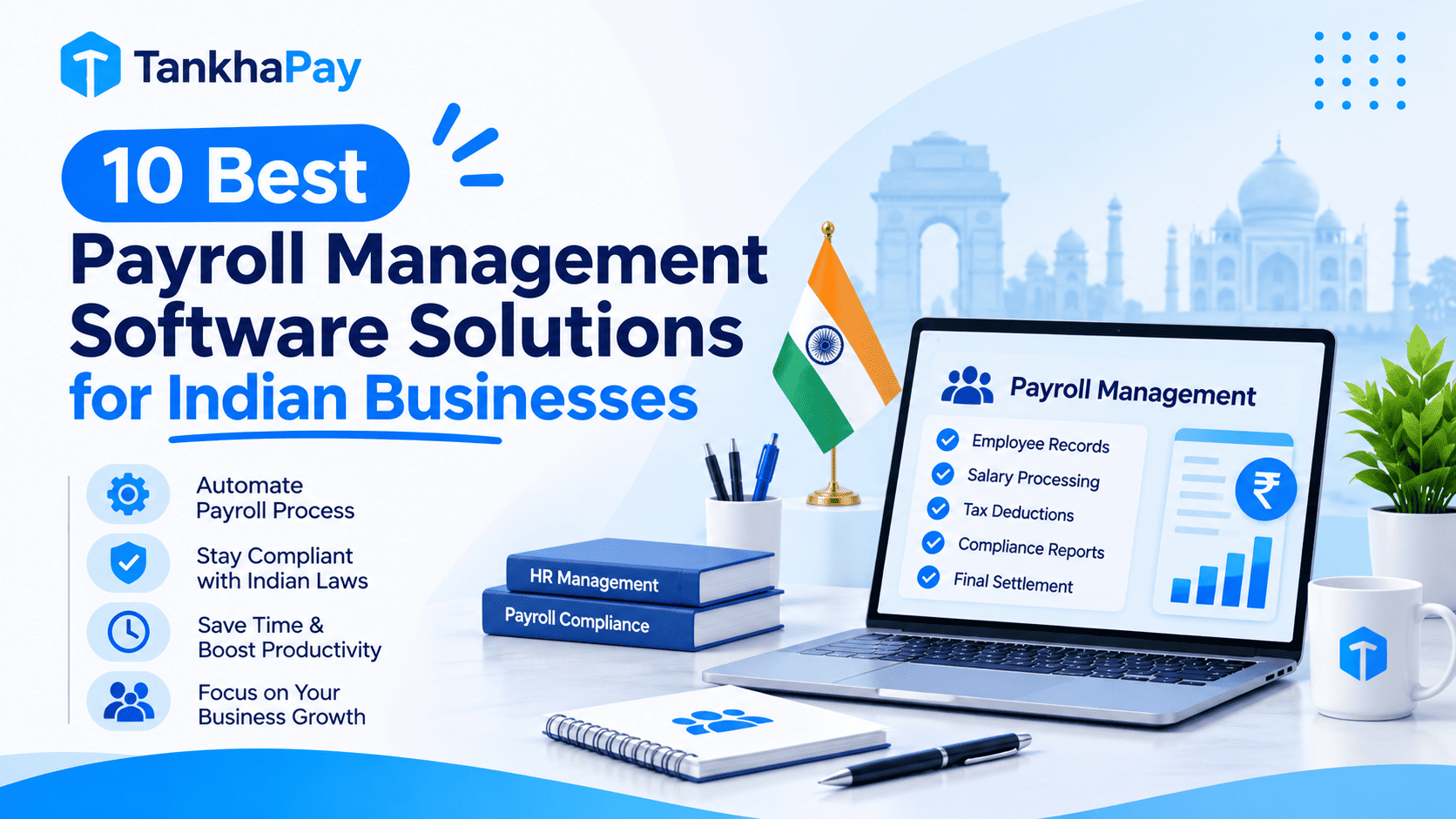
To make the decision easier, we have put together a list of 10 payroll management software solutions that Indian businesses can consider in 2026. This guide covers their key features, suitability and what makes each platform worth evaluating.
Why Do Businesses Need Payroll Management Software?
Payroll management involves much more than transferring salaries to employees' bank accounts. HR and finance teams also need to maintain accurate employee records, calculate deductions, manage attendance and meet applicable statutory requirements.
Handling all these activities manually can become difficult, especially when a company operates across multiple locations.
Here are some reasons businesses are moving towards automated payroll systems:
-
Accurate salary calculations: Automates salary calculations based on attendance, leaves, overtime, deductions and applicable allowances.
-
Statutory compliance: Helps manage payroll-related requirements such as Provident Fund (PF), Employee State Insurance (ESI), Tax Deducted at Source (TDS) and Professional Tax (PT).
-
Less manual work: Reduces repetitive calculations and the need to maintain multiple spreadsheets.
-
Better employee experience: Employees can access their payslips, salary details and tax-related information.
-
Centralised payroll records: Keeps employee salary information, deductions and payroll reports organised.
-
Simplified reporting: Helps HR and finance teams generate payroll summaries and statutory reports when required.
For growing businesses, payroll automation is not just about saving time. It also helps establish a more organised and consistent payroll process.
10 Best Payroll Management Software Solutions in India
There is no single payroll software that works equally well for every business. A startup with 20 employees may have very different requirements from a manufacturing company with 1,000 employees across multiple locations.
The following platforms offer different approaches to payroll management, ranging from dedicated payroll solutions to complete HRMS platforms.
1. TankhaPay
Website: https://www.tankhapay.com/
TankhaPay is an HR and payroll management platform designed for Indian businesses across different industries. It combines payroll processing, attendance management and statutory compliance management within a single system.
One of its notable offerings is the flexibility to use payroll software independently or opt for managed payroll services. This can be useful for businesses that want to automate payroll operations but do not necessarily want to manage every activity internally.
TankhaPay also caters to businesses with different workforce requirements, including office-based employees and field-based teams.
Key features:
-
Automated salary processing and payroll management.
-
PF, ESI, TDS and Professional Tax management.
-
Attendance tracking with biometric, geofencing and facial recognition capabilities.
-
Employee self-service for accessing payslips and payroll information.
-
Payroll reports and statutory records.
-
Multi-location workforce and payroll management.
-
Managed payroll services for businesses that need additional operational support.
Best suited for: Small, medium and large businesses looking for integrated payroll management, attendance tracking and compliance support.
What makes it worth considering: Businesses that prefer having payroll software and managed payroll services under one provider can evaluate TankhaPay as an option.
You can also explore this detailed guide on payroll software in India to understand different payroll platforms and their features.
2. Keka
Website: https://www.keka.com/
Keka is an HRMS platform that brings payroll management and several HR functions together. It is designed for businesses that want to manage employee information, attendance, leave and payroll through a connected system.
Instead of treating payroll as an isolated activity, Keka connects it with other HR processes. This helps HR teams manage employee data and payroll activities without switching between multiple tools.
Key features:
-
Automated payroll processing.
-
Attendance and leave management.
-
Employee onboarding and information management.
-
Tax declarations and investment proof management.
-
Payslip generation and employee self-service.
-
Payroll reporting and compliance-related features.
Best suited for: Growing businesses and mid-sized organisations looking for an integrated HRMS and payroll platform.
What makes it worth considering: Its integrated approach can be useful for companies that want to manage several HR activities alongside payroll.
3. greytHR
Website: https://www.greythr.com/
greytHR is a well-known HR and payroll software platform in India, particularly among small and medium-sized businesses.
The platform focuses on simplifying routine HR activities, including payroll processing, attendance, leave management and employee record maintenance.
For businesses moving away from manual payroll calculations, greytHR offers a combination of payroll automation and HR administration features.
Key features:
-
Automated salary processing.
-
PF, ESI, TDS and Professional Tax-related payroll management.
-
Attendance and leave management.
-
Employee self-service portal.
-
Payslip and payroll report generation.
-
HR document and employee record management.
Best suited for: Small and medium-sized businesses looking for payroll automation with essential HR management capabilities.
What makes it worth considering: Businesses that want to bring payroll, attendance and routine HR activities together can explore greytHR.
4. Zoho Payroll
Website: https://www.zoho.com/in/payroll/
Zoho Payroll is a dedicated payroll management solution from Zoho. It is particularly relevant for businesses already using other Zoho applications for accounting, HR and business operations.
The platform helps automate salary calculations, employee deductions, payslip generation and payroll-related compliance activities.
Its integration with the broader Zoho ecosystem can also help businesses maintain a more connected workflow between HR and finance.
Key features:
-
Automated salary calculations.
-
Employee salary structure management.
-
PF, ESI, Professional Tax and TDS-related features.
-
Payslip generation.
-
Employee self-service.
-
Integration with Zoho Books and other Zoho applications.
-
Payroll reports and tax-related documentation.
Best suited for: Startups and small to medium-sized businesses, particularly those already using Zoho applications.
What makes it worth considering: Its connection with the Zoho ecosystem can make payroll management more convenient for existing Zoho customers.
5. RazorpayX Payroll
Website: https://razorpay.com/
RazorpayX Payroll focuses on payroll automation and salary disbursement. It is an option for businesses that want to simplify salary processing while connecting payroll activities with payment workflows.
For startups and growing businesses, managing employee salaries, deductions and monthly payments can involve several separate activities. RazorpayX Payroll aims to bring these processes together.
Key features:
-
Automated payroll processing.
-
Salary disbursement capabilities.
-
Employee tax and deduction management.
-
PF, ESI and Professional Tax-related compliance features.
-
Payslip generation.
-
Payroll reports.
-
Integration with payment-related workflows.
Best suited for: Startups and small businesses looking for payroll automation with salary payment capabilities.
What makes it worth considering: Businesses that want to connect payroll processing with salary disbursement can evaluate this platform.
6. factoHR
Website: https://factohr.com/
factoHR is an HRMS platform offering payroll, attendance and workforce management capabilities. It is designed for businesses that want to manage employee operations through a centralised system.
For organisations with employees working across different locations or departments, connecting attendance information with payroll calculations can help reduce manual work.
Key features:
-
Automated payroll processing.
-
Attendance and leave management.
-
Employee self-service.
-
Payroll reports and salary records.
-
Statutory compliance-related features.
-
Mobile-based workforce management.
-
Integration capabilities with other business systems.
Best suited for: Small and medium-sized businesses and growing organisations that need integrated HR and payroll management.
What makes it worth considering: Its combination of payroll, attendance and workforce management makes it relevant for companies with diverse employee requirements.
7. Pocket HRMS
Website: https://www.pockethrms.com/
Pocket HRMS provides HR and payroll management solutions for businesses looking to automate employee-related processes.
The platform combines payroll processing with attendance, leave and other HR activities. It also offers employee self-service capabilities, helping employees access important information without repeatedly contacting the HR department.
Key features:
-
Automated payroll calculations.
-
Attendance and leave management.
-
Employee self-service portal.
-
Payslip generation.
-
Payroll reporting.
-
HR document management.
-
Mobile application and employee management features.
Best suited for: Small and medium-sized businesses looking for a connected HRMS and payroll solution.
What makes it worth considering: Its combination of HR administration and payroll capabilities can help reduce repetitive work for HR teams.
8. Darwinbox
Website: https://darwinbox.com/
Darwinbox is an enterprise-focused HR technology platform offering a broad range of human capital management capabilities.
Its payroll functionality is part of a larger HR ecosystem that covers employee management, workforce operations, talent management and other HR processes.
For large organisations with multiple departments, locations and complex employee structures, managing payroll within a unified HR platform can be beneficial.
Key features:
-
Payroll and compensation management.
-
Employee lifecycle management.
-
Attendance and leave management.
-
Workforce management.
-
HR analytics and reporting.
-
Employee self-service.
-
Integration with broader HR operations.
Best suited for: Mid-sized and large enterprises looking for a comprehensive HRMS platform with payroll capabilities.
What makes it worth considering: Businesses with complex HR structures can evaluate Darwinbox for its broader enterprise HR management capabilities.
9. HROne
Website: https://hrone.cloud/
HROne is an HRMS platform that provides payroll and employee management functionalities for businesses.
The platform aims to simplify routine HR operations by connecting employee records, attendance, leave and payroll activities.
For organisations managing growing teams, having employee information and payroll data in one place can make monthly payroll administration easier.
Key features:
-
Automated payroll processing.
-
Attendance and leave management.
-
Employee self-service.
-
Payroll reports and payslips.
-
Employee information management.
-
HR workflow automation.
-
Compliance-related payroll capabilities.
Best suited for: Growing businesses and mid-sized organisations looking for integrated HR and payroll management.
What makes it worth considering: Businesses looking to manage payroll alongside their regular HR workflows can explore HROne.
10. PeopleStrong
Website: https://www.peoplestrong.com/
PeopleStrong is an enterprise HR technology platform offering solutions for employee lifecycle management, workforce operations and payroll.
It is particularly relevant for organisations with large workforces and complex HR structures, where managing employee information and payroll across different departments can become challenging.
The platform provides a broader HR technology ecosystem rather than focusing only on salary calculations.
Key features:
-
Enterprise payroll management.
-
Employee lifecycle management.
-
Workforce administration.
-
HR analytics and reporting.
-
Attendance and leave management.
-
Employee self-service.
-
Integration with other HR functions.
Best suited for: Large organisations and enterprises with complex workforce management requirements.
What makes it worth considering: Its broader HR platform can be useful for businesses that want to connect payroll with enterprise-wide workforce management.
Quick Comparison of the 10 Best Payroll Software Solutions
Choosing between different payroll platforms becomes easier when you compare their primary use cases.
Here is a quick overview:
| Payroll Software | Best Suited For | Primary Focus |
|---|---|---|
| TankhaPay | Businesses across different industries | Payroll, compliance and managed payroll |
| Keka | Growing and mid-sized businesses | Integrated HRMS and payroll |
| greytHR | Small and medium-sized businesses | HR administration and payroll |
| Zoho Payroll | Startups and Zoho users | Dedicated payroll automation |
| RazorpayX Payroll | Startups and small businesses | Payroll and salary disbursement |
| factoHR | Growing businesses | Payroll and workforce management |
| Pocket HRMS | SMEs and mid-sized businesses | HRMS and payroll |
| Darwinbox | Mid-sized and large enterprises | Enterprise HR and payroll |
| HROne | Growing and mid-sized organisations | HR automation and payroll |
| PeopleStrong | Large enterprises | Enterprise workforce and HR management |
Note: This is a functional comparison, not a ranking based on independent product testing. Actual features, integrations and plan availability may vary. Contact the respective vendors to confirm the latest offerings.
How to Choose the Best Payroll Management Software for Your Business
Selecting payroll software should not be based on the number of features listed on a vendor's website. What matters is whether the platform can handle your actual payroll requirements.
Here are some factors worth checking before making a decision.
1. Check Statutory Compliance Capabilities
Payroll compliance is an important consideration for Indian businesses. Your software should support applicable statutory requirements, including PF, ESI, TDS and Professional Tax.
If your organisation operates in multiple states, check whether the software can handle state-specific compliance requirements.
2. Look at Your Business Size and Requirements
Not every company needs an enterprise-level HRMS.
A startup with 20 employees may only need basic payroll automation, whereas a business with 500 or more employees might require attendance integration, multiple payroll structures, advanced reporting and approval workflows.
Choose software that fits your current requirements and can support future growth.
3. Check Attendance and Leave Integration
Attendance data directly affects salary calculations.
If your payroll software can automatically connect attendance, overtime, holidays and leave records with payroll, it can reduce manual adjustments and improve accuracy.
This is particularly important for manufacturing, logistics, retail and other industries with shift-based or field-based employees.
4. Understand Employee Self-Service Features
Employees frequently need access to payslips, salary information, tax declarations and other payroll documents.
A good employee self-service portal allows employees to access this information independently, reducing the number of routine queries handled by HR teams.
5. Compare Pricing and Additional Costs
Before selecting a payroll platform, understand its complete pricing structure.
Ask vendors about:
-
Per-employee or monthly subscription charges.
-
Implementation and setup costs.
-
Additional charges for HRMS modules.
-
Integration costs.
-
Support and maintenance fees.
-
Managed payroll service charges, if applicable.
A lower subscription price does not necessarily mean a lower overall cost.
6. Evaluate Customer Support
Payroll is a time-sensitive business function. Delays in resolving payroll issues can affect salary processing and employee satisfaction.
Check whether the vendor provides dedicated support, onboarding assistance and timely help during payroll cycles.
Frequently Asked Questions About Payroll Management Software
1. Which is the best payroll management software in India?
The best payroll management software depends on your business size, workforce requirements and compliance needs. TankhaPay, Keka, greytHR, Zoho Payroll, RazorpayX Payroll and factoHR are among the options businesses can evaluate. Enterprises may also consider platforms such as Darwinbox and PeopleStrong.
2. What are the most important features of payroll software?
Important payroll software features include automated salary calculations, attendance integration, leave management, PF and ESI calculations, TDS management, payslip generation, employee self-service and payroll reporting.
3. Is payroll software suitable for small businesses?
Yes. Payroll software can be useful even for businesses with a small number of employees. It helps automate salary calculations, maintain employee records and reduce the time spent on monthly payroll activities.
4. How does payroll software help with statutory compliance?
Payroll software helps businesses calculate applicable statutory deductions, maintain payroll records and generate compliance-related reports. However, businesses should verify that their chosen platform supports the applicable rules and filing requirements. Software automation does not replace the employer's responsibility to ensure compliance.
5. How much does payroll software cost in India?
Payroll software pricing varies depending on employee count, features, deployment requirements and service level. Some platforms offer subscription-based pricing, while others provide customised plans. Businesses should request a detailed quotation before making a decision.
6. Can payroll software manage employees working across multiple locations?
Yes. Several modern payroll platforms support multi-location payroll management. However, businesses should check whether the software can handle location-specific Professional Tax, employee work locations and different payroll structures.
7. What is the difference between payroll software and an HRMS?
Payroll software primarily focuses on salary calculations, deductions, payslips and payroll reporting. An HRMS covers a wider range of employee-related activities, including recruitment, onboarding, attendance, leave, performance and payroll management.
Final Thoughts
Choosing the right payroll management software can make a noticeable difference in how efficiently a business manages its employees and monthly salary operations.
While some platforms focus primarily on payroll automation, others offer a complete HRMS with additional workforce management capabilities. The right choice depends on your organisation's size, industry, compliance requirements and long-term plans.
Before making a final decision, compare at least two or three platforms, request a product demonstration and understand how each solution handles your actual payroll scenarios.
If you are exploring payroll solutions for an Indian business, you can also read this detailed comparison of payroll software in India to understand the available options and identify the features that matter most to your organisation.
Taking the time to evaluate the right platform today can help your HR and finance teams manage payroll more accurately and spend less time on repetitive administrative work.

