

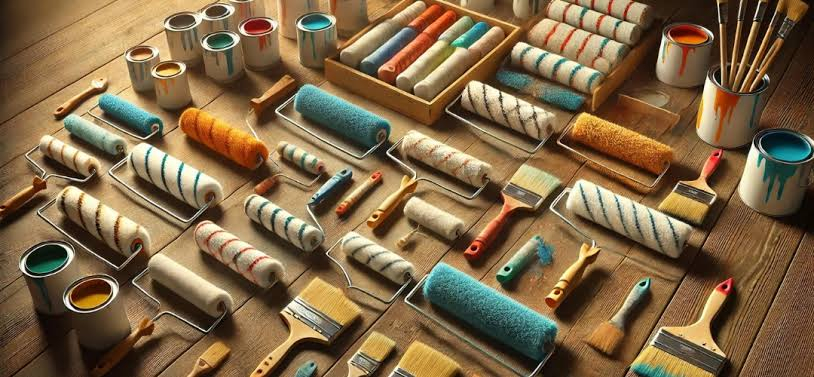
Brushes and Rollers: Choosing the Right Painting Tools for Professional Results

A quality painting project starts with the right preparation, suitable paint, and reliable application tools. Whether you are repainting a bedroom, refinishing cabinets, updating exterior trim, or completing a commercial painting job, the equipment you use can significantly influence the final appearance. The right tools help distribute paint evenly, improve coverage, reduce visible marks, and make the entire process more efficient.
Selecting the right Brushes And Rollers is an important step for both professional painters and homeowners. Different brush shapes, bristle materials, roller fabrics, and nap lengths are designed for specific applications. Understanding how these tools work makes it easier to choose equipment that matches your paint, surface, and desired finish.
Why the Right Painting Tools Make a Difference
Even high-quality paint can produce disappointing results when applied with unsuitable equipment. A brush that does not hold paint properly may leave visible streaks, while an incorrectly selected roller can create uneven coverage or unwanted texture.
Using appropriate painting tools offers several advantages:
- More consistent paint distribution across surfaces.
- Better control when working around edges and corners.
- Improved coverage on smooth and textured materials.
- Less time spent correcting application problems.
- More efficient painting on large surfaces.
- Better control over paint usage and application.
Brushes and rollers are designed for different purposes, so using them together is often the most practical approach. Brushes handle detailed sections, while rollers cover larger areas efficiently.
Different Types of Paint Brushes
Paint brushes come in various shapes, widths, and bristle materials. Choosing the right design depends on the surface, coating, and level of precision required.
1. Angled Sash Brushes
Angled sash brushes feature bristles cut at an angle, allowing painters to control paint application around edges and narrow sections. They are particularly useful for cutting in along ceilings, painting window frames, and finishing door trim or baseboards.
The angled shape helps guide the brush along a straight line, making it easier to work around surfaces that should remain paint-free. Professional painters often keep angled brushes available for detailed work that requires accuracy.
2. Flat Paint Brushes
Flat brushes have a straight bristle edge and are useful for painting broad, relatively flat sections. They can be used on doors, wooden boards, furniture, and other surfaces where controlled paint application is important.
They are available in different widths. Smaller brushes provide more control in narrow areas, while wider options can cover larger sections with fewer strokes.
3. Round Paint Brushes
Round brushes are designed for detailed painting and controlled application. Their shape can make them useful for narrow sections, decorative work, curved surfaces, and areas where a flat brush is difficult to maneuver.
They are often selected for specialty applications rather than general wall painting.
4. Chip Brushes
Chip brushes are simple, economical brushes used for various painting, staining, and maintenance tasks. They can be useful for applying certain coatings, adhesives, and finishes where a disposable or general-purpose brush is appropriate.
Before using a chip brush, check that its bristles and construction are suitable for the selected product. They may not provide the same finish quality as specialized professional brushes.
5. Specialty Painting Brushes
Some projects require brushes with specific shapes, handle designs, or bristle arrangements. Specialty brushes can help with stenciling, decorative finishes, narrow spaces, and other detailed applications.
Selecting a brush designed for the job can improve control and reduce unnecessary effort.
Understanding Brush Bristle Materials
Bristle material affects how a brush picks up paint, releases it onto the surface, and maintains its shape during application. Different materials are better suited to different coating types.
Synthetic Bristles
Synthetic brushes commonly use nylon, polyester, or a combination of synthetic fibers. They are widely used with water-based latex and acrylic paints because they generally maintain their shape and provide controlled application.
Some synthetic brushes are also suitable for other coating types. Always review the manufacturer's product information to confirm compatibility.
Natural Bristles
Natural-bristle brushes are traditionally used with certain oil-based paints, stains, varnishes, and other solvent-based coatings. Their structure can help hold and distribute suitable products smoothly.
Natural bristles can absorb water and lose their shape when used with water-based paint, so they are not automatically suitable for every project.
Blended Bristles
Blended brushes combine different fibers to balance paint pickup, flexibility, and durability. They can be useful for painters who work with different surfaces and coating types.
Instead of choosing a brush based only on its bristle material, consider the product being applied and the finish you want to achieve.
Different Types of Paint Rollers
Paint rollers are designed to cover larger surfaces efficiently. They help distribute paint across walls, ceilings, floors, and other broad areas, reducing the time required compared with using a brush alone.
Standard Paint Rollers
Standard rollers are commonly used for interior walls and ceilings. They consist of a roller frame and a removable cover that holds and transfers paint to the surface.
Rollers are available in different widths and cover materials. Choosing an appropriate combination helps achieve better coverage and a more consistent finish.
Mini Paint Rollers
Mini rollers are useful for smaller areas where standard rollers may be difficult to control. They can be used on doors, cabinets, furniture, narrow wall sections, and other compact surfaces.
They are also helpful when painting around fixtures or working in spaces with limited access.
Specialty Rollers
Specialty rollers are designed for particular surface conditions or application requirements. Some are intended for textured walls, while others are made for smooth finishes, decorative effects, or specific coating types.
Always check the manufacturer's instructions before using a specialty roller with a particular paint or coating.
What Is Roller Nap and Why Does It Matter?
Roller nap refers to the thickness or pile height of the fabric covering the roller. It influences how much paint the roller holds and how effectively it reaches into surface irregularities.
Short-Nap Roller Covers
Short-nap covers are generally suitable for smooth surfaces such as finished drywall, smooth doors, and properly prepared flat materials. They can help create a more refined finish with less visible texture.
Medium-Nap Roller Covers
Medium-nap covers are commonly used on lightly textured walls and general interior surfaces. They provide a balance between paint capacity and finish consistency.
Long-Nap Roller Covers
Long-nap covers hold more paint and can reach into deeper surface textures. They may be suitable for rough masonry, textured walls, stucco, and other uneven materials.
Using the wrong nap length can affect the result. A long nap on a smooth wall may leave an unwanted texture, while a short nap on a rough surface may not provide sufficient coverage.
Matching Brushes and Rollers to Different Painting Projects
Every painting project has different requirements. Choosing tools based on the surface and application method helps improve efficiency and reduce finishing problems.
Interior Walls and Ceilings
Rollers are generally the preferred option for covering large interior wall and ceiling areas. Choose the nap length according to the surface texture and paint manufacturer's recommendations.
Use an angled brush for corners, ceiling lines, trim, and areas around fixtures. This combination helps create a consistent finish across the room.
Doors and Cabinets
Doors and cabinets often require careful application because brush marks and uneven texture can be especially noticeable. A suitable fine-finish roller or quality brush can help achieve a smoother appearance.
Clean and prepare the surface before painting. Sanding, priming, and applying thin, even coats may be necessary depending on the existing finish and selected coating.
Exterior Wood and Trim
Exterior painting requires tools that are compatible with the selected outdoor coating. Brushes are useful for corners, railings, edges, and detailed woodwork, while rollers can cover larger flat sections.
Before painting, remove loose material, clean the surface, and address damaged areas. Select products designed for exterior conditions and follow the recommended application instructions.
Textured Walls and Masonry
Textured surfaces may require roller covers with a longer nap to reach recessed areas. A suitable brush can help cover corners and irregular sections that are difficult to reach with a roller.
Testing the selected roller on a small section can help confirm whether it provides sufficient coverage before beginning the entire project.
Professional Painting Accessories That Improve Application
Brushes and rollers are important, but additional accessories can make painting more organized and comfortable. Having the right equipment ready before starting helps reduce interruptions.
- Roller frames: Hold roller covers securely and provide control during application.
- Extension poles: Help reach ceilings and higher wall sections.
- Paint trays: Provide a convenient way to load paint onto rollers.
- Roller grids: Help distribute paint evenly when working from larger containers.
- Brush combs: Help remove paint residue and maintain brush bristles.
- Painter's tape: Helps protect adjacent surfaces and create cleaner boundaries.
- Drop cloths: Protect floors, furniture, and other nearby items.
- Paint stirrers: Help mix paint before application.
Choose accessories according to the project size and application method. Professional painters may require specialized equipment for larger jobs, while a basic collection is often sufficient for smaller household projects.
How to Use a Paint Brush for Better Results
Correct brush technique helps control paint flow and reduce visible marks. Start by loading the brush with a manageable amount of paint rather than dipping the entire bristle length into the container.
Remove excess paint against the inside edge of the container. Apply the paint using controlled strokes and avoid repeatedly brushing over areas that have already started drying.
For cutting in, hold an angled brush comfortably and guide the bristle edge along the boundary. Work in manageable sections and maintain a consistent amount of paint on the brush.
How to Use a Paint Roller Effectively
Using a roller correctly can help create even coverage while reducing splashes and unwanted texture.
- Prepare the surface: Clean the wall and repair imperfections before painting.
- Prepare the roller: Check the cover for loose fibers and ensure it is properly attached to the frame.
- Load the roller: Dip it into the paint tray and distribute the paint evenly across the cover.
- Remove excess paint: Roll over the tray's ridged area to prevent dripping.
- Apply consistent strokes: Work in manageable sections and maintain even pressure.
- Maintain a wet edge: Work methodically to reduce visible overlap marks.
- Allow proper drying: Follow the paint manufacturer's recommended drying and recoating times.
Common Painting Tool Mistakes to Avoid
Even good-quality brushes and rollers may produce disappointing results when selected or used incorrectly. Avoiding these common mistakes can improve the final appearance.
- Choosing the wrong brush: A brush that is too large or too small can make detailed work difficult.
- Using an unsuitable roller nap: Match the roller cover to the surface texture.
- Overloading tools with paint: Too much paint can cause drips, splashes, and uneven application.
- Ignoring surface preparation: Dirt, grease, and loose paint can affect adhesion and appearance.
- Using damaged equipment: Loose bristles or worn roller covers may leave unwanted marks.
- Applying excessive pressure: Pressing too hard can create uneven coverage and unnecessary texture.
- Ignoring drying times: Applying another coat too early can affect the finish.
Cleaning and Maintaining Brushes and Rollers
Proper cleaning helps extend the useful life of reusable painting equipment. Cleaning methods depend on the type of paint or coating used.
Cleaning Paint Brushes
Remove excess paint before cleaning. For compatible water-based paints, use water and an appropriate cleaning method. For solvent-based products, follow the manufacturer's recommended cleaning instructions and use the correct cleaner.
Work the cleaning solution through the bristles until paint residue is removed. Reshape the bristles and allow the brush to dry completely before storage.
Cleaning Roller Covers
Remove excess paint from the roller cover and clean it according to the coating manufacturer's instructions. Rinse away remaining residue where appropriate and allow the cover to dry fully.
Replace roller covers that have become heavily hardened, damaged, or difficult to clean properly.
Storing Painting Equipment
Store brushes and roller frames in a clean, dry place. Protect brush bristles from bending and keep roller covers away from dust and moisture. Organized storage makes it easier to prepare for future painting projects.
Choosing Quality Painting Equipment for Long-Term Use
Painting equipment should be selected according to how frequently it will be used and the type of results required. Professional painters may benefit from investing in durable brushes, reliable roller frames, and specialized covers for different applications.
Homeowners completing occasional projects may prefer a practical combination of general-purpose brushes, a few roller covers, and essential accessories. The most expensive tool is not always the best choice for every task. Compatibility, comfort, durability, and application requirements are more important considerations.
Find Professional Brushes and Rollers at Norberg Paints
Having access to dependable painting equipment makes it easier to prepare for projects of different sizes. Norberg Paints offers professional painting supplies, including Wooster brushes and rollers, along with equipment and surface preparation products for homeowners and contractors.
Its selection includes options for detailed brushwork, general painting, and larger surface applications. For example, Wooster angled sash brushes are useful for controlled edging, while roller covers are available for different surface textures and coverage requirements.
Before choosing your equipment, consider the paint type, surface texture, application method, and finish you want to achieve. Explore the Brushes And Rollers selection at Norberg Paints to find suitable tools for your next painting project. With the right equipment and proper preparation, you can work more efficiently and achieve a cleaner, more consistent finish.

